

What to Wear to a Bengali Wedding as a Guest (Women and Men)
Silk sarees in jewel tones for women, a silk panjabi and dhoti for men. Colours to skip, Bengal weaves to wear, the atpoure drape and each function explained.
 Mehul AgarwalFounder & CEO
Last updated: November 2026
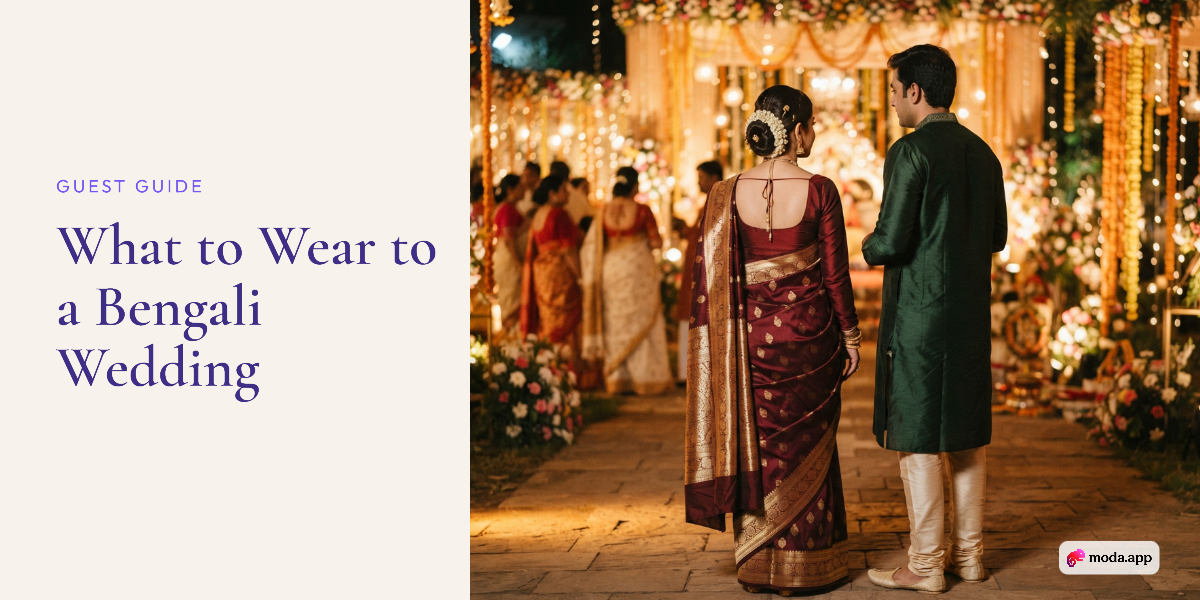
Quick answer: For the Bengali wedding evening, women guests usually wear a silk saree (a Baluchari, Murshidabad silk, Garad, Korial or Banarasi) in a deep jewel tone such as maroon, royal blue or emerald, and men wear a silk or tussar panjabi with a dhoti or pajama, often with a Nehru jacket. Leave head-to-toe red to the bride, and Manyavar's Bengali wedding guide also advises against outfits that are mostly white or black. Pack a shawl: Kolkata's average December low is 15.5°C (IMD 1991 to 2020 normals).
A Bengali wedding dresses differently from the North Indian wedding week most outfit guides assume. The main rituals happen in the evening, handwoven Bengal silks and cottons matter more than heavy embellishment, and the event most guests attend after the wedding is the bou bhat, the reception hosted by the groom's family.
This guide walks through which functions you are likely to attend, what the bride and groom wear so you do not echo them, the Bengal weaves worth wearing and how to recognise them, the atpoure drape, what men wear, and how to stay warm at a winter wedding in Kolkata. If you have a multi-day North Indian wedding instead, see our Indian wedding guest outfits by ceremony guide.
Which Bengali wedding events will you attend?
Most guests attend two events: the wedding itself, held in the evening, and the bou bhat reception. The smaller rituals before them are usually family-only. Here is the usual order, so you know what each invitation means.
- Aiburobhat: the "last rice" meal for the bride and groom, each at their own home, held in the afternoon or the night before the wedding (CulturalIndia, WeddingWire India). Manyavar describes it as usually family-only. If you are invited, bright festive colours work.
- Gaye holud: the turmeric ceremony on the morning of the wedding day (Wikipedia). WeddingWire India notes that the women who apply haldi to the bride wear yellow saris, preferably cotton. Wear something washable: turmeric stains.
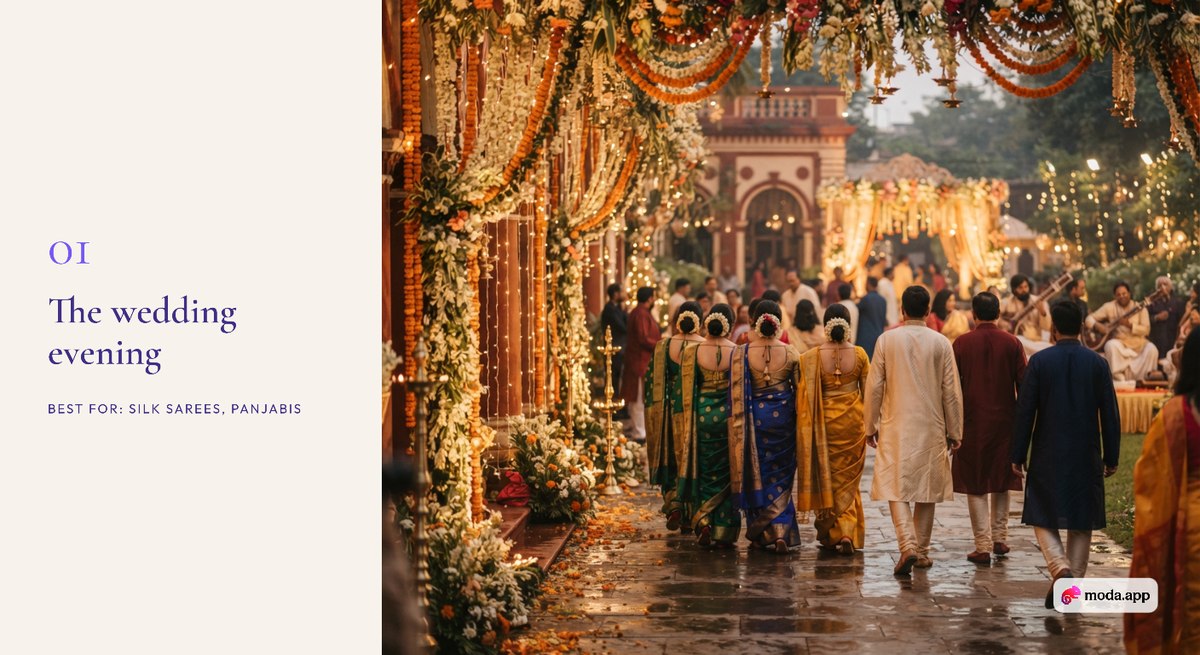
- The wedding (biye): in the evening, starting with the groom's procession (bor jatri), then rituals including saat paak, shubho drishti (the first look), mala badal (the garland exchange), saptapadi and sindoor daan. Sources list these in slightly different orders, and families vary, so do not worry about the sequence. Expect a long evening that can run late.
- Basi biye: some rituals repeated the next morning, or the same night in many families today, according to WeddingWire India.
- Bou bhat: the reception at the groom's home, where the bride serves rice to the family. WeddingWire India notes it was traditionally a lunch and is now often a night reception; Wikipedia describes it as an evening reception for relatives, friends and neighbours. This is the dressiest event for most guests on the groom's side.
What the bride and groom wear (so you don't match)
The Bengali bride traditionally wears a red Banarasi silk saree with gold zari, draped in the atpoure style, with shankha pola (white conch and red bangles) and a white mukut, or crown, on her head (CulturalIndia, Manyavar). At the gaye holud she typically wears a yellow cotton saree.
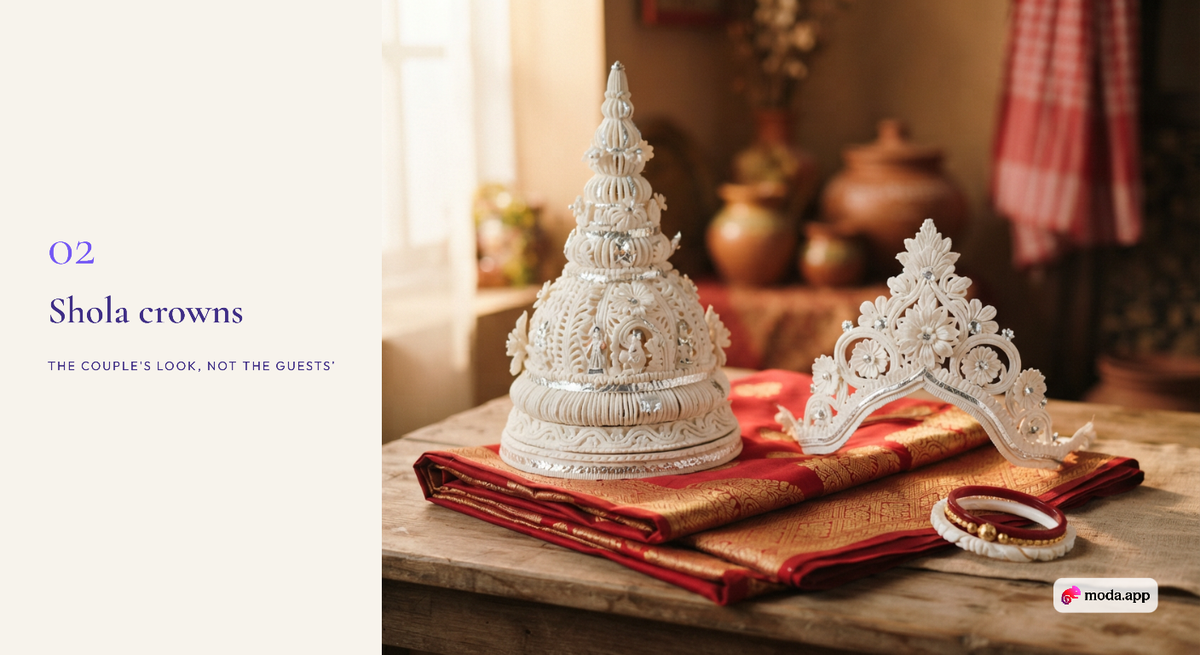
The groom wears a panjabi in cotton, silk or tussar with a dhoti, a conical topor on his head and sandalwood dots on his forehead. Both the mukut and the topor are made from sholapith, the light white pith of the shola plant. The Ministry of Textiles' sholapith craft page notes that both are considered symbols of good fortune, made by Malakar craftspeople.
What this means for you: red and gold together, in a Banarasi weight, is the bride's look. A guest can wear red accents, but not a saree that reads as a bridal red Banarasi.
Colours for a Bengali wedding guest
Choose deep jewel tones for the evening wedding, yellow for the gaye holud and anything festive for the reception. Aza Fashions' Bengali wedding style guide suggests maroon, royal blue and emerald for the wedding evening and yellow for the gaye holud.
- Best bets for the evening: maroon, bottle green, royal or peacock blue, aubergine, mustard, and rich pinks. They look right next to the bride's red without competing.
- Avoid: outfits that are mostly red, which is the bride's colour, and outfits that are mostly white or black, which Manyavar notes can signal mourning in some communities.
- Gold is welcome: zari borders and gold jewellery are part of the look. Bengali brides wear plenty of gold, so guests do not need to hold back on a gold border.
This colour advice comes from style guides rather than any fixed rule, and families differ. If you are close to the family, it is fine to ask.
Bengal sarees worth wearing
A Bengal weave is the easiest way to look like you know where you are. These are the main ones, with how to recognise each and which event it suits.
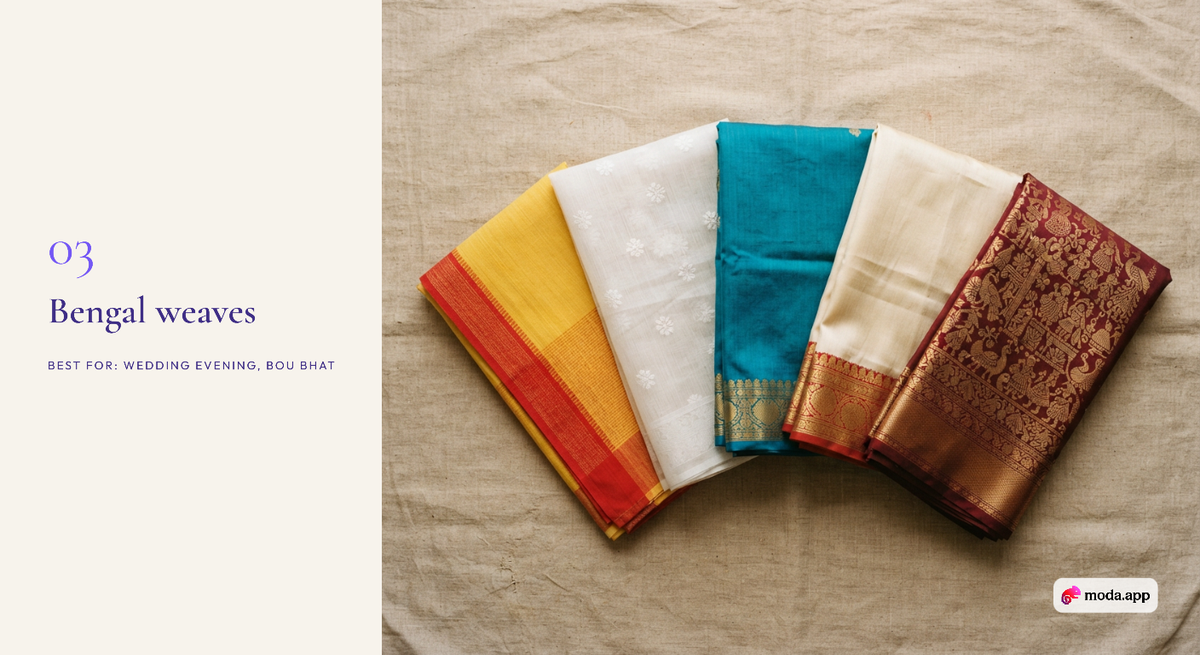
Baluchari
A silk saree whose pallu is woven with figurative scenes, originally from Baluchar village in Murshidabad and now woven in Bishnupur in Bankura district. It received a GI (geographical indication) tag in 2011 (ThePrint). The Swarnachari version uses gold zari. A weaver can take around a week per saree (Wikipedia), so it is a statement piece: ideal for the wedding evening or bou bhat.
Garad and Korial
Both are silk sarees from Murshidabad and Birbhum that received GI tags in January 2024. According to ThePrint, a Garad has a plain white or off-white body, a solid coloured border without ornament and a striped pallu, and is traditionally worn for pujas. A Korial has a white or cream base with heavy gold and silver work on the border and pallu, closer to a Banarasi. A Korial with real colour in its border is a good choice for the evening; a Garad reads more like puja wear.
Murshidabad silk
Fine, light mulberry silk from Murshidabad district that drapes easily, often in a peacock-blue body with a gold border (Wikipedia). It is lighter than a Banarasi, which makes it comfortable for a long evening.

Want this styled from your own closet?
Elara builds the look from what you own, then lets you try it on.
Jamdani and Dhakai
Sheer cotton with motifs woven in on the loom. UNESCO inscribed the traditional art of Jamdani weaving for Bangladesh in 2013 (UNESCO), and the name Dhakai comes from Dhaka. Jamdani is also woven in West Bengal. Light and elegant, it suits daytime functions and warm venues.
Tant
Crisp handloom cotton from Fulia, Shantipur, Dhaniakhali and other weaving towns, with thick borders and floral or paisley motifs (eSamskriti). Aza recommends Tant and Jamdani for daytime events. A yellow Tant is a natural pick for the gaye holud.
Buying silk for the occasion? Our guide to checking a real silk saree with the Silk Mark explains what to look for before you pay.
How to wear a saree the Bengali way (atpoure)
The atpoure drape is the traditional Bengali style: a few large pleats at the front and the pallu brought over the shoulder from the back, with a bunch of keys tied to its end. The Daily Star describes two large pleats at the waist with the anchal taken under the right arm and thrown back over the same shoulder, held down by a key ring, and notes it suits cotton and handloom sarees. Culture Trip describes box pleats and the pallu crossing both shoulders, with the keys once signalling the woman who ran the household.
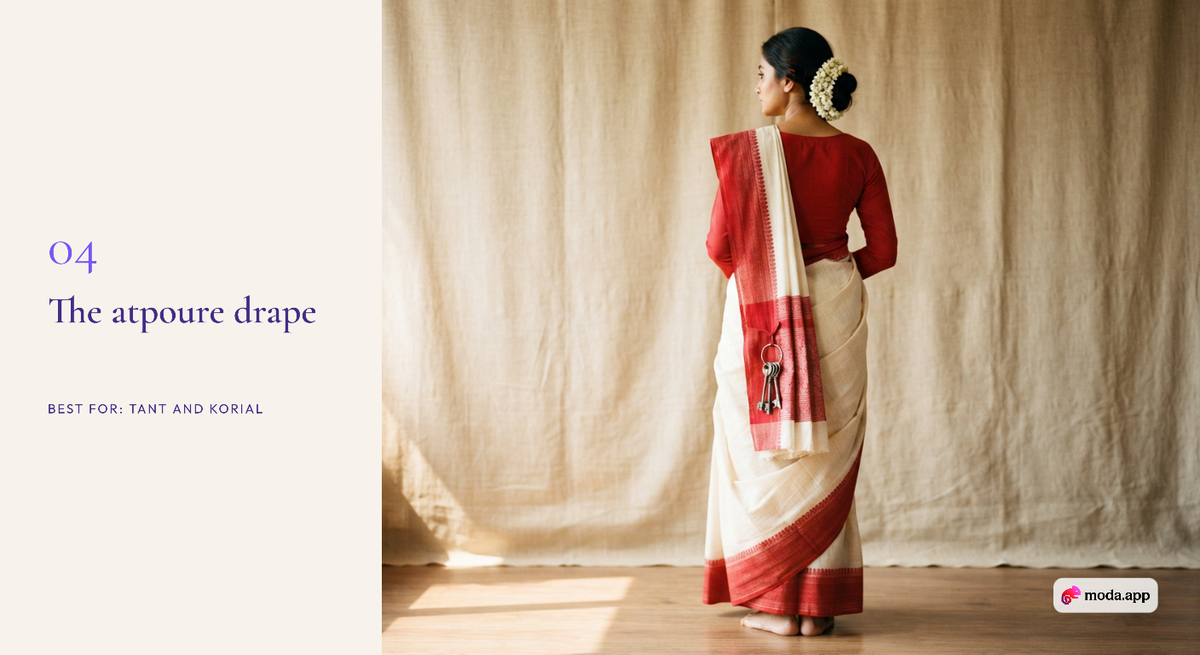
Sources differ on the details, so treat atpoure as a family of drapes rather than one exact method. As a guest you do not need to wear it: a neatly pinned nivi drape is completely normal. But if you are wearing a Tant or Korial and want to honour the hosts, atpoure is a thoughtful touch. Practise once at home, because the large pleats behave differently from nivi pleats.
What men wear to a Bengali wedding
Men wear a panjabi (a knee-length kurta) in silk or cotton with a dhoti or pajama (Culture Trip). White and off-white are traditional, and brighter shades are now common.
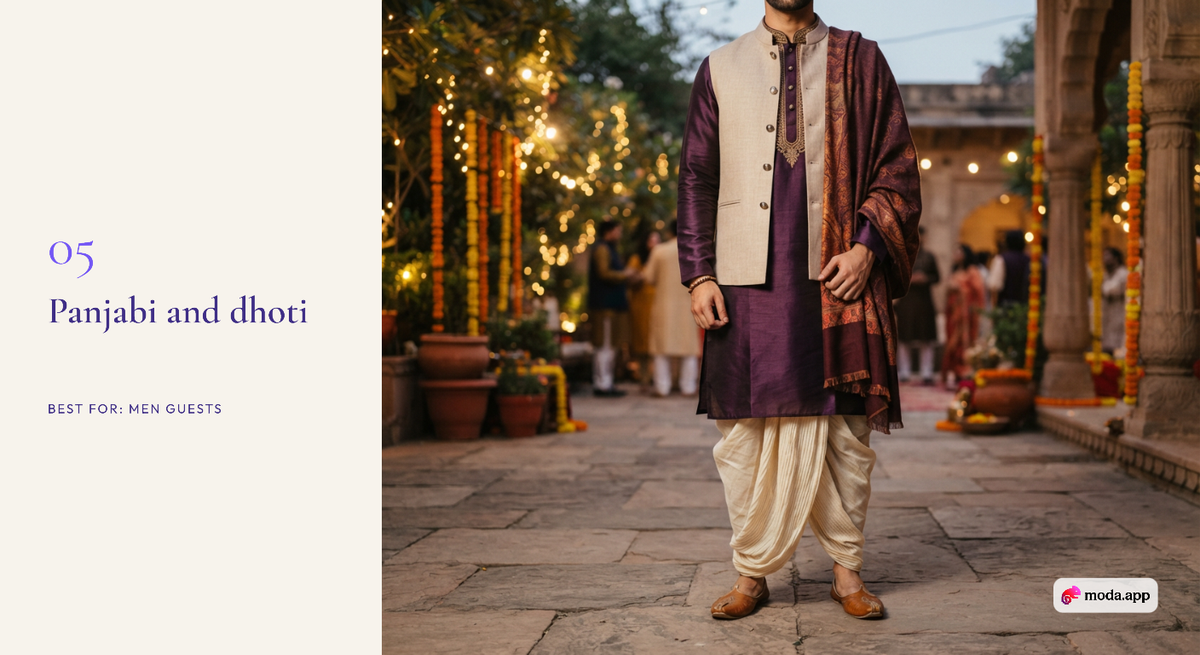
- Wedding evening: a silk or tussar panjabi in a deep colour with a churidar or a dhoti. Manyavar suggests a pastel silk kurta with churidar and a Nehru jacket for a formal look, and deeper jewel tones in the evening.
- Bou bhat: Aza suggests kurtas or a jodhpuri suit for the reception.
- Gaye holud: a simple yellow kurta (Aza).
- Shoes: mojaris or simple leather juttis. You may need to slip them off near the ritual space.
- Avoid: the groom's cream dhoti with a white silk shawl, a topor of course, and anything that reads as head-to-toe white.
Staying warm at a winter wedding in Kolkata
December and January are Kolkata's coolest, driest months. Using IMD's 1991 to 2020 normals for Alipore, the average December low is 15.5°C and January's is 14.3°C, with record lows near 7°C (Climate of Kolkata). Days stay pleasant, but a late outdoor ceremony gets chilly.
- Women: carry a shawl or stole that matches your saree's border colour. A Kashmiri or kantha-stitched shawl works well. A full-sleeve blouse helps more than you would expect.
- Men: a Nehru jacket or bandhgala over the panjabi, or a shawl over one shoulder.
- Fabrics: silk holds warmth better than sheer Jamdani. Save the lightest cottons for daytime.
For more layering ideas without hiding your outfit, see our guide on staying warm at a winter wedding in a saree, lehenga or sherwani.
FAQ
Can I wear red to a Bengali wedding as a guest?
Red accents are fine, but avoid an outfit that is mostly red, especially a red-and-gold Banarasi, because that is the bride's traditional look. Manyavar's guide advises guests against mostly red outfits.
Can I wear a white saree with a red border to a Bengali wedding?
We found no firm rule. White-bodied Garad sarees with coloured borders are traditionally worn for pujas, and Manyavar advises against outfits that are mostly white. If you want a white-based saree, pick a Korial with a rich border and pallu, add a colourful blouse, and check with the family if you are unsure.
What do men wear to a Bengali wedding?
A silk or cotton panjabi with a dhoti, churidar or pajama, often with a Nehru jacket. Deeper colours suit the evening wedding; a jodhpuri suit works for the bou bhat reception.
What should I wear to a bou bhat?
Dress as you would for a reception: a silk saree such as a Baluchari or Murshidabad silk, a lehenga or an anarkali for women, and a kurta set or jodhpuri suit for men.
Is a lehenga okay for a Bengali wedding?
Yes. Sarees are the most common choice for women, but a lehenga or anarkali in a jewel tone is fine, especially for the bou bhat.
What colour should I wear to a gaye holud?
Yellow, ideally in cotton. WeddingWire India notes that the women who apply haldi wear yellow saris, and Aza suggests yellow for guests too. Choose something washable, because turmeric stains.
Plan every function's outfit in one place
Bengali weddings in winter often come in clusters, and a saree you wore to one family's bou bhat might be perfect for the next wedding. Elara keeps your wardrobe in one place, plans looks for each function on your Calendar, and suggests what to pair with the sarees and panjabis you already own. Try Elara free and walk into every function knowing what you will wear.
Your stylist, in your pocket
Stop reading about outfits. Start wearing them.
Elara knows your closet, shops every store and gets you dressed for any occasion.