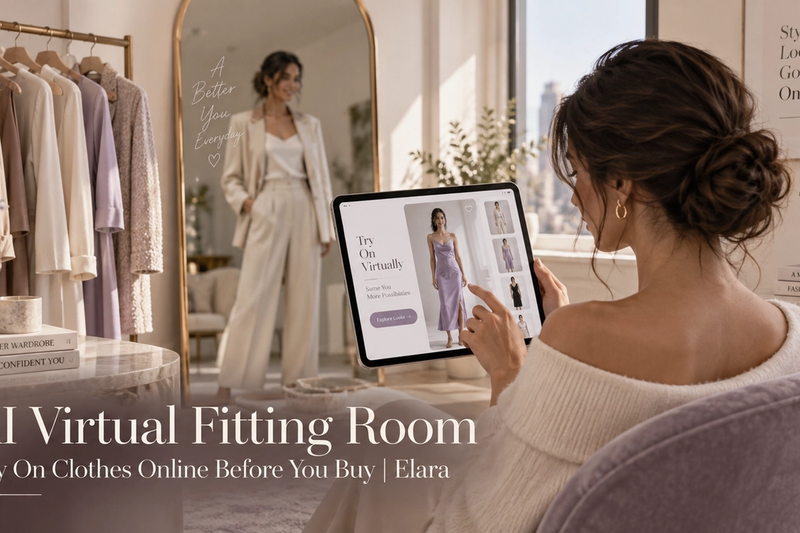
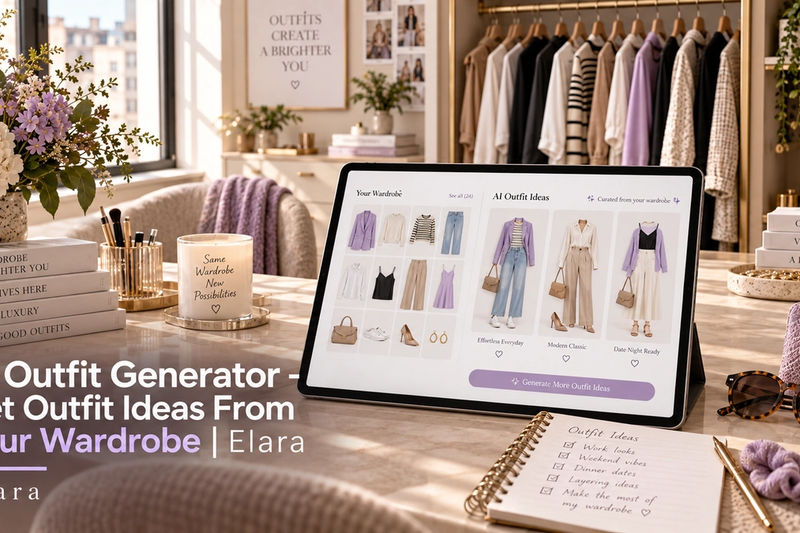
AI Wardrobe App Story: How Elara Solves Decision Fatigue
Discover how the AI wardrobe app Elara tackles decision fatigue and wardrobe waste. Learn why 80% of clothes go unworn and how AI-powered styling is reshaping the $12B wardrobe market.

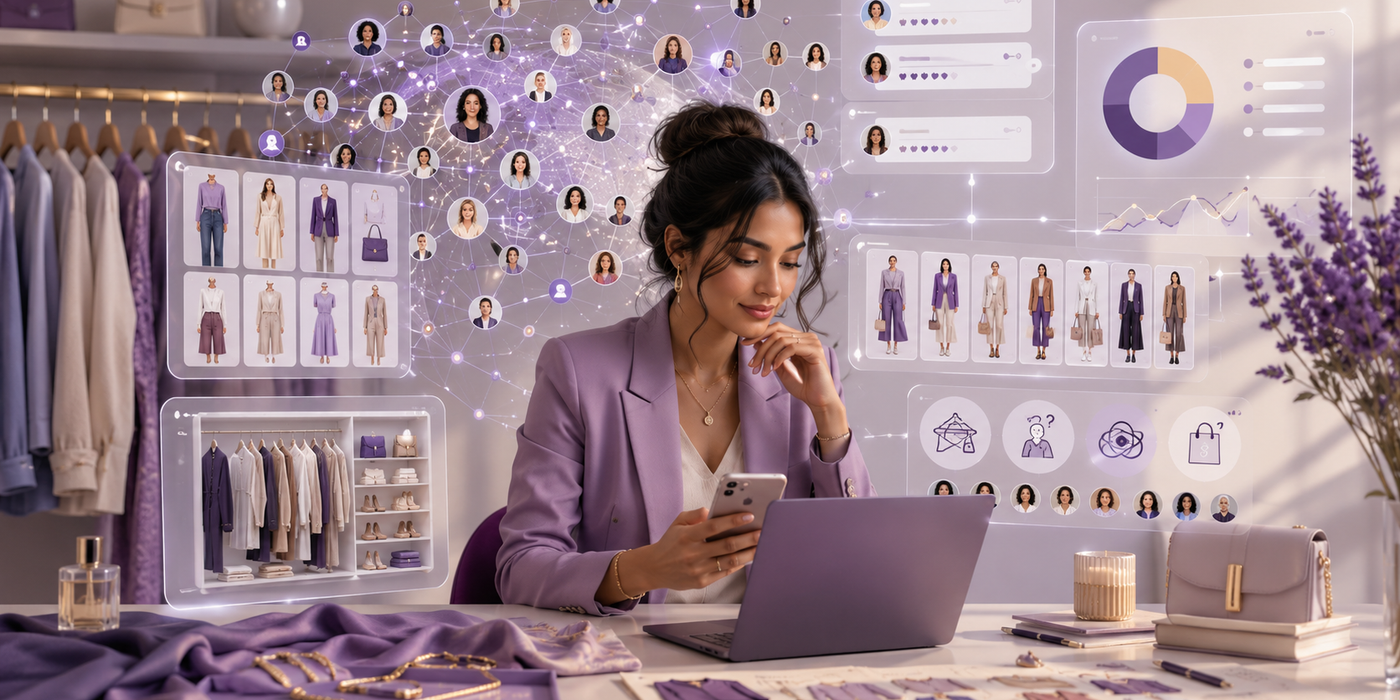
What we built Elara to solve (and what we learned from 10,000 waitlist users)
Table of Contents
- Key Takeaways
- Introduction: The Problem Nobody Was Solving
- The Category Was Broken: 'Organize' Apps vs. 'Decide' Apps
- The Sustainability Story We Couldn't Ignore
- What Privacy in a Wardrobe App Actually Means
- 10,000 Beta Users: What We Got Wrong (and Right)
- Where the Market Is Heading (and Where Elara Fits)
- FAQ
- Conclusion: The Stylist Everyone Deserves
Edited Article
Key Takeaways
- The average person owns 120 clothing items but wears only 24 — 80% goes unworn. Elara was built to solve that waste problem, not add to it.
- The AI wardrobe category is splitting into "organize" apps and "decide" apps. Elara is firmly in the second camp.
- Garment classification accuracy reached 97% in 2026, making daily AI styling trust finally viable.
- The AI personalized stylist market is growing at 36.5% CAGR — nearly three times the 12.6% rate of the broader wardrobe app market.
Introduction: The Problem Nobody Was Solving
The average person owns 120 clothing items and regularly wears 24 of them. That means roughly 80% of most wardrobes sits untouched, according to Klodsy data. Standing in front of a full closet at 7am and feeling like you have nothing to wear is a real problem — the daily decision of what to wear genuinely is hard.
Elara wasn't built because the world needed another app to photograph and tag clothes. The founding team saw something different: a missing intelligence layer between the clothes people already own and the daily decisions they make about them. Every existing tool was solving for organization — cataloging, sorting, digitizing. Nobody was solving for the moment that actually matters: what do I wear today, given my life, my plans, and what's in my closet?
The market context made the opportunity clear. According to Wise Guy Reports, the wardrobe app category is valued at $3.67 billion in 2025 and projected to reach $12 billion by 2035, growing at a 12.6% CAGR. The category has real scale. What it lacked was a product that acted less like a filing cabinet and more like a stylist.
This article covers three things: the decision fatigue problem that nobody was adequately addressing, the wardrobe waste crisis hiding in plain sight, and the intelligence layer Elara was built to provide — along with honest lessons from 10,000 beta users who told us where we got it right and where we didn't.
The Category Was Broken: 'Organize' Apps vs. 'Decide' Apps
The AI wardrobe app market in 2026 is undergoing a structural split, and the dividing line is a single question: does the app tell you what to wear, or does it just store what you own?
"Organize" apps built their value proposition around closet digitization — photograph your clothes, tag them by color and category, browse your inventory. That's useful, the same way a well-organized filing cabinet is useful. But it's passive. It requires the user to do the cognitive work that actually matters: assembling an outfit from a catalog, accounting for weather, occasion, and personal context. The app holds the data; the user still makes every decision.
"Decide" apps are structurally different. AI is the dividing line between these two categories — and by 2026, AI accuracy has finally crossed the threshold needed to make "decide" apps trustworthy enough for daily use. Garment classification accuracy jumped from 89% in 2024 to 97% in 2026, while virtual try-on realism reached 95%, according to Klodsy data. These aren't incremental improvements. Below a certain accuracy floor, users stop trusting AI recommendations and stop returning to the app. Above it, daily habit formation becomes possible. The jump from 89% to 97% is the difference between a novelty and a utility.
The market is already pricing in this distinction. The broader wardrobe app market is growing at 12.6% CAGR, according to Wise Guy Reports. The AI-based personalized stylist segment — the "decide" tier — is growing at 36.5% CAGR. That's nearly three times the rate of the category it sits inside. User value and investment capital are both concentrating in the "decide" segment, not the "organize" one.
Elara was architected as a "decide" app from the first design document. The product expression of that philosophy is the conversational AI interface — not a grid of tagged photos, but a dialogue. AI wardrobe apps in 2026 are increasingly positioned as decision-support systems for the clothes people already own, not shopping assistants pointing them toward new purchases. A monthly open is not success. A daily trusted habit is.
The Sustainability Story We Couldn't Ignore
When you build an app people use every morning to decide what to wear, you're also building something that sits between them and impulse purchases.
Ready to upgrade your wardrobe?
Get the Elara app for AI-powered styling and virtual try-ons.
The 80% underuse figure from Klodsy is the product problem, not a marketing headline. The average person owns 120 clothing items and regularly wears 24. That means roughly 96 items are sitting idle at any given moment — bought, forgotten, or never quite integrated into how someone actually gets dressed. Elara was designed to close that gap. Not by cataloging the 96, but by making the 24 work harder and gradually expanding that active set.
Cost-per-wear tracking and wardrobe analytics weren't on the original feature roadmap. Beta users surfaced them. When early testers started asking "how often have I actually worn this?" and "what's the real cost of this jacket I bought two years ago?", the team listened. Those questions revealed something important: users weren't just looking for outfit suggestions, they were looking for a way to make sense of the money and space already committed to their closets.
According to Wise Guy Reports, Gen Z and millennials are the primary demand drivers for digital and sustainable fashion tools — and these users don't separate those two things. For them, a digital wardrobe tool that doesn't address waste feels incomplete. Business Research Insights frames the sustainability narrative directly: wardrobe apps are tools to help users buy less, wear more, and reduce waste. That's structurally incompatible with the shopping-first app model, where monetization depends on purchase volume. Elara's wear-more-buy-less model isn't a positioning choice layered on top of the product — it's baked into how the product generates value.
What Privacy in a Wardrobe App Actually Means
Most apps in this category treat privacy as a legal requirement. Elara treats it as a product design principle — because wardrobe data is far more revealing than it first appears.
Think about what a complete picture of someone's clothing habits actually contains. Which outfits appear on Monday mornings versus Friday evenings signals daily routines and workplace context. The ratio of formal to casual wear is a rough income and lifestyle proxy. Occasion patterns — weddings, job interviews, first dates — map emotional and social milestones. Body-fit notes and size changes over time capture physical changes users may not have consciously shared with any other platform. Wardrobe data, in aggregate, builds a detailed behavioral profile. Users deserve to understand that, and to control it.
Privacy is emerging as a major theme in 2026, with users becoming more aware of what wardrobe data reveals about their lives and expecting stronger data ownership controls. Elara's response to this isn't a privacy policy buried in settings — it's architecture. Style profiles are not sold to third parties. On-device processing handles sensitive classification tasks where technically feasible. Users control what data persists, what gets used for recommendations, and what gets deleted.
This matters competitively. Privacy-first design is a retention driver, not a compliance burden. Users who trust that their data isn't being packaged and sold are users who share more honestly, which produces better recommendations, which creates the daily habit loop the product depends on. Apps that treat style data as an asset to monetize will face a reckoning as users grow more sophisticated — and in 2026, that sophistication is arriving faster than most product teams anticipated. Getting ahead of it now is a structural advantage, not a sacrifice.
10,000 Beta Users: What We Got Wrong (and Right)
The honest version of any beta story starts with what the team assumed and got wrong.
Assumption one: wardrobe upload was the barrier. The team built an onboarding flow centered on digitizing a full closet before delivering any value. Beta users abandoned it. The real pain point wasn't that people couldn't organize their clothes — it was that at 7am, standing in front of an open wardrobe, they had no one to ask. The onboarding was redesigned to deliver a useful outfit suggestion with as few as five uploaded items. Value before effort. That single change materially improved activation rates.
Assumption two: users would prefer a visual grid. The browse-and-filter interface tested well in internal reviews and performed poorly with real users. Conversational UI — a simple back-and-forth with the AI — outperformed the grid for daily outfit decisions by a significant margin. Users didn't want to scroll through tagged photos at 7am. They wanted to say "I have a client lunch and it might rain" and get an answer. The chat-first direction the product had been debating internally was validated decisively.
Assumption three: privacy concerns would surface late, if at all. They surfaced in the first round of user interviews, unprompted, and with more specificity than anticipated. Users asked directly: who sees my style data? Can you sell my wardrobe information to brands? What happens if I delete the app? Users in 2026 are increasingly aware of what wardrobe data reveals about their lives — and beta confirmed that awareness is not theoretical. It shaped how Elara communicates data practices from onboarding forward.
What worked: sustainability through data, not declaration. Telling users that Elara was sustainable generated mild interest. Showing a 24-34 year-old user that their cost-per-wear on a £180 coat was £4.20 across 43 wears — that generated engagement. Business Research Insights and Wise Guy Reports both point to Gen Z and millennials as the users most motivated by sustainable fashion tools, and beta confirmed that the motivation activates when the data is tangible, not when the messaging is abstract.
AI accuracy improvements had a direct, measurable effect on user trust scores throughout the beta period. Garment classification accuracy reached 97% in 2026, up from 89% in 2024, according to Klodsy data. In beta, users who experienced misclassified items or poor outfit logic dropped their trust ratings sharply — and rarely recovered them. Getting the accuracy right wasn't a technical milestone. It was the foundation on which every other product decision rested.
Where the Market Is Heading (and Where Elara Fits)
That accuracy milestone — 97% garment classification in 2026 — matters beyond the product. It signals that the entire AI wardrobe category has crossed a threshold where daily trust is finally viable. And where trust is viable, habits form. That's the market dynamic worth watching.
The broader wardrobe app market is estimated at USD 3.67 billion in 2025, growing at a steady 12.6% CAGR, according to Wise Guy Reports. But the AI-based personalized stylist segment is growing at 36.5% CAGR — nearly three times faster — projected to climb from USD 171.89 million in 2025 to USD 3.82 billion by 2035. The headline number understates the shift. Value isn't distributing evenly across the category; it's concentrating in AI-first decision tools.
Three forces will define the next three years. First, AI accuracy maturity: as garment classification and virtual try-on reach near-human reliability, the gap between an AI stylist and a human one narrows to preference, not performance. Second, privacy expectations: users are growing more sophisticated about what wardrobe data reveals — routines, income signals, body changes — and they will reward platforms that treat data ownership seriously. Third, sustainability-driven behavior change: Business Research Insights identifies wear-more-buy-less as a structural shift in how users relate to their existing wardrobes, not a passing trend.
Elara's direction is built around what we call the fashion ecosystem layer — one AI that travels with users across wardrobe management, shopping decisions, and daily outfit choices, without requiring them to context-switch between tools. Not a feature. A posture.
FAQ
Q: How is Elara different from other AI wardrobe apps? Elara is built as a "decide" app, not an "organize" app. While other tools focus on cataloging and tagging your clothes, Elara's conversational AI actually tells you what to wear each day based on your wardrobe, your plans, and your style. You just talk (or type) and the AI responds — like having a stylist who understands you.
Q: Will Elara help me shop smarter? Yes. Elara shows you how potential purchases work with clothes you already own before you buy. Its context-aware shopping recommendations only surface items that fill real gaps in your wardrobe, helping you avoid impulse buys and duplicate purchases.
Q: How does Elara handle my wardrobe data and privacy? Your style data isn't sold to third parties. Elara uses on-device processing for sensitive classification tasks where possible. You control what data persists, what gets used for recommendations, and what gets deleted. Privacy is a product design principle, not just a legal requirement.
Q: Do I need to upload my entire wardrobe to get started? No. You can get a useful outfit suggestion with as few as five uploaded items. Start small and add more as you go — value before effort.
Q: How accurate is the AI? Garment classification accuracy reached 97% in 2026, up from 89% in 2024. Virtual try-on realism is at 95%. These accuracy levels are high enough for daily trust and habit formation.
Conclusion: The Stylist Everyone Deserves
The problem was never too few clothes. According to Klodsy, the average person owns 120 clothing items but regularly wears only 24 — meaning roughly 80% of most wardrobes sits idle. The intelligence to use what people already own was always missing, not the clothes themselves.
Elara was built around three convictions: that the category's future belongs to apps that decide, not just organize; that wearing more and buying less is both a sustainability outcome and a product goal; and that privacy isn't a compliance footnote — it's the foundation on which user trust is built and kept.
The mission, stated plainly: build the layer between people, their wardrobes, and fashion — so that everyone has access to the kind of thoughtful, context-aware styling that used to require a personal stylist or a very patient friend.
Follow the journey or join the beta waitlist at joinelara.com.
Your AI Stylist is Here.
live on the App Store & Google Play
Available on iOS and Android for seamless access anytime, anywhere.