
The Morning I Felt Underdressed And Why I Built Elara
 Mehul AgarwalFounder
The Story
I want to tell you about a morning that changed everything.
I was getting ready for Miro Canvas 25 - my first big paid conference. The kind of event where you know the room is going to be full of people who matter, and how you show up matters too.
I had no idea what to wear.
Not because I didn't have clothes. I had plenty. But I didn't know what kind of event this was going to be. Formal? Casual? Smart casual? That in-between thing where everyone looks effortlessly put together and you can't quite figure out how?
So I did what everyone does. I Googled it. I asked ChatGPT. I texted friends. I called family. Thirty minutes later - thirty minutes of my morning gone - I made a decision I wasn't confident in and walked out the door.
I was wrong.
I walked into that room and felt underdressed. And I'll be honest with you - that hit harder than it probably should have. I've always been the best-dressed person in the room. That's not arrogance, it's just always been true. Style matters to me. It's how I express who I am. It affects how I carry myself, how I speak, how I feel.
That day, none of that was true. And I felt it the entire time.
Underdressed. Under-confident. Annoyed at myself.
On the train home I kept thinking - I have access to every AI tool on the market. I asked Google. I asked ChatGPT. I asked the people who know me best. And none of it helped me answer one simple question: what should I wear today, for this specific occasion, in a way that's right for me?
That question had no good answer. Not anywhere.
So I decided to build one.
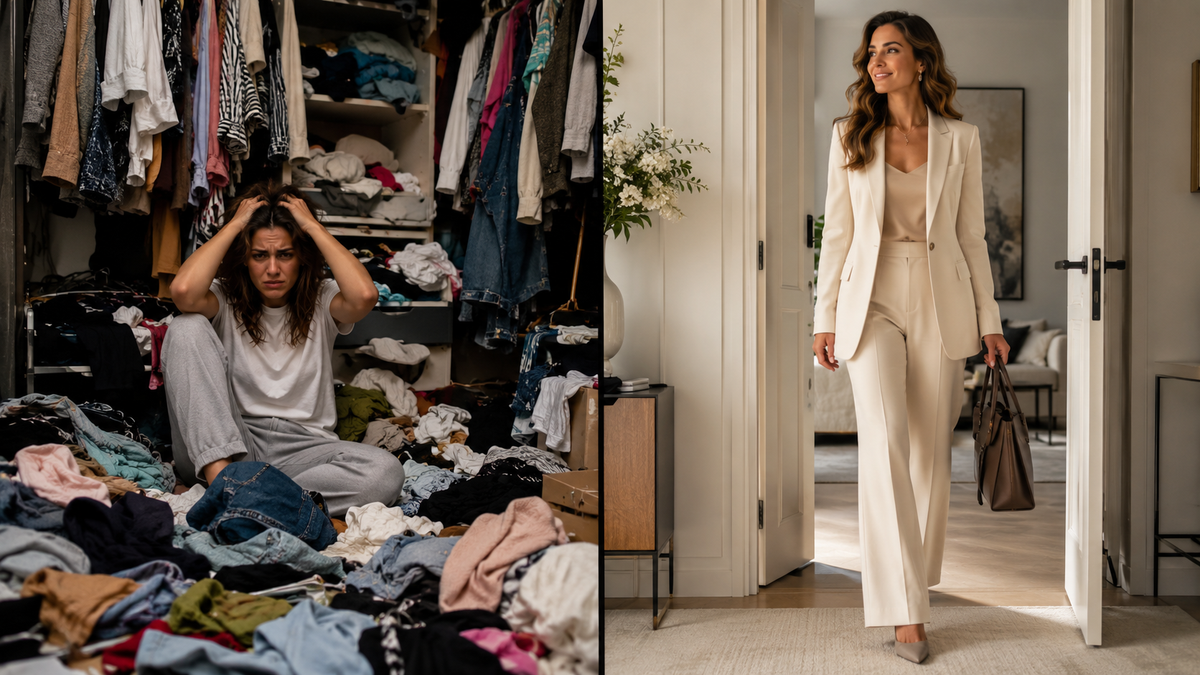
The Gap I Couldn't Unsee
I've been obsessed with fashion my whole life. Not in a trend-follower way - in a deeply personal way. I believe what you wear changes how you show up. It changes your posture, your energy, how you walk into a room. I've spent years helping friends and family figure out their style, understand what works for their body, build a wardrobe that actually reflects who they are.
And when I moved to New York City, something shifted in how I saw this.
NYC showed me what fashion actually looks like when people own it. In this city, you see peak minimalism walking next to peak maximalism. You see people who have found exactly who they are stylistically and wear it with complete confidence - not because Instagram told them to, but because they figured it out for themselves.
But you also see the other side. People who follow trends because they don't know what else to do. People who have wardrobes full of clothes and wear the same rotation every week because the rest feels too uncertain.
The gap between those two groups is not talent. It's not taste. It's access to the right information, at the right moment, about who you specifically are and what works for you.
A personal stylist bridges that gap. But a personal stylist costs $200 an hour. Almost nobody has one.
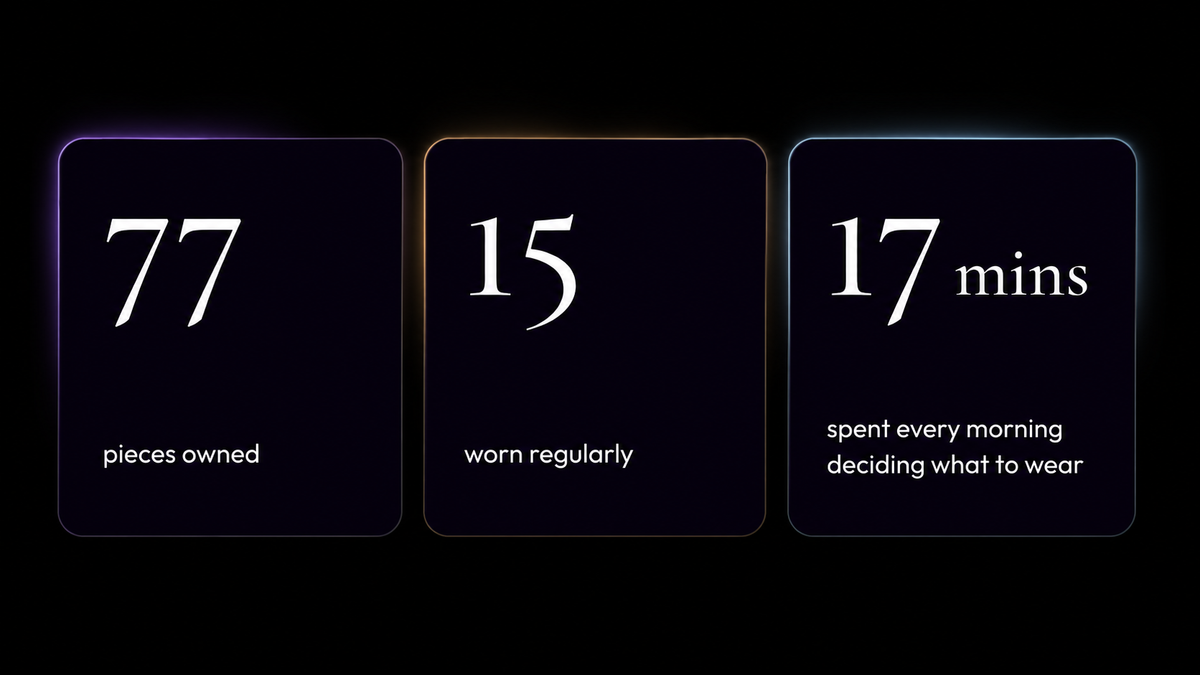
The numbers tell the rest of the story:
- 77 - the average number of pieces of clothing a person owns
- 15 - how many they actually wear regularly
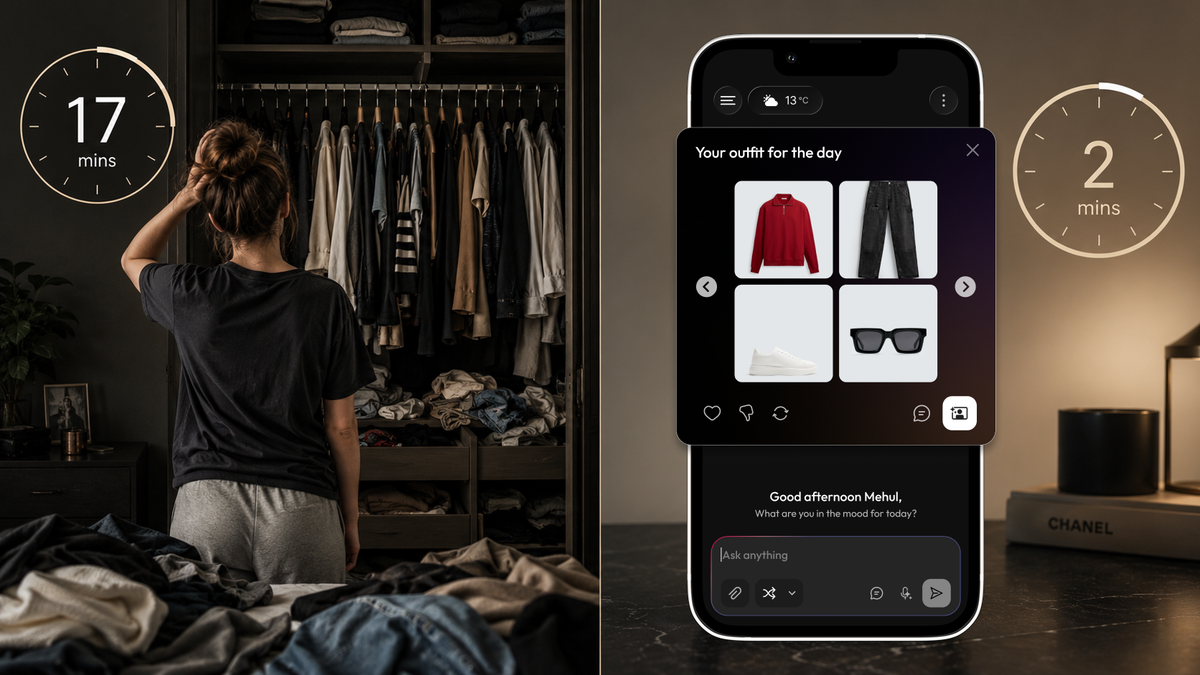
- 17 minutes - spent every morning figuring out what to wear
- 61% of people struggle to find something to wear despite a full wardrobe
- 98 out of 100 shoppers browse fashion ecommerce and leave without buying
- 70% of fashion shopping carts are abandoned every single day
These numbers describe hundreds of millions of people. And everyone has just accepted this as normal.
It's not normal. It's a solvable problem. And I couldn't unsee it.
Why I Actually Built It
I've always wanted to build something of my own. For years I knew that - I just never knew what.
Two things changed that.
The first was the technology. The AI models that can genuinely understand personal style at depth - the language understanding, the visual intelligence, the ability to learn someone over time didn't exist properly until 2023 and 2024. I did the deep dive into the space and realised: the tools are finally powerful enough to actually solve this. Not partially. Not approximately. Actually.
The second was New York City.
Moving here changed something in me. It made me more open - to ideas, to talking to people, to sharing things before they were ready, to taking swings I wouldn't have taken before. I started talking to users, then investors, then operators in the fashion and tech space. And the more conversations I had, the more clearly I could see the size of what this could be.
So I gave my notice on April 30th. Alone. Nobody would have let me make it if I'd asked. I didn't ask.
I was stressed. I still am. But underneath the stress is a clarity I haven't had in a long time. The end state is clear in my head. And I am going to get there.
What Elara Does
Elara is not a shopping app. It is not a trend aggregator. It is not another "you might also like" recommendation engine with a better UI.
Elara is an AI personal stylist - one that actually knows you. And it works in three interconnected ways.
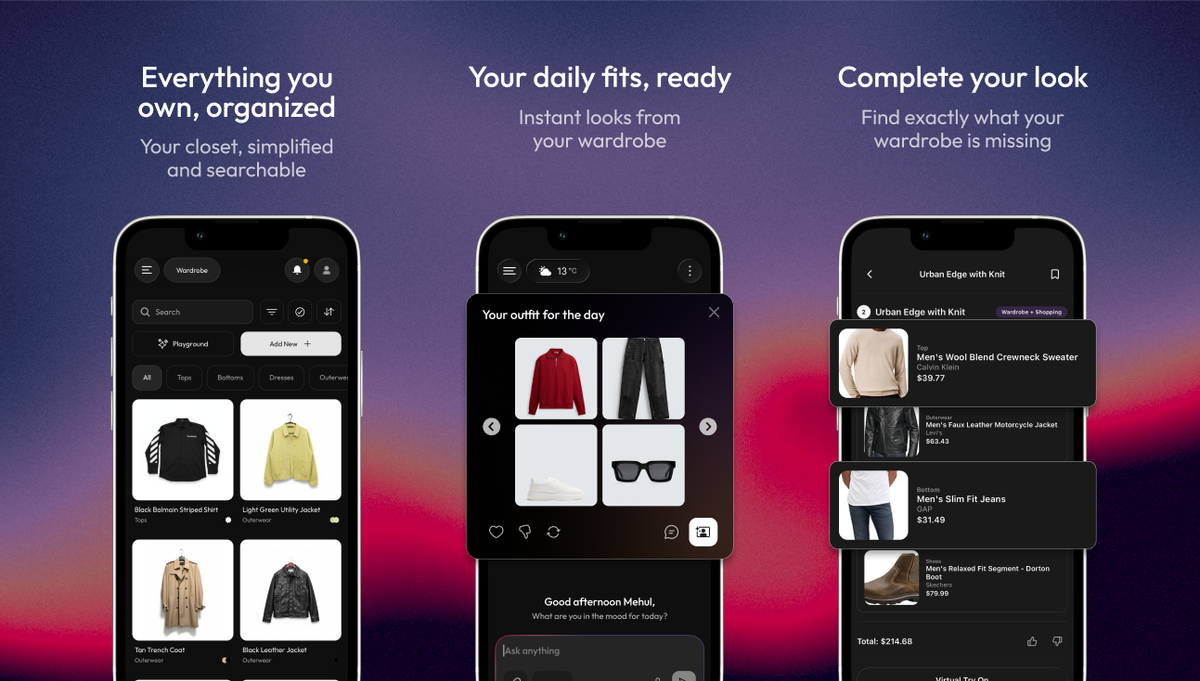
1. Your Wardrobe, Finally Understood
Most people don't have a wardrobe problem. They have a wardrobe intelligence problem. The clothes are there. The knowledge of how to use them isn't.
Elara fixes that from day one.
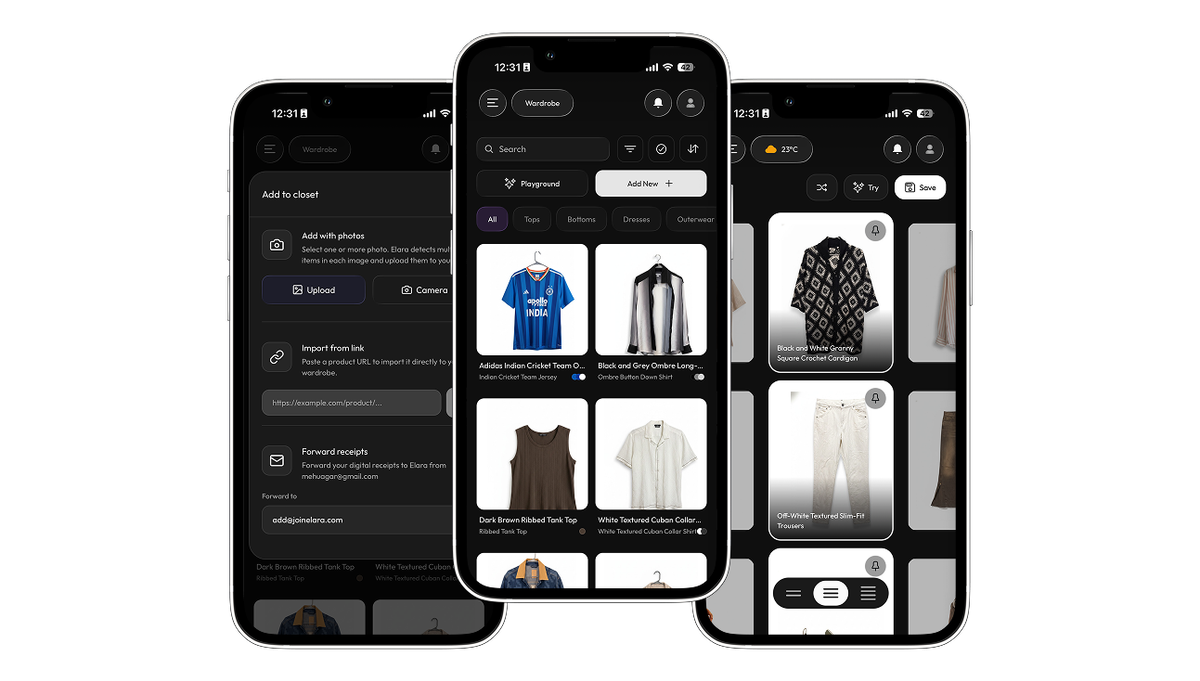
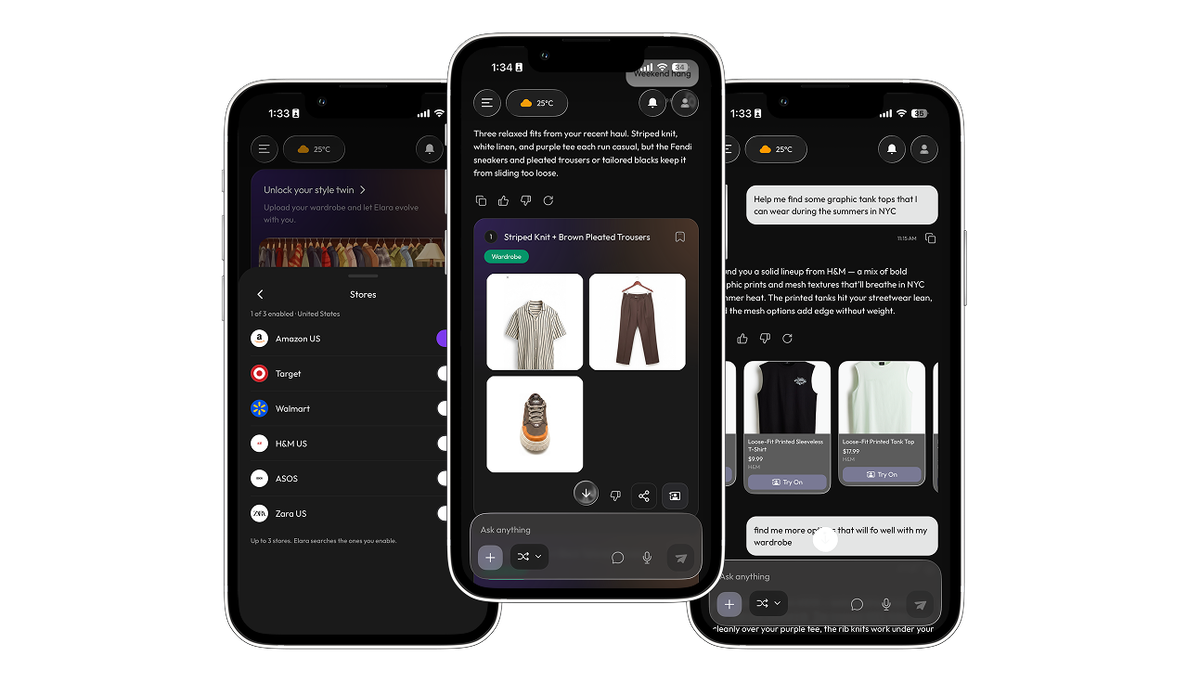
- Upload your clothes - photograph them directly in the app, import from your camera roll, or add via links. Takes about 10 minutes for a full wardrobe.
- Automatic categorisation - Elara identifies and organises everything: tops, bottoms, layers, shoes, accessories, and occasion type. You don't sort a thing.
- Complete wardrobe map - every item you own, searchable and understood. The clothes you forgot you had. The pieces you never figured out. All of them, now part of your style story.
2. A Style Profile That's Actually About You
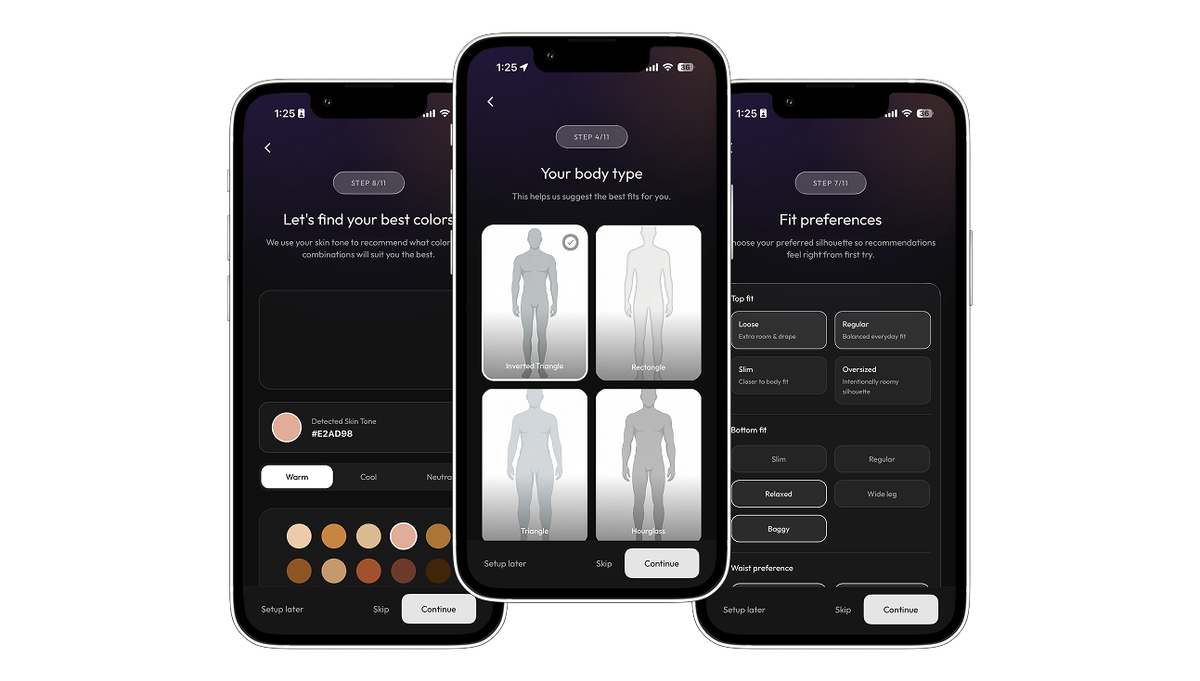
The style quiz doesn't ask "casual or formal?" That tells us nothing real about you.
Elara asks different questions:
- How do you dress when you want to feel powerful?
- What's the last outfit you wore where you felt completely right?
- What occasions matter most to you?
- What do you always reach for without thinking?
- Do you have pieces you love but never wear - and why?
Every answer builds a model of how you think about clothes. Not a label like "minimalist" or "streetwear." A real understanding of your decision-making, your confidence triggers, your style identity.
That profile is the foundation. Everything Elara does is built on top of it.
3. Daily Styling - From What You Own
Every morning, Elara does something no app has done properly before.
It looks at your wardrobe, your style profile, the weather, and your calendar - and tells you exactly what to wear today.
Not a trend. Not a suggestion to go shopping. An outfit from what you already have, built for your body, your occasions, your actual life.
Here's what that looks like in practice:
- Daily outfit - open the app, get today's look. Specific. Styled. From your own clothes.
- Occasion styling - "I have a dinner tonight." Tell Elara. It goes through your wardrobe and builds the right outfit for that specific context. The jacket you bought for a wedding and haven't touched since? Elara knows how to make it work for Tuesday evening.
Want this styled from your own closet?
Elara builds the look from what you own, then lets you try it on.
- Wardrobe unlock - pieces you own but never use get pulled into rotation. Forgotten purchases become everyday outfits.
- Learning loop - rate outfits. Tell it what you'd actually wear. The model adjusts. Every session it knows you a little better. After a few weeks it feels less like an app and more like a stylist who's known you for a long time.
4. Shopping That's Actually Personalised
When you do need something new - Elara shops for you.
Not by pushing trending products. Not by showing you what's popular this week. By identifying the actual gaps in your wardrobe - the specific occasion you have no outfit for, the layer that's always missing, the piece that would unlock 10 other combinations - and finding exactly that from stores you actually use.
In India: Myntra · Flipkart · AJIO · Amazon · Zara · H&M
In the US: ASOS · Walmart · Target · Amazon · Zara · H&M
No grids. No scrolling through thousands of products hoping something catches your eye. No guessing whether it'll suit you.
Elara already knows your size, your style, what's missing from your wardrobe, and how you like to dress. It finds what you need. You decide if you want it.
5. The Style Graph - Why Elara Gets Better Forever
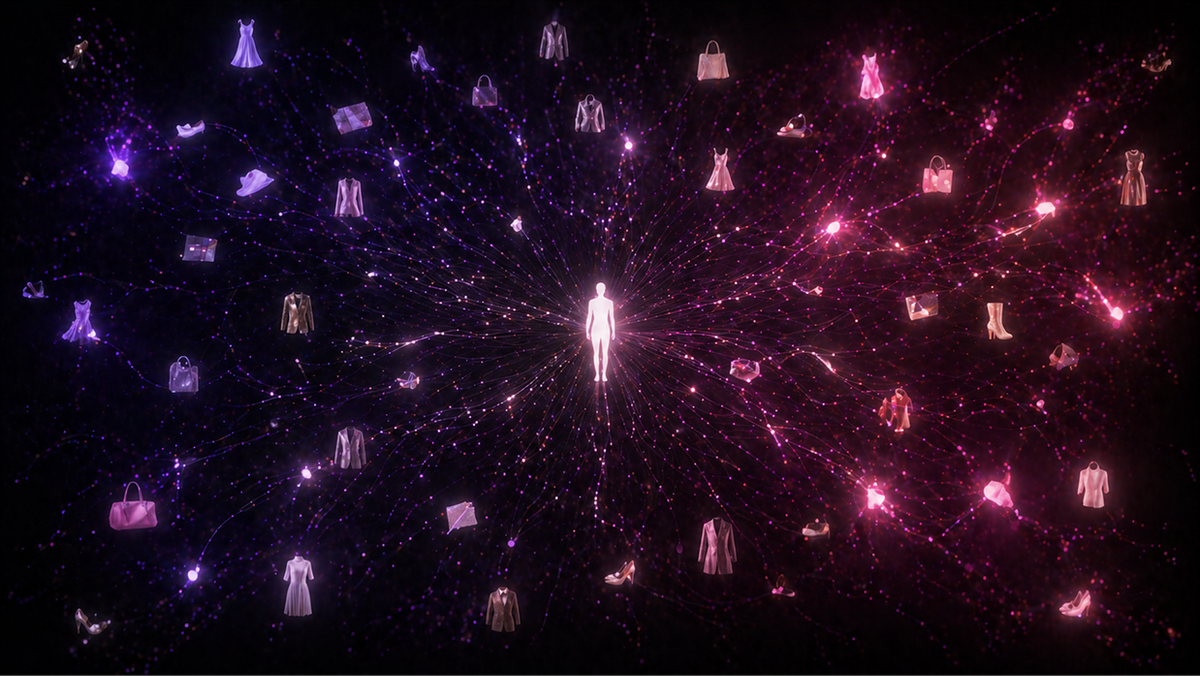
Underneath everything is something we call the Style Graph.
Every outfit you rate. Every item you upload. Every occasion you dress for. Every session you use the app. All of it trains a taste model that is uniquely yours.
This is what makes Elara genuinely different from anything that came before it.
Other apps: showed everyone the same things. Trends for the masses. Generic personalisation based on your last click.
Elara: builds a compounding model of who you are stylistically. The longer you use it, the better it gets. The better it gets, the more useful it becomes. The more useful it becomes, the more you use it.
Data compounds. Competitors can copy the product. They cannot copy months or years of your decisions.
The Bigger Vision
Today's launch is the first chapter. Not the whole story.
Here's what we're building toward.
The Immediate Future - Getting Dressed, Solved
In the near term, Elara becomes the layer that makes your mornings effortless.
- You wake up. Elara already knows the weather, your calendar, what you wore this week.
- You open the app. Your outfit is ready.
- If you need something new, Elara finds it without you having to scroll a single grid.
- Every day it knows you a little better than the day before.
Getting dressed goes from 17 minutes of uncertainty to 2 minutes of confidence. Every morning. That alone changes how you start your day.
The Medium Term - Fashion That Knows You Everywhere
As Elara builds a deeper understanding of your style, that intelligence becomes useful far beyond your morning routine.
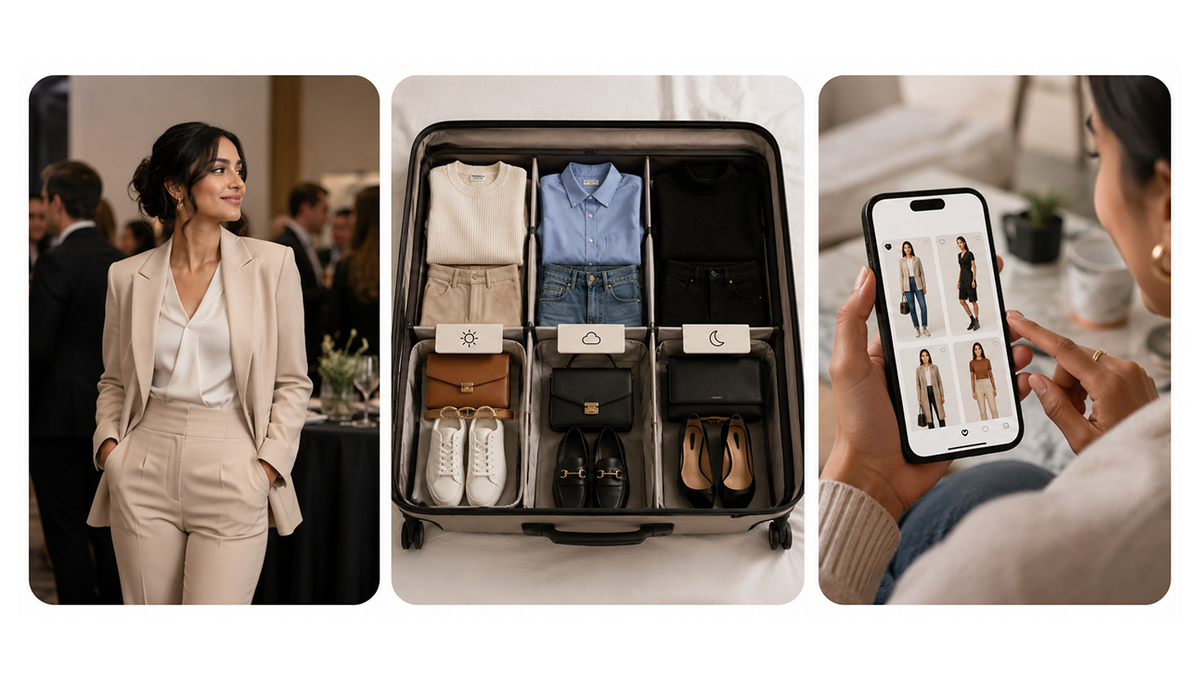
- Before a trip: Tell Elara where you're going, for how long, what you'll be doing. It builds a complete packing list from your wardrobe - every outfit, every occasion, nothing you'll regret leaving behind.
- Before an event: Job interview. First date. Wedding. Big dinner. Tell Elara what's happening and it dresses you for the exact moment, not a generic version of it.
- For new purchases: Stop buying things that don't fit your life. Elara knows what's genuinely missing from your wardrobe and only surfaces what would actually get worn.
The Long Term - AI-Native Fashion Commerce
This is where the vision gets big.
Imagine a shopping experience that doesn't start with a grid of products.
It starts with you.
- You tell Elara what you need. It finds it.
- Every page you visit is built specifically for you - not an algorithm's guess about what you might click, but a genuinely personalised space that reflects your style, your size, your budget, your wardrobe gaps.
- Brand stores. Influencer stores. Your favourite labels. All filtered through the lens of who you are and what actually works for you.
- Agentic features: Elara doesn't just recommend. It acts. Place an order, track it, manage a return - all from one place, across every platform you shop on.
Fashion commerce has never actually known the customer it was selling to. Every interaction has started from zero. Every session has treated you like a stranger.
Elara ends that.
The end state is an AI-native fashion experience where the product finds the person - not the other way around. Where getting dressed and shopping and managing your wardrobe are all one seamless, intelligent, deeply personal experience.
That world takes time to build. The hurdles will be real. But the destination is clear.
For Fashion Brands
Elara isn't just for consumers.
The same intelligence that helps someone get dressed every morning is also what every fashion brand needs to solve their biggest problems.
- Fashion ecommerce converts 1.9% of visitors on average. 98 out of 100 people leave without buying.
- 70% of shopping carts are abandoned daily - not because of price, but because shoppers don't know if something will actually work for them.
- 20–30% of purchases are returned for the same reason.
Every one of these numbers is a personalisation failure. And the fix isn't more ads or more promotions.
The fix is showing each customer how your product works in their actual life - with their wardrobe, their body, their occasions.
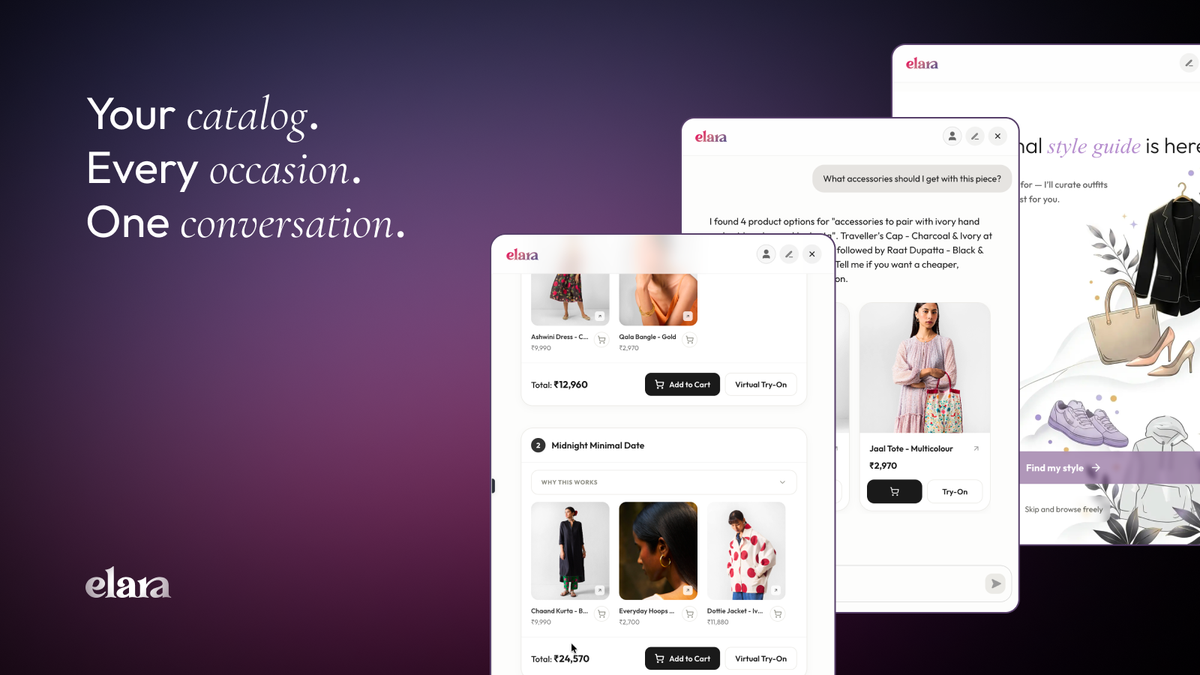
That's exactly what Elara's Shopify integration does. It's live today. Fashion brands can embed Elara's styling intelligence into their own storefront - giving every customer the personalised experience that currently only exists for the 1% who can afford a real stylist.
Our Shopify integration is live. Get in touch →
Thank You
To the 10,000+ people who joined the waitlist before we announced a single thing - you made this real.
To the 150+ beta testers and 200+ people who gave us their time for user interviews - you made this right.
To everyone who believed in this before there was anything concrete to believe in - this is for you.
Elara is live. The journey starts now.
And to the person reading this who stood in front of their wardrobe this morning, unsure - this was built for you. That feeling ends today.
Elara on iOS. Download
Android? Join the waitlist
Fashion brand? Our Shopify integration is live. Get in touch →
Built in New York City. For everyone who's ever stood in front of a full wardrobe and had no idea what to wear.
Your stylist, in your pocket
Stop reading about outfits. Start wearing them.
Elara knows your closet, shops every store and gets you dressed for any occasion.