
What to Wear Labor Day Weekend 2026: Relaxed Polish
Discover what to wear Labor Day weekend 2026 with relaxed polish styling. Five repeatable outfit formulas using breathable basics and one intentional detail—no shopping required.
 Mehul AgarwalFounder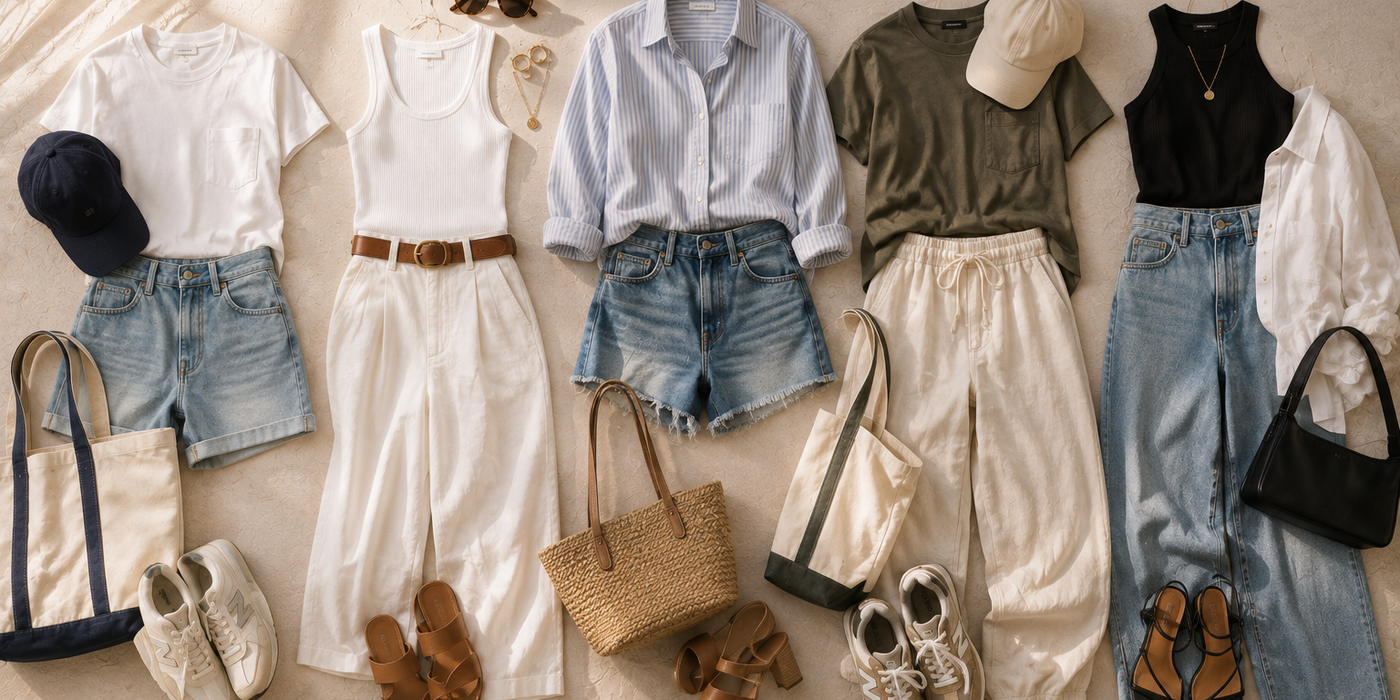
What to Wear Labor Day: 5 Outfit Formulas
Table of Contents
- Introduction: The Real Labor Day Dress Code
- Why 'Relaxed Polish' Is the Only Vibe Worth Chasing This Labor Day
- The 5 Labor Day Outfit Formulas (Built From What You Already Own)
- What to Do If You're Missing a Key Piece
- How to Layer Summer Into Fall Without Looking Like You're Wearing Two Seasons at Once
- Frequently Asked Questions
- The Bottom Line
Key Takeaways
- The dominant 2026 Labor Day style direction is relaxed polish: intentional but effortless, built from breathable basics plus one elevated detail (Editorialist).
- White is completely on-trend for Labor Day weekend — wear it confidently, per editorial consensus across InStyle, Marie Claire, and Editorialist.
- Five repeatable outfit formulas cover every setting — barbecues, beach days, city plans, dinners — without requiring new purchases (Marie Claire).
- The "one intentional detail" rule — a great accessory, matching set, or pop of color — is the fastest shortcut to looking polished (InStyle).
- Transitional pieces like barn jackets, loafers, and lightweight knits bridge the summer-to-fall shift without looking costume-y (Editorialist).
Introduction: The Real Labor Day Dress Code
You open the closet, stare at a full rack of clothes, and still have no idea what to wear for the long weekend. That specific frustration — too many options, zero clarity — is exactly what Labor Day dressing tends to produce.
Here's what fashion editors agree on: the dominant 2026 Labor Day style direction is relaxed polish, defined by Editorialist as outfits that look intentional but never overdone, built from breathable basics, light layering, and a few elevated accessories. It's not a trend that requires anything new. It's a decision-making filter you apply to what you already own.
One thing you can stop second-guessing immediately: white. The "no white after Labor Day" rule is functionally dead. Multiple major fashion editors — including those at InStyle, Marie Claire, and Editorialist — actively encourage all-white and white-forward looks for the holiday weekend itself. Wearing white on Labor Day isn't a style risk. Avoiding it is the more outdated move.
This article isn't a lookbook. There's no shopping list at the end. What follows is a system of five repeatable outfit formulas designed to work with what's already hanging in your closet — each built on a single principle: start with a breathable base, add one intentional detail, and stop there.
Why 'Relaxed Polish' Is the Only Vibe Worth Chasing This Labor Day
Relaxed polish sits at the intersection of comfort and intention. It's not sloppy — there's a clear point of view in the outfit. But it's not overdressed either — nothing signals effort for effort's sake. According to Editorialist, this aesthetic defines the strongest 2026 Labor Day style direction precisely because it refuses to be either extreme.
The reason it dominates this particular weekend is practical: Labor Day plans don't fit neatly into one dress code. The same day can move from a backyard barbecue to an afternoon at the beach to an evening dinner, and according to Marie Claire, the season's winning look is versatile rather than themed — showing up across all of those settings without requiring a wardrobe change. A head-to-toe trend look or a themed outfit collapses the moment plans shift. Relaxed polish doesn't.
The mechanism that makes this achievable from any starting point is what InStyle identifies as the "one intentional detail" principle: a matching set, a pop-of-color dress, or a well-chosen accessory — ballet flats, a straw or raffia bag, a baseball cap, a barn jacket — is all that separates a basic outfit from a polished one. You're not building a look from scratch. You're elevating what you already have with a single deliberate choice.
The fabrics and silhouettes that carry this aesthetic best are specific. Holr Magazine points to linen, poplin, lightweight knits, and maxi or midi lengths as the editor-recommended choices for handling both heat and shifting temperatures. These aren't trend fabrics — they're functional ones that happen to read as effortless. Before you pull out the five formulas, run a quick closet audit: any piece in those fabrics, in any of those silhouettes, is a potential starting point.
What this aesthetic is not is worth stating plainly. It's not a coordinated theme look. It's not a reason to buy anything. And it's not a style reserved for people with carefully curated wardrobes. The five formulas that follow are applications of this single principle — each one a different starting point, the same logic throughout.
The 5 Labor Day Outfit Formulas (Built From What You Already Own)
Each formula below follows the same structure: a base you likely already have, one intentional detail that does the heavy lifting, the settings where it lands well, and a wardrobe diagnostic question to make it actionable against your actual closet—not a fashion editor's.
Formula 1 — The Matching Set + One Flat
Base: Any matching set in linen, cotton, or knit—white, cream, sand, or a soft color. According to Editorialist, white and neutral sets are among the most consistent 2026 Labor Day recommendations across editorial sources.
One intentional detail: Ballet flats or strappy sandals. Per InStyle's 2026 coverage, ballet flats are the footwear detail that converts a casual set into something that reads as considered rather than coincidental.
Where it works: City plans, casual dinners, any day-to-evening transition.
Wardrobe diagnostic: Do I own two pieces in the same fabric or color that I've never worn together? A linen blazer and wide-leg trousers in the same neutral count. A matching set doesn't have to be sold as one.
Formula 2 — The Breezy Dress + Structured Bag
Base: Any midi or maxi dress in linen, poplin, or a lightweight knit. Holr Magazine specifically calls out maxi and midi lengths as the silhouettes that handle both heat and shifting temperatures best.
One intentional detail: A straw, raffia, or structured tote. InStyle identifies the straw or raffia bag as one of the clearest single-accessory signals of effortless summer polish—it does more visual work than almost any other addition.
Where it works: Beach days, afternoon barbecues, farmers markets, any outdoor afternoon plan.
Wardrobe diagnostic: Is there a dress I've been saving for the right occasion? A long weekend with no dress code and no wrong answer is exactly that occasion.
Formula 3 — The Button-Down + Linen Shorts
Base: A relaxed button-down—white, chambray, or a subtle stripe—tucked or loosely tied, paired with linen or tailored shorts. Editorialist lists the button-down and linen shorts combination as one of the most repeatable outfit formulas for 2026.
One intentional detail: A baseball cap or woven hat. According to InStyle, a well-chosen hat is one of the accessories that most reliably closes the gap between "dressed" and "put-together" without adding effort.
Where it works: Outdoor cookouts, beach towns, coastal errands, any setting where comfort is non-negotiable.
Want this styled from your own closet?
Elara builds the look from what you own, then lets you try it on.
Wardrobe diagnostic: What's the most-ignored button-down in my closet right now? If it hasn't been worn since spring, this is its moment.
Formula 4 — The Full White Outfit
Base: White-on-white—linen trousers or pants with a white top, poplin blouse, or simple tank. Editorial consensus across Editorialist, InStyle, Marie Claire, and Sew Mama Sew confirms that white is not only acceptable for Labor Day weekend but actively encouraged. The rule is retired.
One intentional detail: A bold or colorful accessory—earrings, a bag, a sandal in a contrasting tone—to give the all-white look a clear anchor point.
Where it works: Every setting. Marie Claire specifically notes that the season's strongest looks are versatile rather than occasion-specific, and all-white reads well from backyard barbecue to evening dinner.
Wardrobe diagnostic: Do I own white pieces I've been avoiding because of the "no white after Labor Day" rule? Wear them this weekend. Then keep wearing them.
Formula 5 — The Summer-to-Fall Bridge Look
Base: Any breezy summer starting point—a slip dress, linen shorts, light trousers—that you'd already wear in August.
One intentional detail: A barn jacket, a lightweight cardigan, or loafers swapped in for sandals. Editorialist identifies these three transitional pieces as the clearest 2026 signal that summer is shifting without forcing a full seasonal costume. The layer or shoe swap is the entire move.
Where it works: Evening events, cooler coastal areas, late-afternoon outdoor dinners where temperatures drop after 6 p.m.
Wardrobe diagnostic: Is there a jacket or lightweight layer I've been waiting to pull out for fall? Start now. Labor Day weekend is the natural on-ramp.
What to Do If You're Missing a Key Piece
Not every closet contains linen trousers and a matching set and a straw bag. Here are the four most common wardrobe gaps and a realistic substitute for each:
- No linen pants: Any tailored trouser in a light color or breathable fabric—cotton, poplin, even a lighter-weight chino—achieves the same relaxed-but-intentional silhouette.
- No matching set: A monochromatic outfit built from separate pieces in the same color family reads identically at a glance. A cream top with sand-toned shorts or a white blouse with ivory trousers creates the same visual cohesion without requiring a coordinated set.
- No barn jacket: A lightweight denim jacket or an oversized blazer in a neutral tone functions as the same transitional layer. The goal is a single structured piece over a soft base—the specific garment is secondary.
- No straw bag: Any structured tote or crossbody in a neutral—canvas, woven cotton, natural leather—carries the same visual weight. The straw bag is a texture signal, not a mandatory item.
Before buying any of these substitutes, ask: what do I already own that could unlock the most new outfit combinations? That's the diagnostic work Elara is built to do—conversationally, without requiring you to photograph or catalog anything upfront. The goal is to work with what exists, not to shop your way into a better wardrobe.
How to Layer Summer Into Fall Without Looking Like You're Wearing Two Seasons at Once
The most common layering mistake is treating the transitional piece as an afterthought—a jacket grabbed on the way out the door because the temperature dropped. That's how an outfit ends up looking confused. The fix is structural: the transitional piece should be the one intentional detail in the formula, not something added on top of an already-complete look.
Three specific moves make this work in practice:
- Barn jacket over a slip dress or breezy midi. The contrast between the soft dress and the structured jacket does the work. Neither piece is trying to be a fall outfit—together, they read as deliberate.
- Lightweight cardigan tied over the shoulders of a matching set. This adds texture and a mild warmth buffer without making the outfit heavier. Holr Magazine recommends lightweight knits specifically for their ability to function in both directions as temperatures shift.
- Swapping sandals for loafers on any formula. This is the lowest-effort seasonal signal available. The outfit stays identical; the shoe closes the gap between summer and fall without announcing it.
Fabric choice matters here. Linen, poplin, and lightweight knits—the fabrics Holr Magazine flags as best suited to temperature fluctuations—stay comfortable whether it's 85°F at noon or 65°F after sunset. They don't trap heat, but they also don't feel thin once the sun drops.
Transitional dressing isn't about introducing fall pieces. It's about identifying pieces that work in both directions—so you stop waiting for a seasonal permission slip to wear what's already in your closet.
Frequently Asked Questions
What to wear Labor Day weekend 2026 (without looking like you tried too hard)?
Start with a breathable base—linen, poplin, or a lightweight knit—in a neutral or soft color. Add one intentional detail: a straw bag, a pair of ballet flats, a barn jacket, or a pop of color. That's it. The five formulas in this article are just different combinations of this same principle.
Can I really wear white on Labor Day?
Yes. The "no white after Labor Day" rule is outdated. Editorial consensus across InStyle, Marie Claire, and Editorialist actively encourages all-white and white-forward looks for Labor Day weekend itself. If you own white linen trousers or a cream poplin blouse, wear them.
What if I don't own linen or any of the "recommended" fabrics?
Any breathable, lightweight fabric works—cotton, poplin, even a lighter chino. The goal isn't a specific fabric. It's comfort and a relaxed silhouette. Work with what you already have, and ask yourself which single piece would unlock the most new outfit combinations in your closet.
How do I know if an outfit is "relaxed polish" or just casual?
One intentional detail separates the two. A matching set is casual. A matching set with ballet flats is polished. Linen shorts and a button-down are casual. Linen shorts, a button-down, and a baseball cap are polished. The detail doesn't have to be expensive or complicated—it just has to be deliberate.
Should I buy new clothes to make these formulas work?
No. The entire premise is that these formulas work with what you already own. If you're missing a piece, use the substitutes listed in the "What to Do If You're Missing a Key Piece" section. Before buying anything, identify which single item from your existing closet would create the most new outfit combinations. That's always the smarter move.
The Bottom Line
The principle that runs through every formula in this article is simple: start with a breathable base, add one intentional detail, and stop there. That's the exact definition of relaxed polish—outfits that look intentional but never overdone. InStyle's 2026 coverage confirms that this approach is the fastest route to looking put-together without looking like you spent a week planning it.
The white-after-Labor-Day rule is retired. Editorial consensus across InStyle, Marie Claire, and Editorialist actively encourages all-white looks for the holiday weekend—so if you've been holding back white linen trousers or a cream poplin blouse, this is your permission slip to stop waiting.
The goal was never a themed outfit. As Marie Claire frames it, the season's strongest looks are versatile by design—equally at home at a backyard cookout, a beach afternoon, or an evening dinner. That versatility is what makes the formula worth memorizing.
If matching the right formula to your actual closet still feels like the hard part, that's exactly what Elara is built for—a conversational AI that does the wardrobe diagnostic for you and tells you what to wear without the guesswork. Try it at joinelara.com, or read next: How to Build a Capsule Wardrobe from What You Already Own.
Your stylist, in your pocket
Stop reading about outfits. Start wearing them.
Elara knows your closet, shops every store and gets you dressed for any occasion.