What to Wear on First Day of College: 5-Piece Formula
What to wear on your first day of college doesn't require a shopping haul. Use this 5-piece formula to build a confident outfit from clothes you already own.

What to Wear on the First Day of College: 5-Piece Formula
Table of Contents
- Introduction: Why Your First-Day Outfit Feels Like Such a Big Deal
- The 5-Piece Formula Explained
- 2026 Campus Trend Context: What's Actually on College Campuses Right Now
- Occasion Micro-Moments: One Outfit, Three Settings
- Building the Formula From What You Already Own
- Confidence Comes From a System, Not a Shopping Haul
- FAQ: Your Questions About the First-Day Outfit Formula
Key Takeaways
- The smartest first-day outfit follows a 5-piece formula: top + bottom + shoes + layer + one accessory — all buildable from what you already own.
- Campus style in 2026 leans toward oversized silhouettes, baggy denim, retro sneakers, and preppy-revival layering.
- 34% of college students prioritize aesthetics, but 31% prioritize cost — this formula respects both.
- Confidence on day one comes from a system, not a shopping haul.
Introduction: Why Your First-Day Outfit Feels Like Such a Big Deal
The first day of college is one of the rare moments when getting dressed carries genuine social stakes. You're walking into rooms full of people who have no prior context for who you are — your outfit is doing real communicative work before you've said a word. That pressure is legitimate, and it's worth taking seriously rather than dismissing with "just wear whatever."
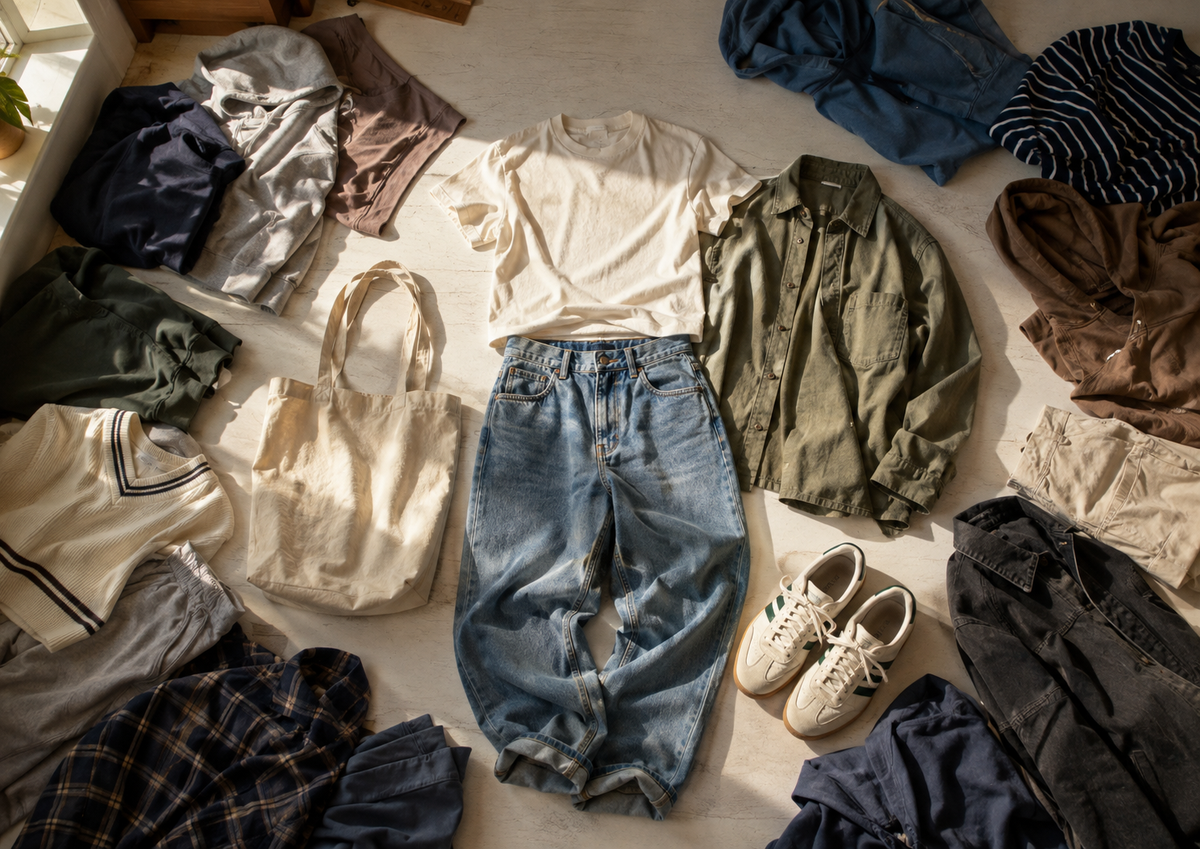
The problem is that most existing advice swings between two unhelpful extremes. Trend-focused listicles push a shopping haul that ignores financial reality — a significant oversight, given that 34% of college students prioritize aesthetics in clothing while 31% prioritize cost. Those two motivations are nearly equal, which means any useful advice has to serve both. On the other end, generic guidance ("just wear jeans and a tee") ignores the specific visual landscape of 2026 campuses and leaves students with no actual decision framework.
This article offers something different: a 5-piece formula — top, bottom, shoes, layer, accessory — that functions as a decision system, not a purchase checklist. Every slot can be filled from what you already own. The sections that follow break down each piece of the formula, contextualize it within 2026's actual campus trends, show you how one outfit handles multiple settings in a single day, and explain how to build the whole thing from your existing wardrobe. No haul required.
The 5-Piece Formula Explained
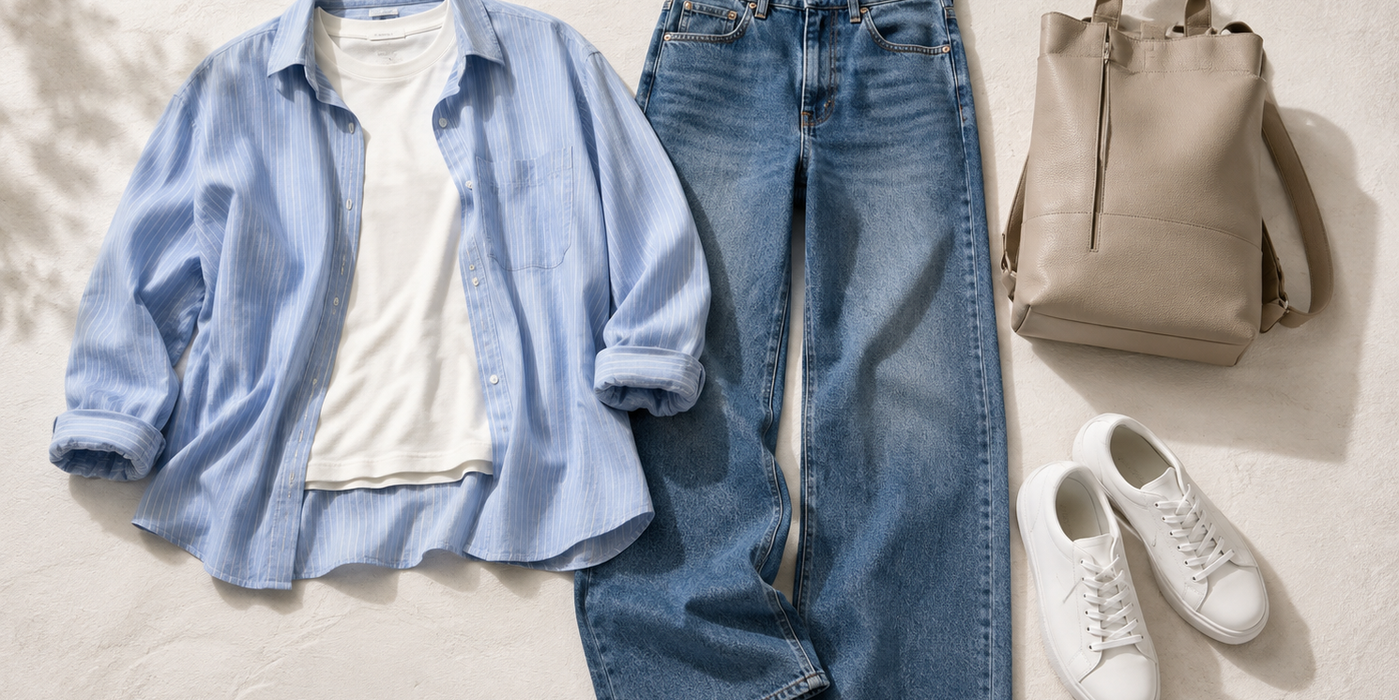
Every successful first-day outfit fills five slots: Top, Bottom, Shoes, Layer, and Accessory. That's the entire framework. The formula works not because it's stylish in the abstract, but because it's engineered for the specific demands of day one — long stretches of walking an unfamiliar campus, moving between climate-controlled classrooms and outdoor quads, and transitioning from a morning lecture to an afternoon dining hall without time to change.
Here's what each slot looks like in practice:
- Top: A clean crewneck tee, a polo, a ribbed knit tank, or a simple button-down. The goal is a solid or subtly textured base that doesn't compete with the layer.
- Bottom: Baggy or straight-leg jeans, relaxed trousers, or tailored shorts. Fit matters more than brand — the bottom should feel comfortable enough to wear for six or more hours without adjusting.
- Shoes: Retro sneakers, clean trainers, loafers, or Birkenstock-style clogs. Comfort is non-negotiable here; blisters from new shoes on day one are a real and avoidable problem.
- Layer: A light jacket, an overshirt, a cardigan, or a blazer. This slot does double duty — it handles temperature variation between indoor and outdoor environments, and it's the piece that most easily shifts the outfit's register from casual to put-together.
- Accessory: A tote, a crossbody bag, a watch, or a cap. One is enough. The accessory slot is where personality enters the formula without overwhelming it.
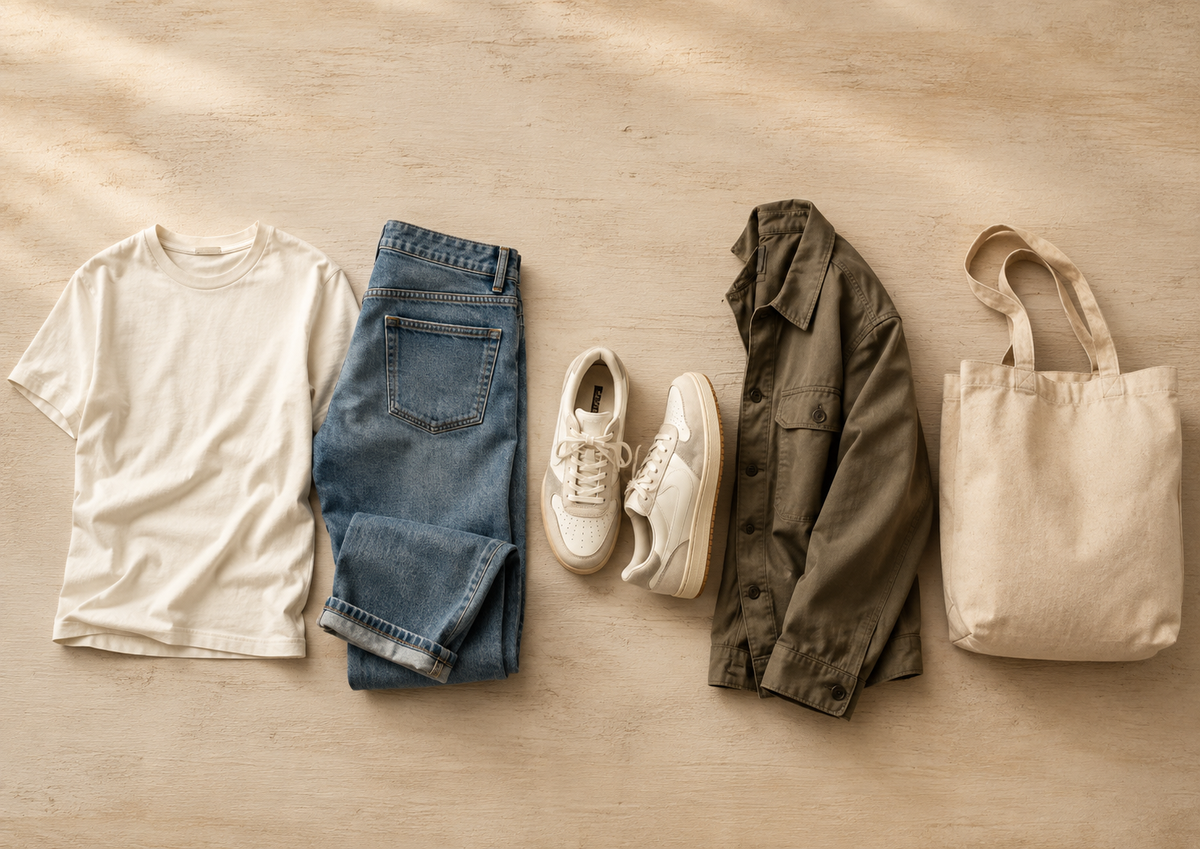
According to Circana, denim, sneakers, and casual sportswear are the dominant categories shaping back-to-school shopping in 2026 — which means the Bottom and Shoes slots of this formula align directly with what students are already buying and wearing.
The formula's deeper logic is coherence without over-coordination. You don't need pieces that match; you need pieces that don't fight each other. A neutral or tonal color story across the five slots — think earth tones, greyscale, or a single muted accent — creates visual unity without requiring any outfit-planning expertise.
Critically, all five slots are fillable from an existing wardrobe. This is a curation exercise, not a shopping trip. Before concluding you're missing something, pull one candidate item per slot from what you already own and lay them out together. Most students discover the formula is already there — it just hasn't been assembled as a system before.
2026 Campus Trend Context: What's Actually on College Campuses Right Now
Knowing that the formula's five slots can be filled from your closet is one thing — knowing that what you pull out will actually land well on campus is another.
Real college campuses in 2026 look nothing like a fashion week recap. According to Her Campus, SewMamaSew, and Looqs, the dominant campus silhouette right now is relaxed and deliberately unbothered: oversized and wide-leg pieces lead, with a strong preppy revival — polos, striped knits, clean layering pieces — and matching sets appearing consistently across reporting. These aren't aspirational trends students are working toward. They're already on campus, which means leaning into them reads as socially aware rather than try-hard.
Campus-specific trend reporting adds more detail. According to AOL and campus-focused coverage, baggy jeans, oversized outerwear, Birkenstock Boston clogs, and retro-inspired sneakers are the recurring favorites among actual college students — not editorial suggestions, but observed patterns. Notice how precisely these map onto the formula's Bottom, Layer, and Shoes slots.
Ready to upgrade your wardrobe?
Get the Elara app for AI-powered styling and virtual try-ons.
The broader 2026 fashion direction reinforces this further. Coverage from dlook and the Printful blog consistently emphasizes sporty-relaxed dressing, a sustainability and resale mindset, and nostalgic references executed with a cleaner, less maximalist finish. That last point matters: 2026 campus style isn't chaotic vintage — it's considered and edited, which is exactly what a well-assembled five-piece formula produces.
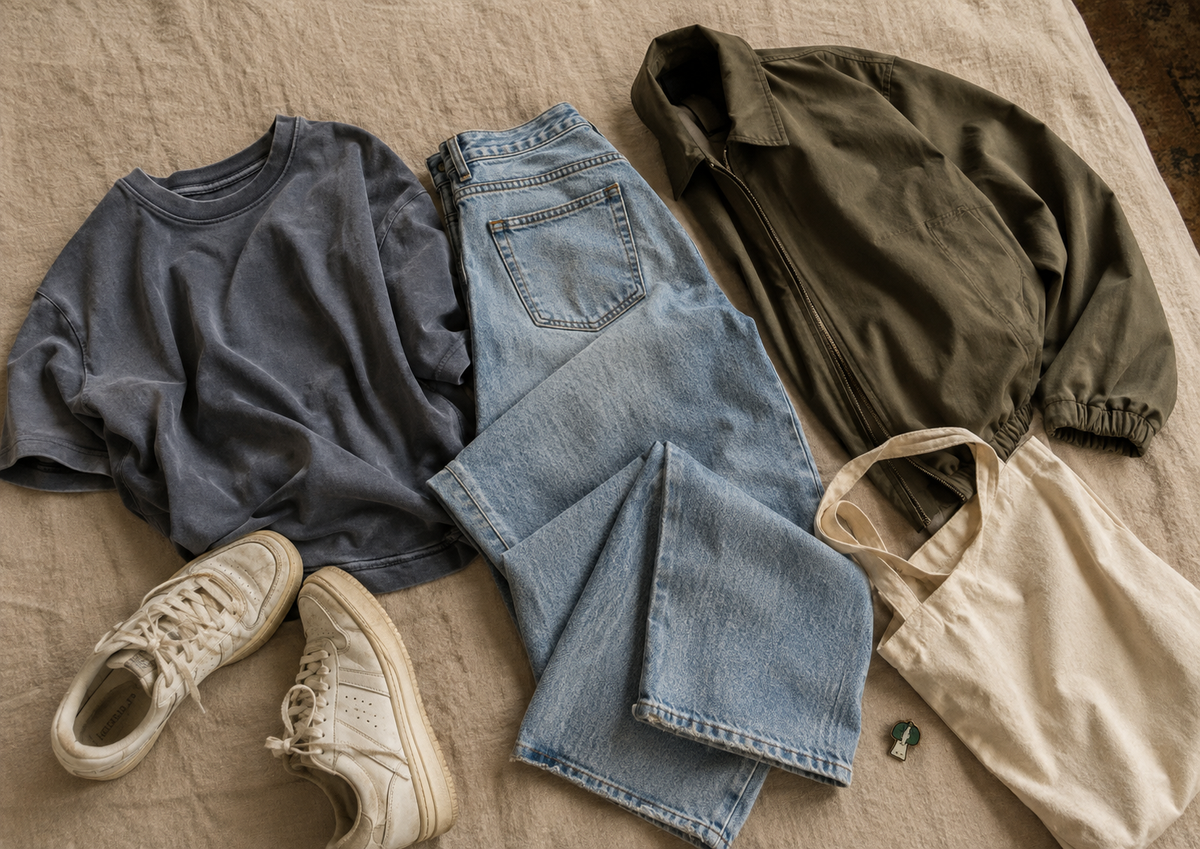
Budget context belongs here too. McKinsey & Company projects the global fashion industry will post only low single-digit growth in 2026 — a signal that value-conscious dressing has moved from necessity to norm. Students arriving in head-to-toe new looks are the exception, not the expectation. Arriving in a thoughtfully assembled outfit built from existing pieces doesn't read as underprepared; it reads as current.
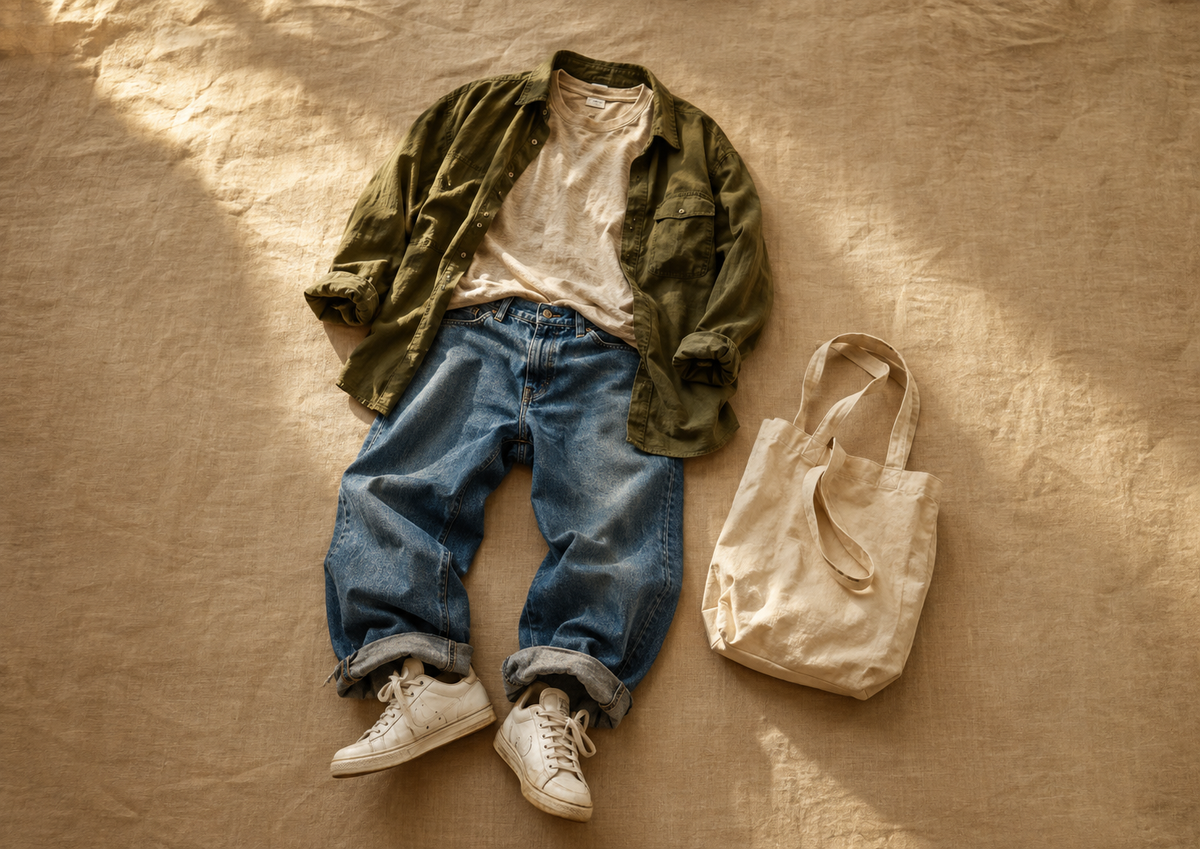
The practical takeaway: the 2026 campus uniform maps almost perfectly onto the five-piece framework. Oversized top, wide-leg or baggy bottom, retro sneaker, overshirt or jacket as layer, tote or crossbody as accessory. The formula isn't a workaround for trend-following — it is the trend.
Occasion Micro-Moments: One Outfit, Three Settings
Day one of college isn't a single event. It's a sequence — morning class, dining hall at noon, a dorm floor hangout or campus social in the evening — and each of those settings carries a slightly different visual and functional demand. Most outfit advice ignores this entirely, which is why students either overpack or feel underdressed by 3pm.
The three micro-moments worth planning for are class, dining hall or casual midday, and social or evening. Class rewards a pulled-together, functional look: the layer stays on (lecture halls and seminar rooms run cold), the tote carries your notebook, and clean sneakers handle the walking. Dining hall and casual midday call for something more relaxed in energy — the layer comes off or gets tied loosely around the waist, and the overall feel shifts from structured to easy without changing a single piece. For social or evening settings, the adjustment is just as simple: swap the tote for a crossbody, add a watch or a pair of earrings if that's your instinct, and put the layer back on for a slightly more intentional finish.
Three distinct settings. Zero outfit changes. The formula handles all of them because the pieces are chosen to flex, not to lock you into one context.
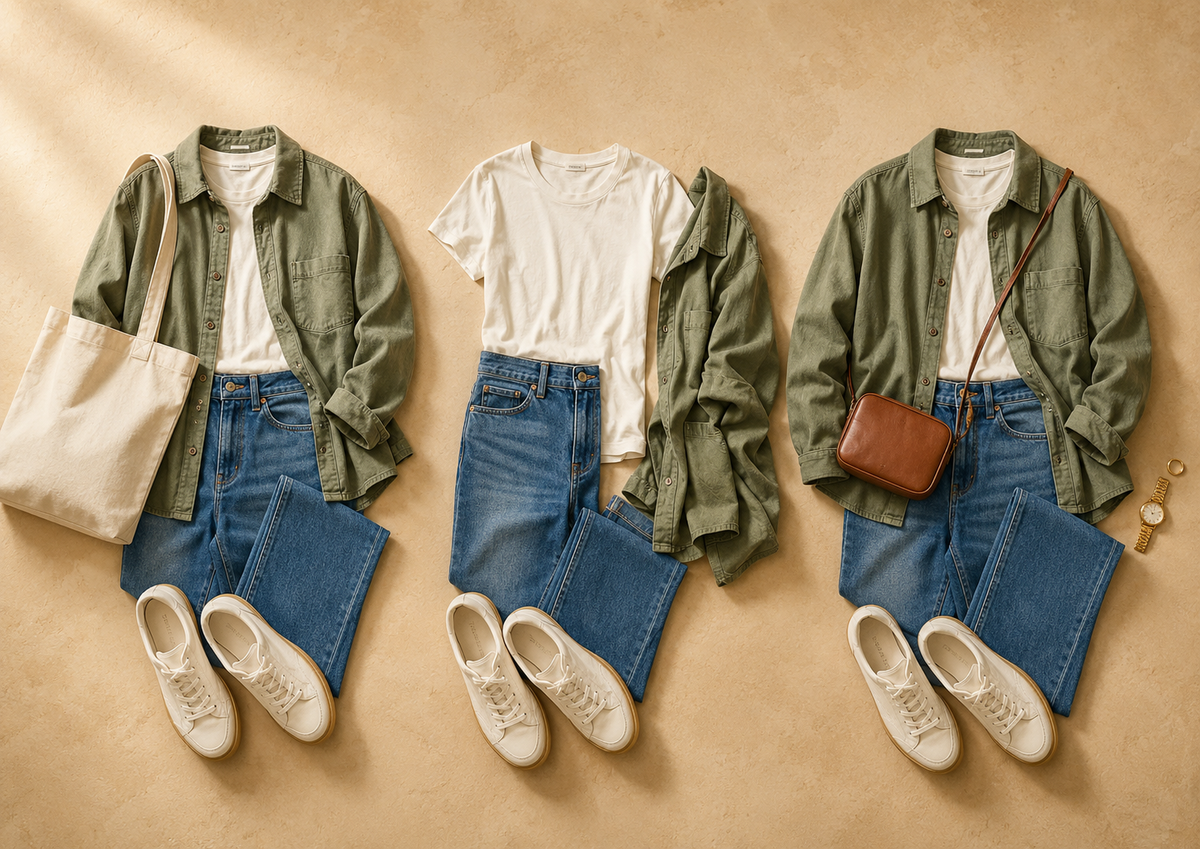
Color strategy amplifies this flexibility. Choosing neutral or tonal base pieces — earth tones, greyscale, a single muted accent — means the layer and accessory carry the mood-shifting work. A cream tee and straight-leg jeans read differently under a slate-blue overshirt than under a camel cardigan, even though the base is identical.
Temperature variation is the other practical problem the formula quietly solves. Students with back-to-back morning and late-afternoon classes move through a real range — 65°F outside at 8am, 58°F in an over-air-conditioned classroom at 10am, warmer again by lunch. The Layer slot is specifically designed for this: it's not decorative, it's functional. Choosing it well means you're never uncomfortable, regardless of where the day takes you.
Building the Formula From What You Already Own
The formula only works if you trust that your existing wardrobe can fill it. For many students, that trust is the actual obstacle.
According to the flytedesk College Student Research Statistics Library, 31% of college students prioritize cost nearly as much as aesthetics when choosing what to wear. That tension — wanting to look good while being genuinely budget-conscious — is exactly what this section addresses. The answer isn't a shopping list. It's a three-step closet audit.
Step one: pull one candidate per slot. Go through your wardrobe with the five slots in mind — Top, Bottom, Shoes, Layer, Accessory — and pull the first item per slot that fits the 2026 direction: relaxed fit, clean lines, layerable. Don't overthink it. One item per slot is enough to start.
Step two: check for comfort over a full campus day. Hold each piece against the reality of wearing it for six or more hours — walking between buildings, sitting through lectures, standing in a dining hall line. If anything pinches, restricts, or requires constant adjustment, swap it out.
Step three: check for color coherence. Lay all five pieces together. Do they share a tonal range, a color story, or at least a consistent level of saturation? If one piece fights the others visually, replace it with something that doesn't — not something new, just a different option from the same closet.
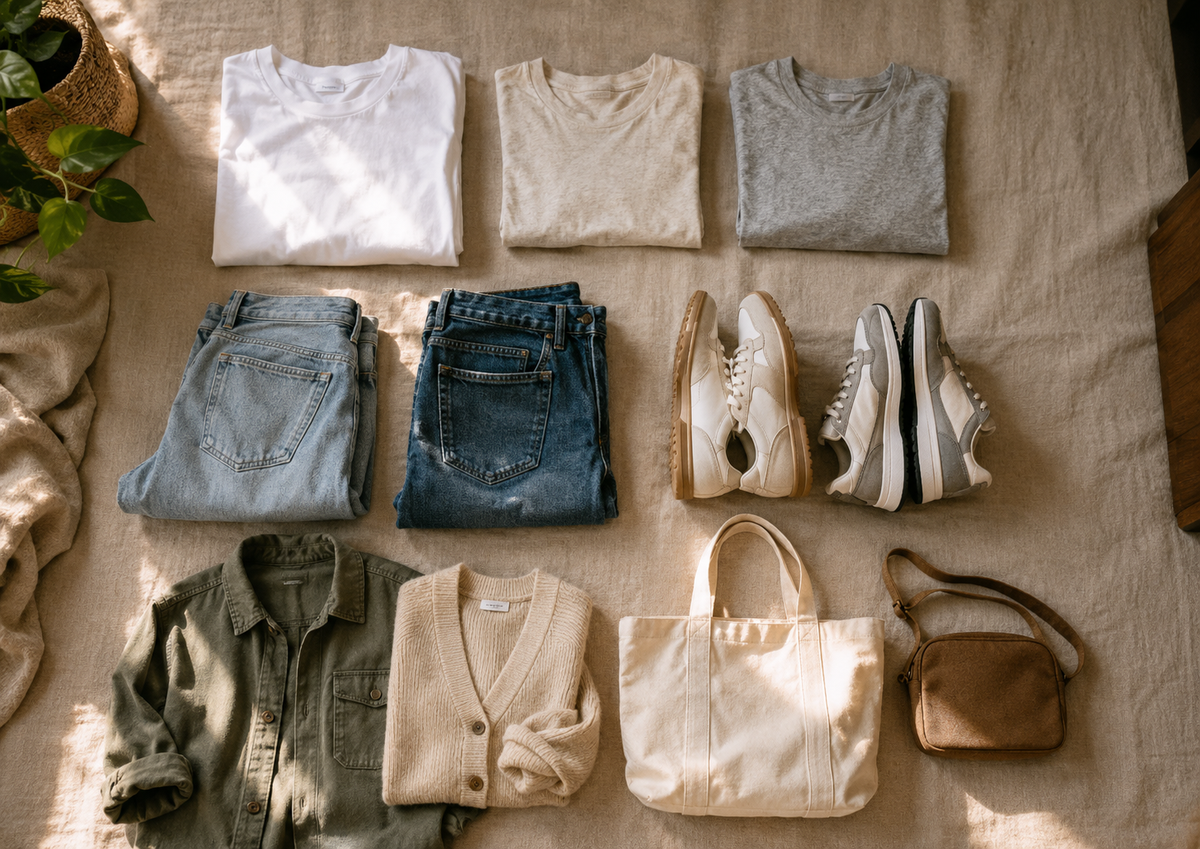
The "I have nothing to wear" feeling that strikes before a high-stakes day is almost always a curation problem, not a wardrobe gap. Most students own a clean tee, a pair of jeans, a sneaker, something to layer with, and a bag. The pieces exist — they just haven't been assembled as a deliberate system before.
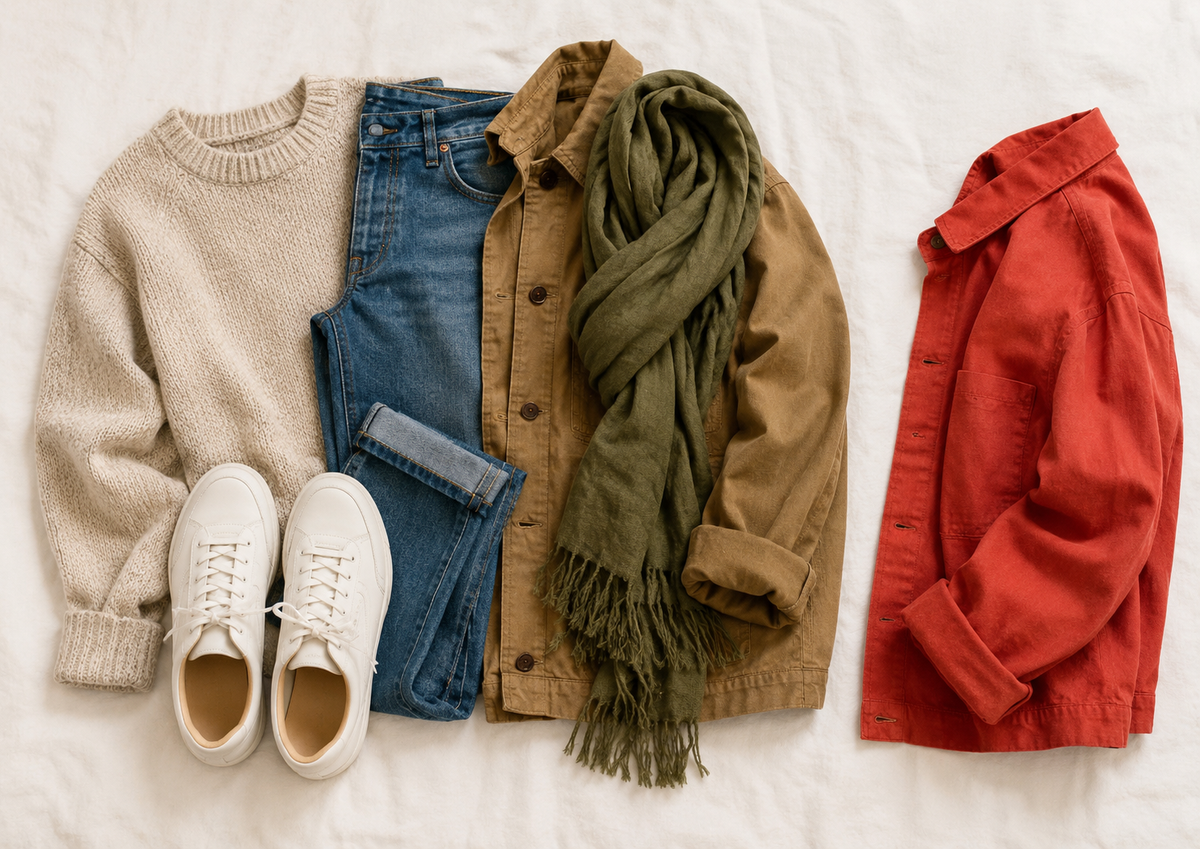
This is where Elara comes in. Rather than directing you toward new purchases, Elara works through your existing wardrobe conversationally, surfacing combinations you already own but haven't thought to put together. For students navigating that first-day pressure on a real budget, that kind of curation support is more useful than any shopping guide.
A first-day outfit assembled from what you already own — and assembled well — will carry more genuine confidence than anything bought in a rush. The formula makes that assembly process repeatable, not just lucky.
Confidence Comes From a System, Not a Shopping Haul
That repeatable quality is exactly what makes the 5-piece formula worth keeping long after orientation week ends. Top, bottom, shoes, layer, accessory — five slots, infinite combinations, zero dependency on a last-minute shopping trip.
The data supports this approach. According to flytedesk's College Student Research Statistics Library, 34% of students prioritize aesthetics while 31% prioritize cost — a gap so narrow that any outfit strategy ignoring budget is already working against half the room. McKinsey projects the global fashion industry will post only low single-digit growth in 2026, a signal that value-conscious dressing isn't a compromise position — it's the cultural default. Building from what you own isn't a workaround. It's the move.
The formula's real power is that it doesn't expire on day two. Every new college situation — job fair, club meeting, weekend social, study group that unexpectedly turns into dinner — is just another moment where five well-chosen slots do the work. The pieces change; the system stays the same.
FAQ: Your Questions About the First-Day Outfit Formula
What if I genuinely don't have one of the five pieces?
Start with what you have. If you're missing shoes, borrow from a friend or roommate for day one — you'll have time to fill that gap after. If you're missing a layer, a sweatshirt counts. The formula is flexible because it has to be. The point is the system, not perfection.
Can I wear the same outfit multiple days during the first week?
Absolutely. The first week of college is chaos. Wearing the same five pieces in different combinations for three or four days straight is completely normal and not something anyone will notice or judge. Save the variety for when you've settled in.
How do I know if my color choices are working together?
Take a photo of all five pieces laid out together in natural light. Step back and look at it on your phone. If your eye travels smoothly across the pieces without any one color jumping out aggressively, you're good. If one piece looks like it belongs to a different outfit, swap it.
Should I buy new pieces to fill the formula?
No. The entire point is that you don't have to. If after a genuine closet audit you're missing a piece, that's a future purchase — not a first-day problem. Day one works with what exists.
If you want to see what your existing wardrobe is actually capable of for what to wear on the first day of college, Elara can help you find out. The app works conversationally through your closet, surfacing outfit combinations you already own but haven't thought to assemble. See how Elara works →

Your AI Stylist is Here.
live on the App Store & Google Play
Available on iOS and Android for seamless access anytime, anywhere.