What to Wear to a Wedding: 2026 Guest Style Guide
What to wear to a wedding in 2026 means embracing intentional style over generic formalwear. Learn dress codes, seasonal tips, and how to style pieces you already own.

What to Wear to a Wedding as a Guest: Dress Codes Decoded
Table of Contents
- Key Takeaways
- Introduction: Why 'Just Wear Something Nice' No Longer Cuts It
- 2026 Wedding Guest Trends: What's Actually Changed
- What to Wear to a Wedding: Women's Guest Attire Guide
- What to Wear to a Wedding as a Guest: Men's Attire Guide
- Formal Wedding Dress Codes: A Plain-English Decoder
- What to Wear to a Wedding in Winter (and Other Seasons)
- The Wardrobe-First Approach: Style What You Own Before You Shop
- Conclusion: Dress with Intention, Not Anxiety
Edited Article
Key Takeaways
- Wedding guest dressing in 2026 is defined by deliberate personalization—polished, expressive looks outperform generic formalwear every time.
- Women should lean into romantic silhouettes and jewel tones; men are moving toward linen suits and pastel separates.
- The one rule that never changes: never wear white, ivory, cream, or champagne.
- You likely already own something that works—the key is knowing how to remix it for the occasion.
- Elara's AI stylist can scan your existing wardrobe and build a wedding-ready outfit before you buy anything new.
Introduction: Why 'Just Wear Something Nice' No Longer Cuts It
Bridgerton-style weddings have surged 191% year-over-year, according to Elle UK—and that single statistic tells you everything about why wedding guest dressing has become genuinely complicated. The aesthetic stakes at modern weddings are higher than they've been in a generation, and "something nice" no longer signals that you've understood the assignment.
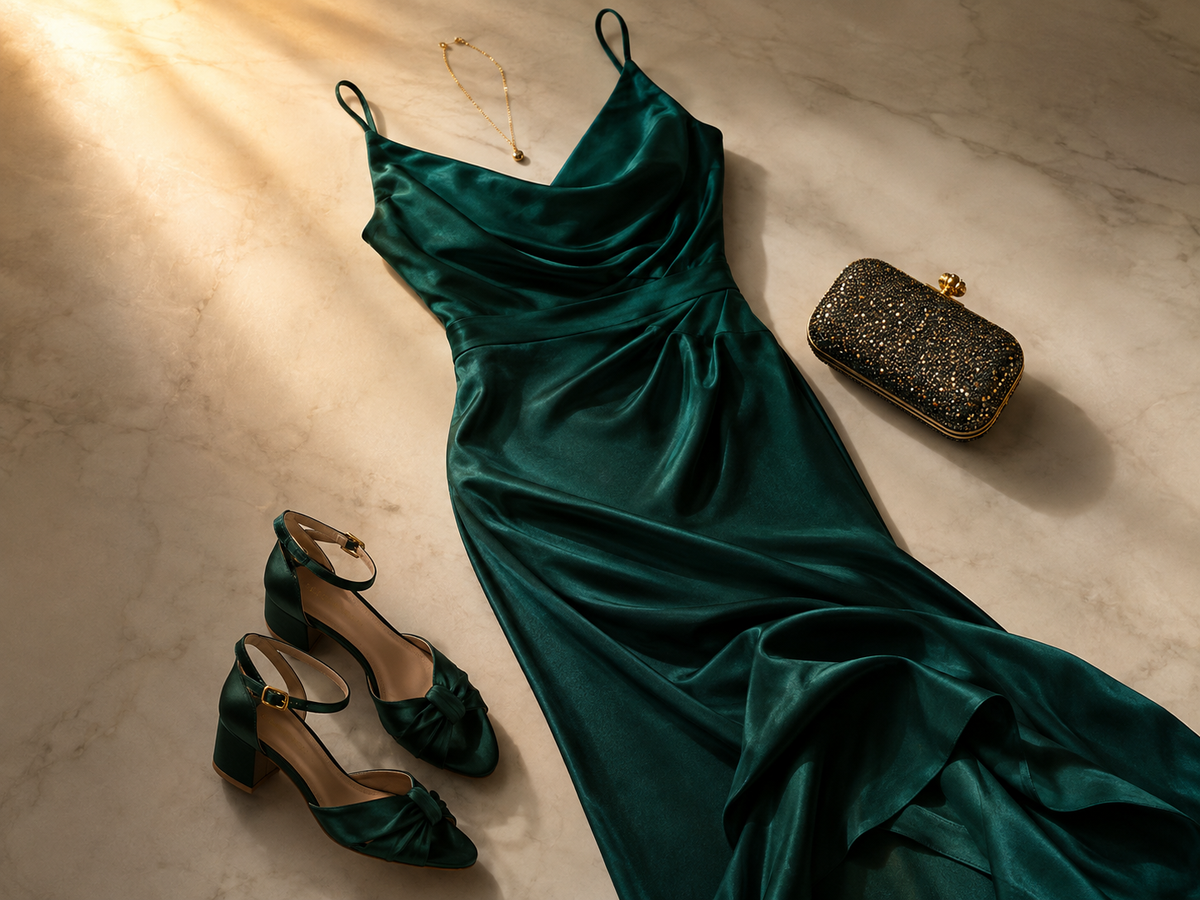
Most people feel this acutely. You stand in front of a full closet, scroll through three browser tabs of dresses, and still feel like you have nothing to wear. That anxiety is real, and it's not a personal failing—it's a symptom of how wedding aesthetics have shifted.
Vogue describes 2026 bridal fashion as defined by "deliberateness," a word that extends naturally to guests. Couples are making intentional, highly personal choices about every aesthetic detail of their wedding day, and guests who default to a safe black dress or a last-minute suit rental increasingly stand out—for the wrong reasons.
This guide cuts through the noise. It covers dress codes by formality level, practical guidance by gender, seasonal considerations, and—crucially—how to work with what you already own before spending a penny on something new.
2026 Wedding Guest Trends: What's Actually Changed
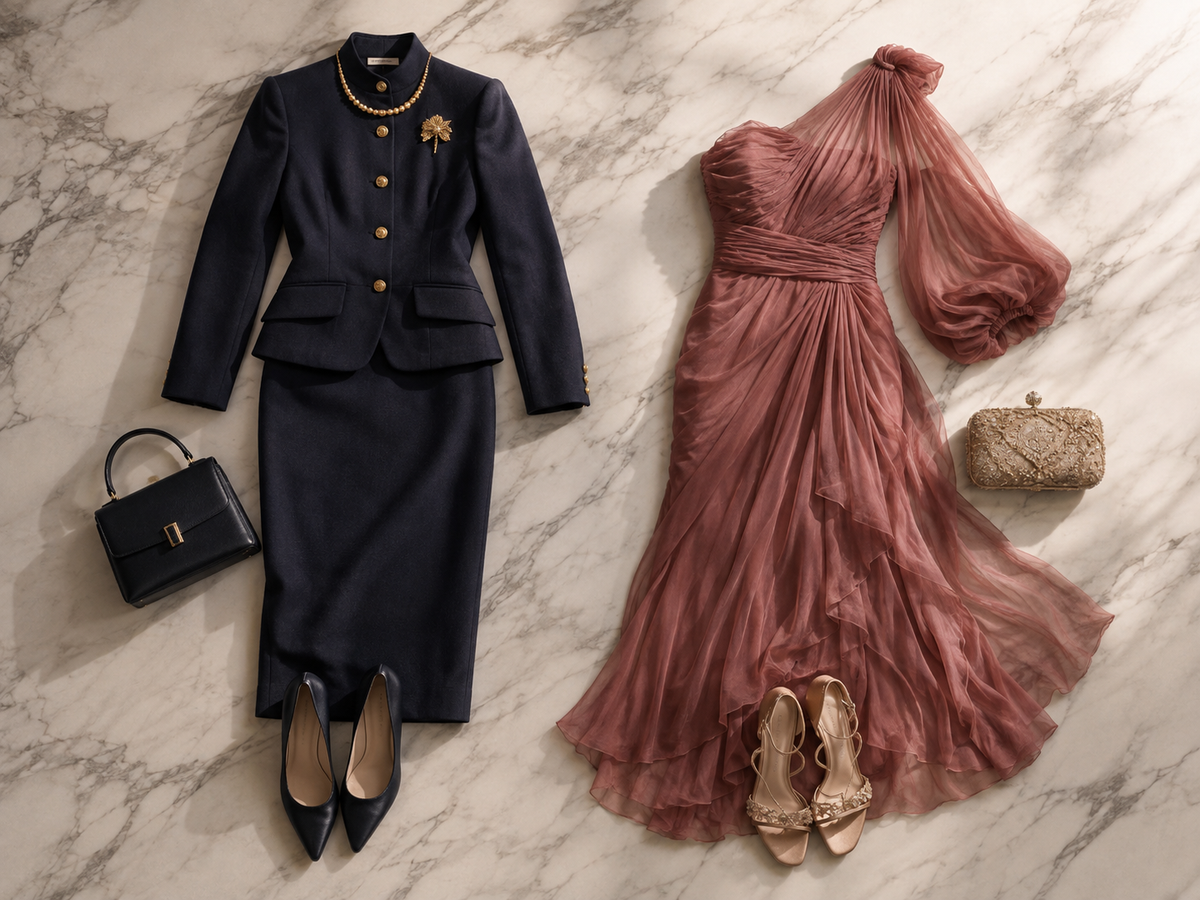
The simplest way to understand 2026 wedding aesthetics is to look at two numbers side by side. According to Elle UK, the old money wedding aesthetic is up 133%, while Bridgerton-inspired weddings have climbed 191% year-over-year. Those two trends pull in slightly different directions—one toward understated heritage dressing, the other toward full-blown romantic drama—and together they define the range of visual contexts a wedding guest might walk into this year. There is no single "safe" look that works across both.
The deeper shift is away from minimalism. Vogue and Who What Wear both point to the same 2026 theme: couples and their guests are embracing texture, volume, and nostalgia-driven details that clean, minimal dressing simply can't deliver. Lace is back with genuine force. Basque waist silhouettes—which create that dramatic, nipped-in hourglass shape—have seen search interest climb 333%, per Elle UK. Bubble hems, dramatic veils, and statement sleeves are appearing at weddings that would have called for a sleek column dress just three years ago.
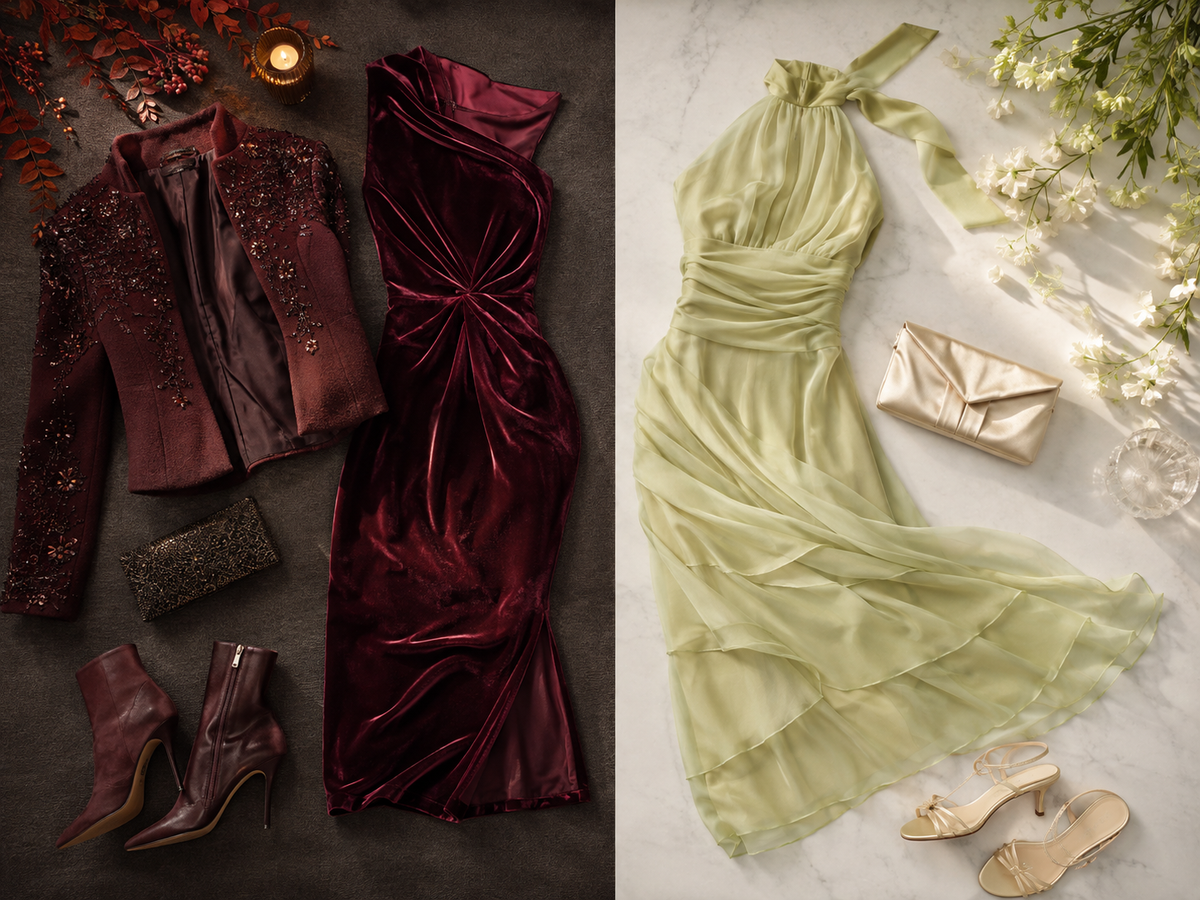
Layering has become a practical and stylistic consideration in equal measure. Fashion journalist Zoe Suen, writing in Vogue, expects bridal outerwear—opera coats, boleros, capes—to become a fixture as weddings increasingly happen year-round rather than clustering in the summer months. For guests, that means a structured cape or embellished bolero is no longer an afterthought; it can be the statement piece that ties an entire look together.
The practical takeaway from all of this trend data is what stylists are calling the "one strong statement" rule: choose a single standout element—a rich jewel-toned fabric, a sculptural sleeve, an intricate lace overlay, a dramatic asymmetrical hemline—and keep everything else balanced around it. Trying to incorporate every 2026 trend simultaneously produces noise. One deliberate choice, executed well, produces a look that reads as intentional and current. That framing matters because it transforms trend awareness from a shopping list into an editing tool—something you can apply to pieces you already own just as easily as to something new.
What to Wear to a Wedding: Women's Guest Attire Guide
That editing-tool mindset applies directly when assessing your own wardrobe for a wedding—and in 2026, you have a clear set of signals to evaluate against.
According to Who What Wear, asymmetrical silhouettes are having a moment, alongside romantic midi and maxi lengths. Fabric-wise, satin, plissé, chiffon, organza, velvet (for evening and cooler months), and jacquard are all doing the heavy lifting. The color palette runs from butter yellow and sage to fuchsia, emerald, sapphire, and deep rose—rich, saturated shades that photograph beautifully against the lush, textured wedding aesthetics dominating 2026.
One rule remains non-negotiable: avoid white, ivory, cream, and champagne. Style guides continue to emphasize these shades can read as bridal in photographs, regardless of the dress's cut or embellishment. The same caution applies to very pale blush that photographs white.
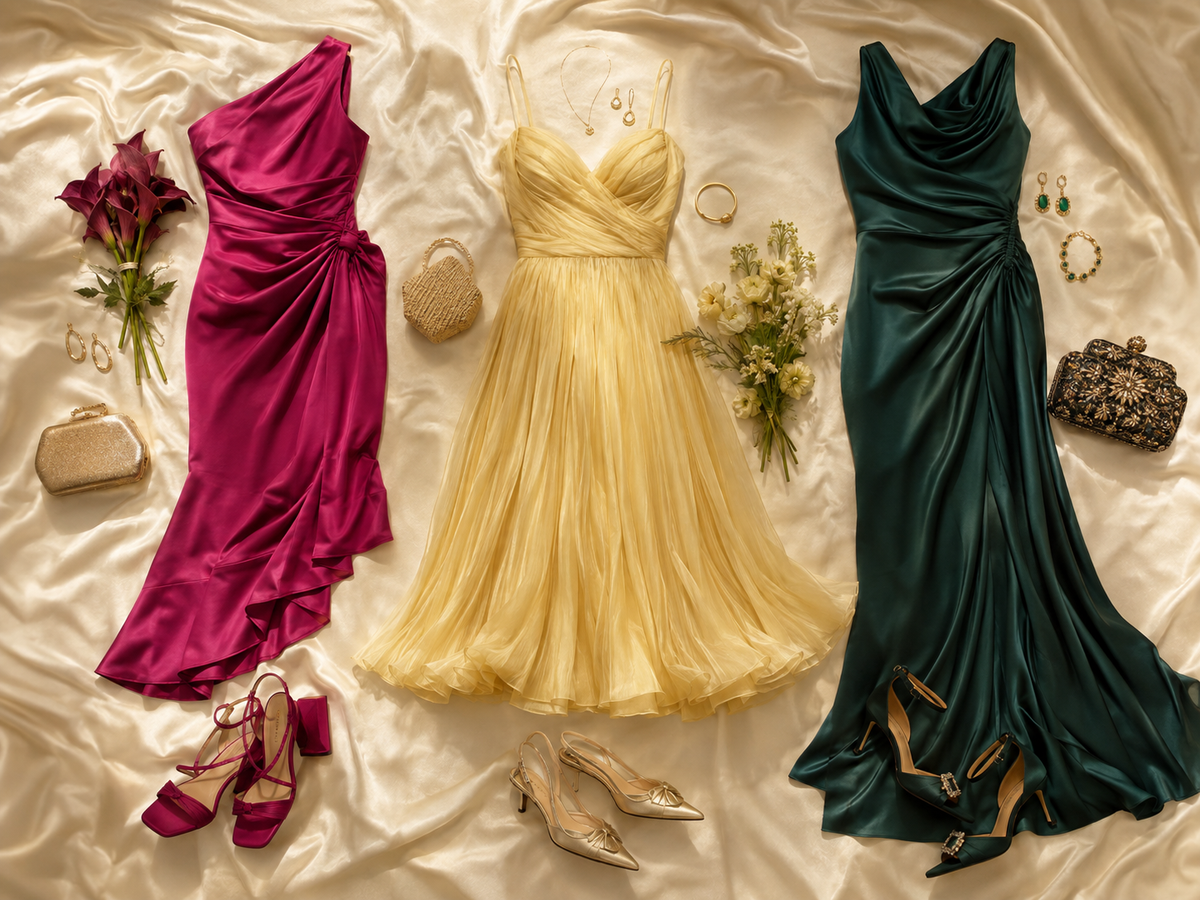
Before buying anything new, run each candidate piece through this three-question wardrobe checklist:
- Does it read as occasion-appropriate? A sundress that works at brunch won't carry the elevated formality most 2026 weddings now expect.
- Is the silhouette current? Bodycon and shift cuts have largely ceded ground to the longer, more fluid shapes dominating this year's trend cycle.
Ready to upgrade your wardrobe?
Get the Elara app for AI-powered styling and virtual try-ons.
- Is it clearly non-bridal? When in doubt, a bold color or a print on a dark background removes all ambiguity.
Bold florals on dark grounds—navy, forest green, burgundy—are a strong 2026 choice. Small, delicate florals on pale backgrounds sit closer to the bridal-adjacent territory worth avoiding.
What to Wear to a Wedding as a Guest: Men's Attire Guide
The clearest shift in men's wedding guest dressing for 2026, according to both Who What Wear and SuitShop, is the move away from heavy suiting toward linen and linen-look fabrics, pastel separates, and lighter earth tones. This doesn't mean abandoning formality—it means expressing it through lighter, more considered choices.
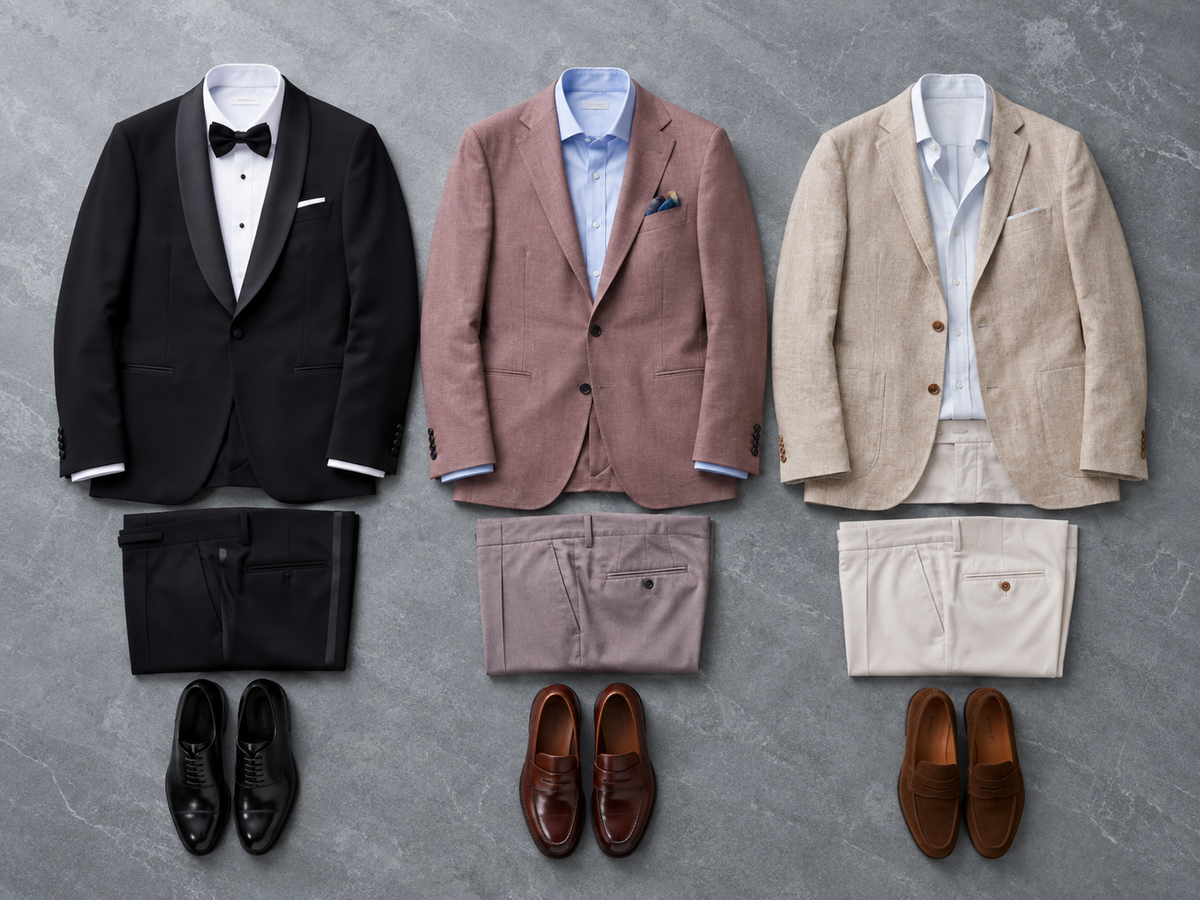
Three formality tiers cover most invitations a male guest will receive:
- Black Tie: A classic tuxedo remains the standard. If the invitation says black tie optional, a well-fitted dark suit in black or deep charcoal is fully appropriate.
- Cocktail/Semi-Formal: Navy and charcoal remain reliable, but 2026 opens the door to suits in dusty rose, sage, warm tan, or soft slate—all of which signal awareness without veering into costume territory.
- Smart Casual / Garden Party: A linen or linen-look suit is the strongest choice here. Tailored separates—think a structured blazer with well-fitted trousers in a complementary tone—also work well.
The biggest 2026 accessories story for men is personality-forward detailing: bold ties, textured pocket squares, and embroidered accents are all tools for individual expression within formal constraints. A plain white shirt and a patterned silk tie in a jewel tone instantly modernizes any suit.
If you already own a navy or charcoal suit, you don't need to buy anything new. Swap a standard white shirt for one in pale blue or soft pink, add a pocket square in a complementary pattern, and choose a tie in emerald, burgundy, or sapphire. That combination hits every 2026 signal—lighter, more expressive, deliberately personal—without a single new garment.
Formal Wedding Dress Codes: A Plain-English Decoder
Dress codes exist to give guests a starting constraint, not a straitjacket. As Vogue noted in its 2026 bridal coverage, the defining mindset of this year's wedding season is "deliberateness"—and that applies to guests as much as to brides. A dress code tells you the floor; everything above it is personal expression.
Here are the four codes you're most likely to see on an invitation:
- Black Tie: The most formal. Women should wear a floor-length gown or a very elevated formal dress; men wear a tuxedo or dark suit. This is the occasion for satin, velvet, and metallic jacquard—and for the most dramatic silhouettes in your arsenal.
- Black Tie Optional: The same aspirational standard, with a suit accepted for men and a sophisticated cocktail-length dress permitted for women alongside floor-length options.
- Cocktail Attire: A knee-to-midi-length dress or a sharp suit. This is where 2026's asymmetrical cuts and jewel tones—midnight navy, emerald, sapphire, burgundy, amethyst—do their best work, according to The Knot and Who What Wear.
- Smart Casual / Garden Party: Elevated but not stiff. A midi dress in chiffon or a linen suit both land correctly here. Avoid anything that reads as beachwear or office casual.
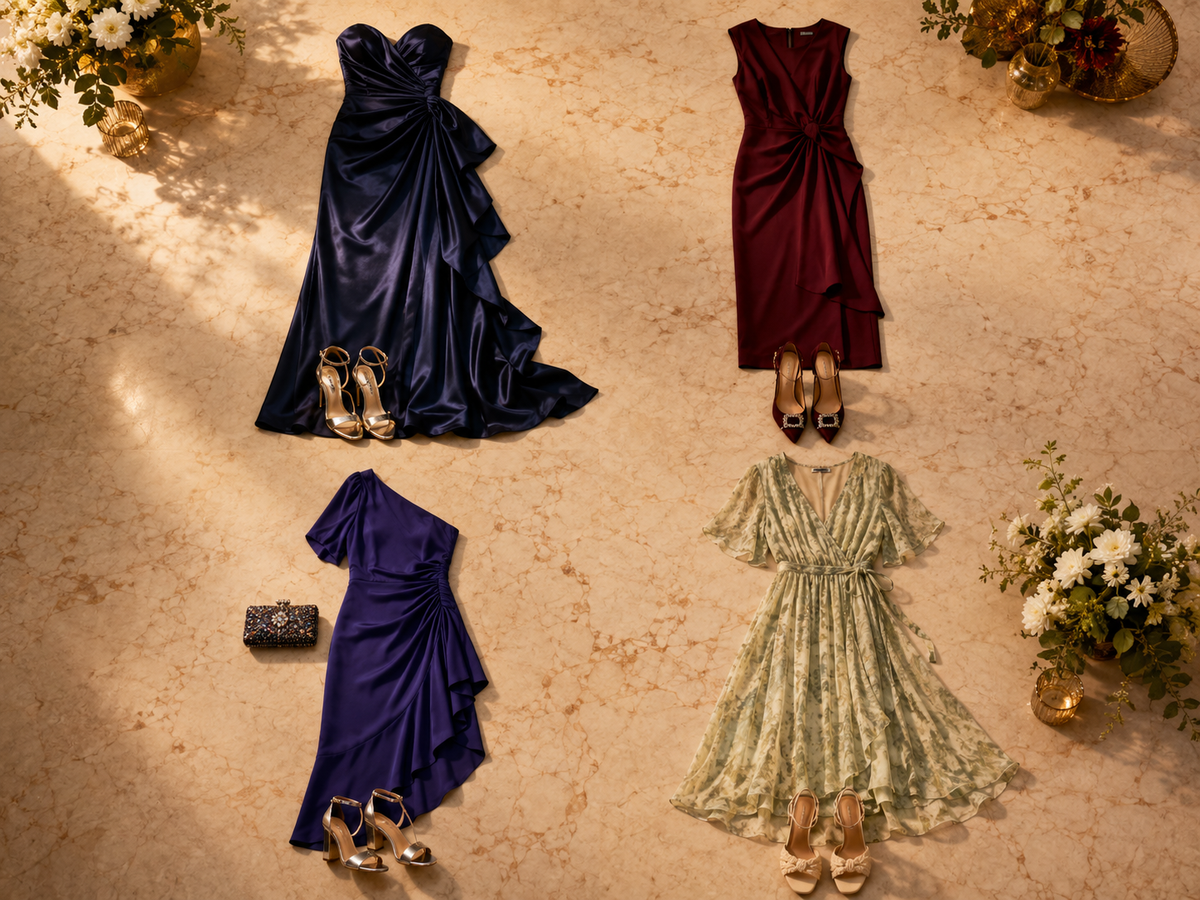
On the perennial question of black: black is appropriate at formal and evening weddings. The old superstition that black was off-limits for weddings has largely faded. The colors that remain genuinely off-limits are white, ivory, cream, and champagne, for the same photographic reasons that apply across every dress code.
Whatever the code on your invitation, the 2026 upgrade path is consistent: reach for jewel tones over pastels, choose textured fabrics over flat ones, and pick a silhouette with at least one point of interest—an asymmetrical neckline, a draped detail, a sculptural sleeve—rather than defaulting to the plainest version of formal.
What to Wear to a Wedding in Winter (and Other Seasons)
Silhouette and color choices matter—but so does the calendar. Weddings cluster in the warmer months, which explains why warm-weather advice dominates most style guides. Fall and winter weddings deserve equal attention, and the guidance is meaningfully different.
For autumn and winter weddings, reach for velvet, brocade, and heavier crepe. Jewel tones—deep emerald, burgundy, amethyst, midnight navy—work harder in low light than pastels ever could. Rich florals on dark backgrounds read as intentional rather than summery. On the outerwear question (the one most guides ignore entirely): according to Vogue fashion journalist Zoe Suen, bridal outerwear is becoming a genuine style category as weddings shift to year-round events, with opera coats, boleros, and embellished capes replacing the awkward puffer-over-gown compromise. A tailored wool coat in a coordinating jewel tone or a velvet blazer achieves the same goal without deflating the look.
For spring and summer weddings, chiffon, organza, and satin reward movement and warm light. According to Who What Wear and SuitShop's 2026 coverage, linen-look suiting is the dominant shift in men's guestwear, while women's looks favor asymmetrical necklines, one-shoulder cuts, and midi-to-maxi lengths. Butter yellow, sage, and fuchsia are the palette signals of the moment—all strong enough to read as intentional, none close enough to bridal white to cause concern.
Venue adds a final layer: outdoor garden ceremonies call for block heels or wedges over stilettos; barn settings favor slightly more relaxed fabrications; indoor ballrooms can handle the full drama of floor-length satin.
The Wardrobe-First Approach: Style What You Own Before You Shop
Most people already own something that could work for a wedding. The problem isn't the wardrobe—it's the ability to see it clearly under the pressure of an invitation.
A simple three-step framework resolves this:
- Identify your strongest piece. A dress, a blazer, a pair of tailored trousers—whatever reads most occasion-appropriate in your current rotation.
- Evaluate it against formality and 2026 trend signals. Does the silhouette have at least one point of interest? Does the color sit outside the white-ivory-cream exclusion zone? Vogue's 2026 framing of "deliberateness" and the broader industry shift toward texture and personalization are your benchmarks—not a shopping list.
- Fill only the gaps. Accessories, outerwear, and shoes can transform a familiar piece into something that reads entirely fresh.
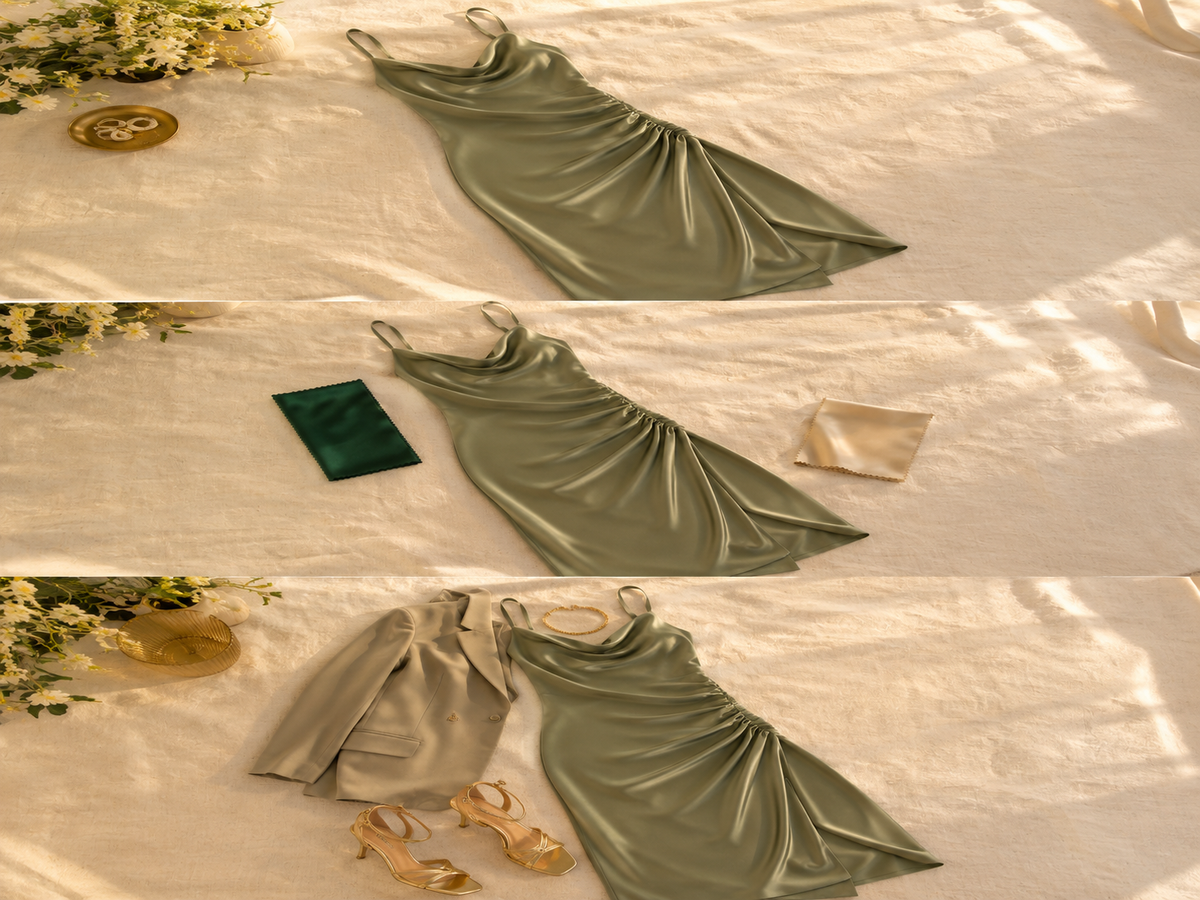
A concrete example: a satin midi dress in sage green, paired with a structured blazer and metallic heels, hits multiple 2026 trend signals—the color, the fabric, the silhouette—without a single new purchase.
This is exactly where Elara works. Elara's AI scans your existing wardrobe, identifies your strongest wedding-ready pieces, and suggests how to style them for the specific occasion, dress code, and season. No guesswork, no unnecessary spending. Curious what your closet can already do? Start with Elara at joinelara.com.
Conclusion: Dress with Intention, Not Anxiety
The throughline across every dress code, season, and silhouette is the same: intentionality beats perfection. Choose one strong statement, respect the formality on the invitation, and dress for where and when the wedding actually is. The non-negotiables remain simple—avoid white, ivory, cream, and champagne; match the dress code; account for the season and venue.
The rest is a remix problem, and you likely have more to work with than you think.
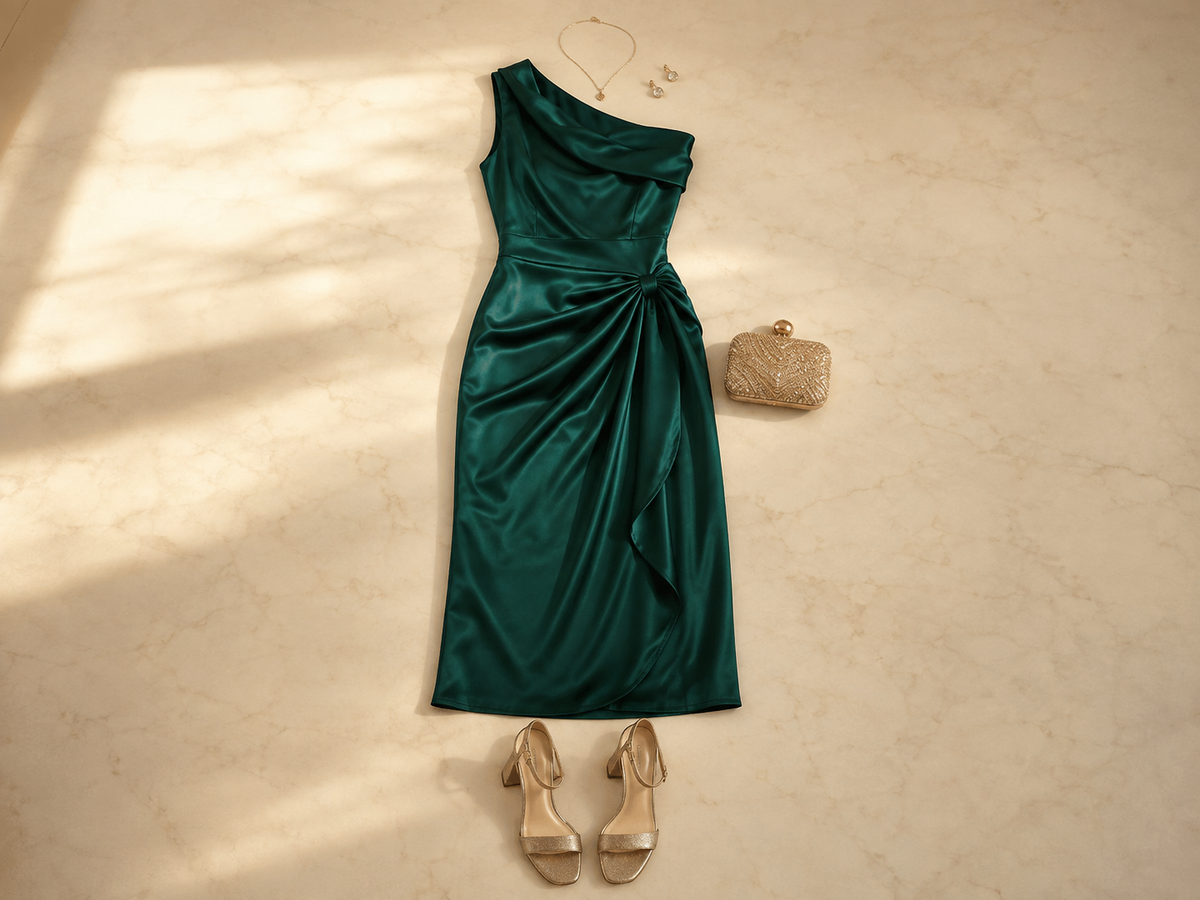
Curious what your closet can do? Elara can show you. joinelara.com
Your AI Stylist is Here.
live on the App Store & Google Play
Available on iOS and Android for seamless access anytime, anywhere.