What to Wear to an Interview: Industry Guide
What to wear to an interview depends on industry and company culture. Learn the "one level above" rule, gender-specific guidance, and how to build your outfit from what you already own.

What to Wear to an Interview: 2026 Guide by Industry
Table of Contents
- Introduction: Why 'Just Wear a Suit' Is Outdated Advice
- The 'One Level Above' Rule: Your Interview Attire Decision Framework
- What to Wear to an Interview: Female
- What to Wear to an Interview: Male
- What to Wear to an Interview by Industry
- What Shoes to Wear to an Interview
- Wardrobe-First: How to Build Your Interview Outfit From What You Already Own
- Frequently Asked Questions
- Conclusion: Dress With Intention, Not Anxiety
Key Takeaways
- Dress one level above the expected office standard — the single most actionable rule for any interview, any industry.
- According to a 2026 WiFi Talents survey, 52.4% of men default to a full suit, while 58% of women prefer flexible, self-directed attire — industry context matters more than gender convention.
- Finance, law, and government demand formal attire; tech, retail, healthcare, and hospitality accept smart casual.
- Audit your wardrobe before you shop — the right interview outfit is likely already there.
Introduction: Why 'Just Wear a Suit' Is Outdated Advice
Only 3% of U.S. workers regularly wear business-professional clothing — suits or suit separates — on a typical workday, according to Gallup. The other 97% show up in business casual or street clothes. That single statistic exposes the problem with most interview attire advice: it was written for a workplace that no longer exists.
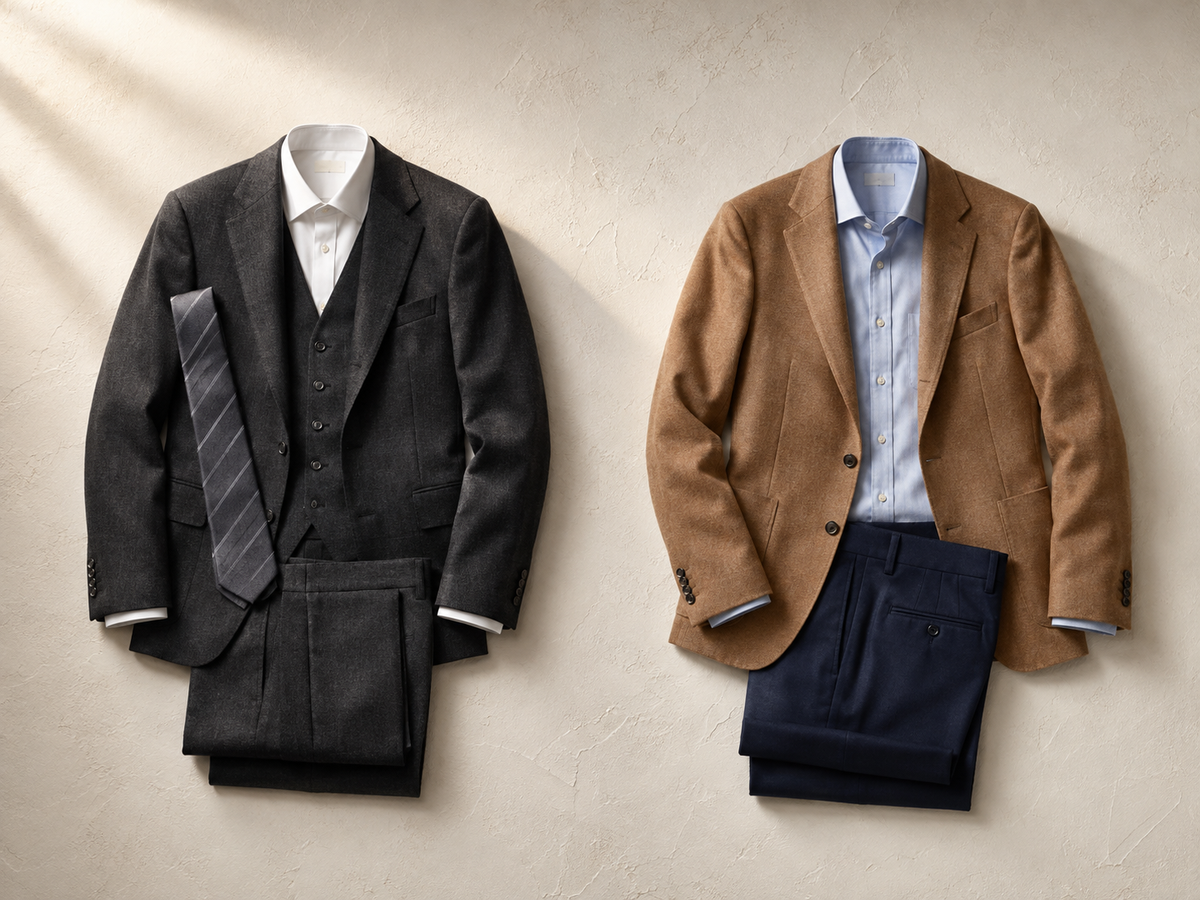
The two common approaches are predictable. One says "always wear a suit," ignoring that walking into a startup in a three-piece suit signals you haven't done your research. The other says "dress professionally," which is advice so vague it helps no one. Neither gives you a decision framework.
This article does. The organizing principle is the "one level above" rule: identify the company's everyday dress code, then step up one notch in formality for the interview. It works across every industry, every budget, and every wardrobe. The sections that follow cover how gender patterns play out in practice, how formality expectations break down by industry, which specific items to reach for, and — critically — how to build your interview outfit from what you already own before spending a cent.
The 'One Level Above' Rule: Your Interview Attire Decision Framework
The "one level above" principle is straightforward: research how employees dress on a normal workday at your target company, then dress one rung more formal for the interview. If the office runs business casual, you wear business formal. If it's smart casual, step up to business casual. The rule scales to any context without requiring a new wardrobe for every application.
Gallup data makes clear why this framework matters more than ever: 41% of U.S. workers wear business casual most days, and 31% wear street clothes. Only 3% regularly wear full business-professional attire. "Dress for the job" has never meant "always wear a suit" — it means read the room and arrive one level sharper than the room expects.
The formality ladder has five rungs:
- Street Clothes — jeans, t-shirts, hoodies, sneakers; everyday casual wear
- Smart Casual — dark jeans or chinos, clean shirts, ankle boots or loafers; polished but relaxed
- Business Casual — tailored trousers, blazers, blouses, collared shirts; no tie required
- Business Formal — full suit, dress shirt, tie (men); tailored suit or sheath dress (women); leather shoes
- Black Tie — reserved for formal events, not interviews
Identify where your target company sits, then move up one rung. That's your target.
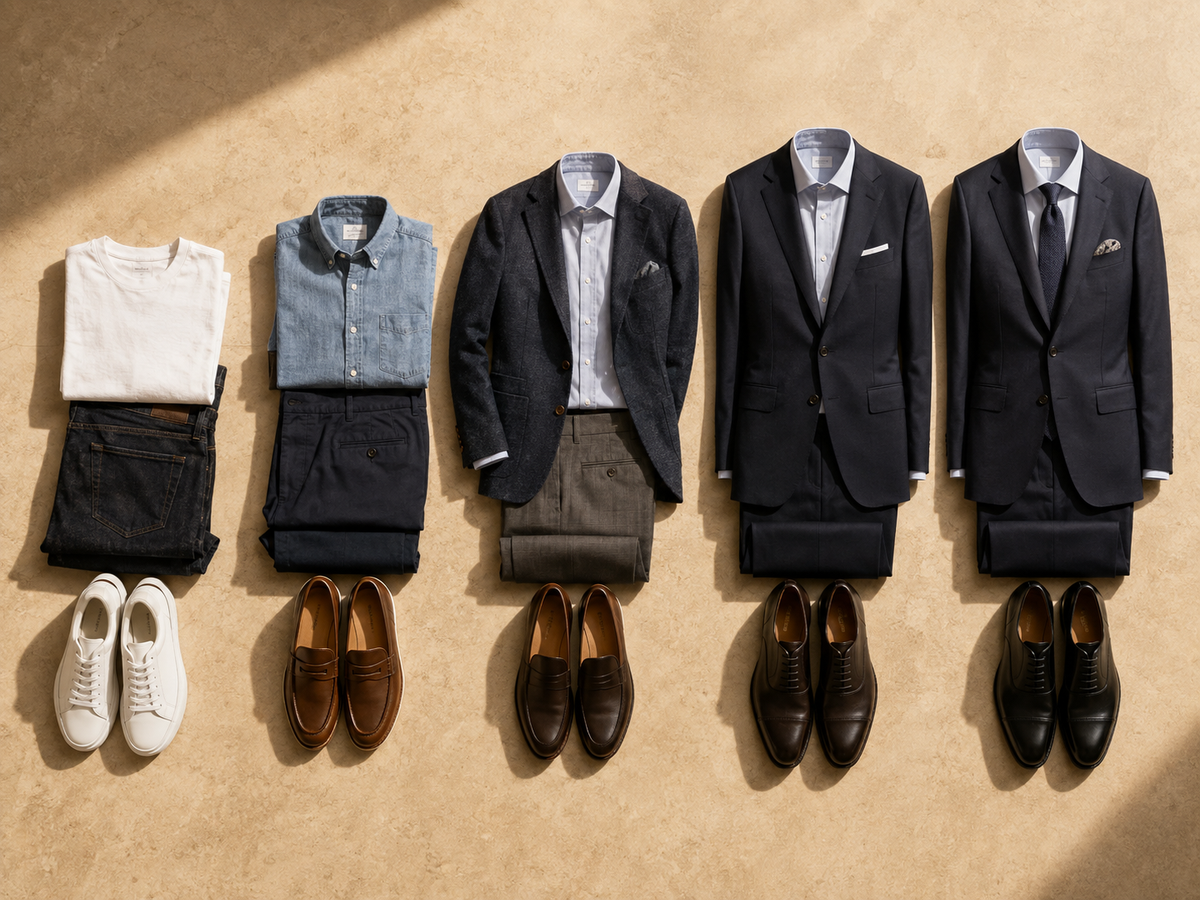
One more calibration for 2026: the trend is toward less rigid, more tailored silhouettes — what Samuel Baron Clothiers describes as "quiet confidence and a refined silhouette" over conspicuous fashion statements. Restraint is the right instinct. A jacket that sits cleanly on the shoulders and trousers with a neat break at the shoe will read more professional than any trend-forward detail. Before buying anything new, hold what you already own against this framework — most people are one piece away from a complete interview outfit, not an entire wardrobe away.
What to Wear to an Interview: Female
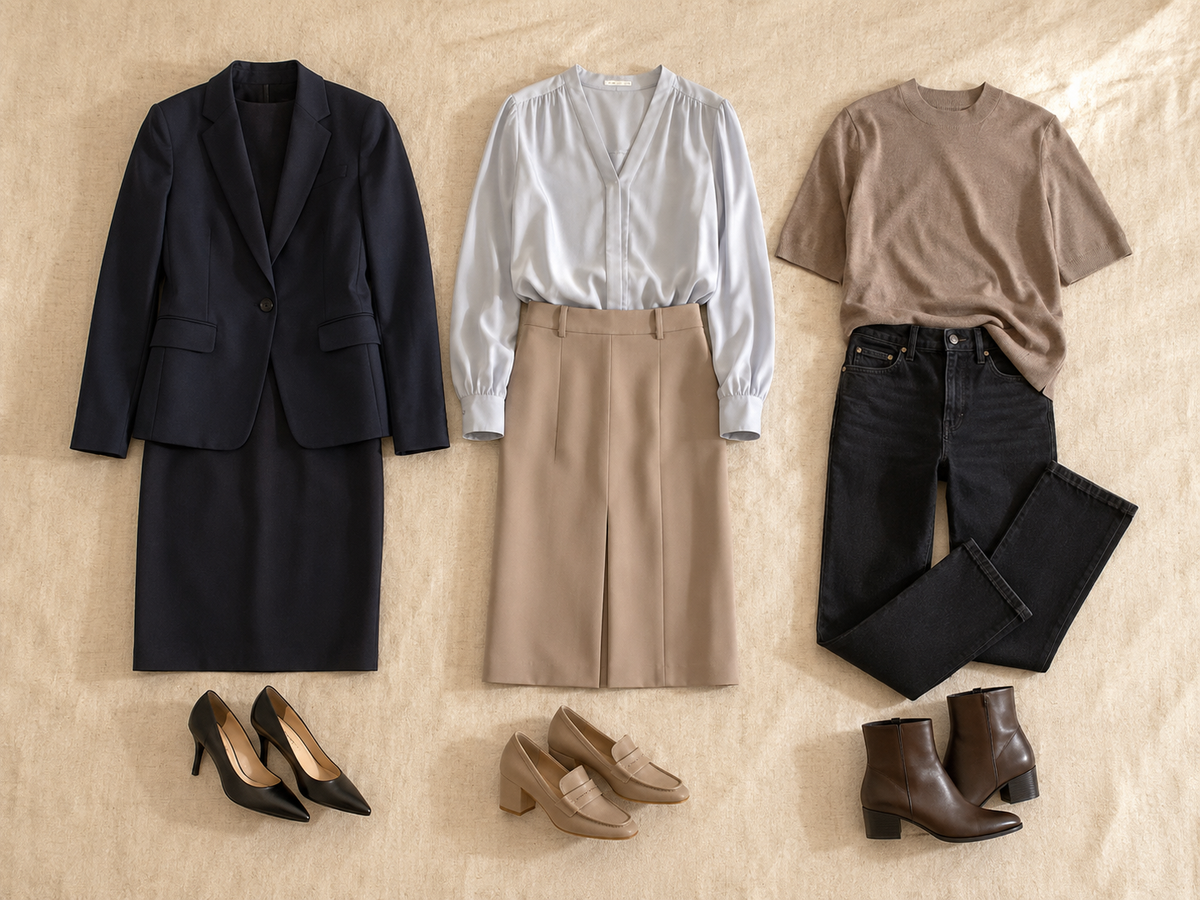
That principle of restraint applies equally to women — and the 2026 data suggests most women already understand it intuitively. According to a 2026 WiFi Talents job-seeker survey, 38.3% of women chose semi-formal attire for interviews and 26.1% opted for office-casual styles. Crucially, 58% preferred flexible, self-directed dressing over strict suit rules — meaning the most useful guidance isn't a single prescribed outfit, but a tiered framework women can map to their own wardrobes.
Three formulas cover the full range of interview contexts:
- Formal (finance, law, consulting): tailored blazer paired with dress trousers or a knee-length sheath dress, closed-toe pumps or structured flats, minimal jewelry.
- Business Casual (healthcare, education, corporate admin): a smart blouse with tailored trousers or a midi skirt, clean loafers or block-heel shoes.
- Smart Casual (retail, tech, creative): a well-fitted structured top with tailored trousers or dark, undistressed jeans, ankle boots or clean sneakers.
On shoes: closed-toe remains the safest default across all tiers. Samuel Baron Clothiers' 2026 guidance emphasizes that closed-toe shoes are the most dependable choice for interviews across industries and seasons.
For teenage girls and first-time interviewees, the formula is simpler still — a neat blouse with dark trousers, or a clean, unfussy dress, is always appropriate and never reads as overdressed. The goal at any experience level is the same: look intentional, not effortful.
Ready to upgrade your wardrobe?
Get the Elara app for AI-powered styling and virtual try-ons.
What to Wear to an Interview: Male
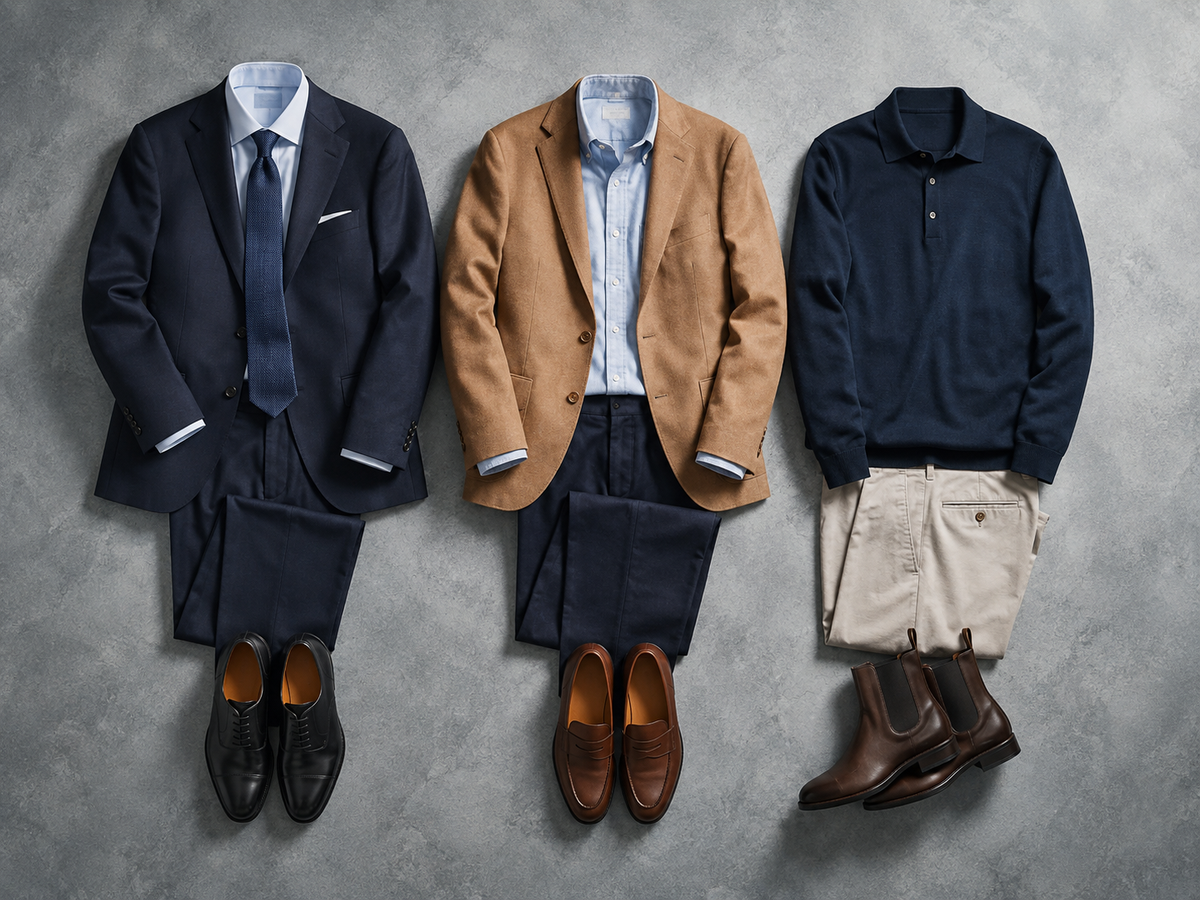
Men's interview attire follows a narrower consensus. The 2026 WiFi Talents survey found that 52.4% of male job-seekers wore a full suit or formal interview wear, and 51% expressed a preference for standardized suit-style dress. That consistency reflects a genuine professional norm — but it doesn't mean every man needs to buy a new suit before every interview.
The same three-tier framework applies:
- Formal (finance, law, government): navy or charcoal suit, white or light-blue dress shirt, conservative tie, leather oxford shoes.
- Business Casual (corporate tech, consulting, healthcare admin): a blazer with tailored trousers (no matching suit required), a collared shirt, loafers or clean leather shoes.
- Smart Casual (startups, creative, retail): chinos with a clean button-down or polo, smart casual shoes — no athletic trainers.
Shoe color pairings matter: black leather works with charcoal or black suits; dark brown or oxblood pairs better with navy or gray. Polished closed-toe shoes remain the most dependable default across all formality levels.
Fit is the single highest-leverage variable. A jacket that sits cleanly on the shoulder seam and trousers that break neatly at the shoe will read more professional than an expensive ill-fitting suit every time. The HR Review data showing that 61% of men are willing to spend over £100 on interview clothing versus just 10% of women is worth reframing: the spending gap doesn't produce a confidence gap. A well-fitted £40 blazer from a charity shop beats a loose £200 jacket from a department store. Optimize what you own before you open your wallet.
What to Wear to an Interview by Industry
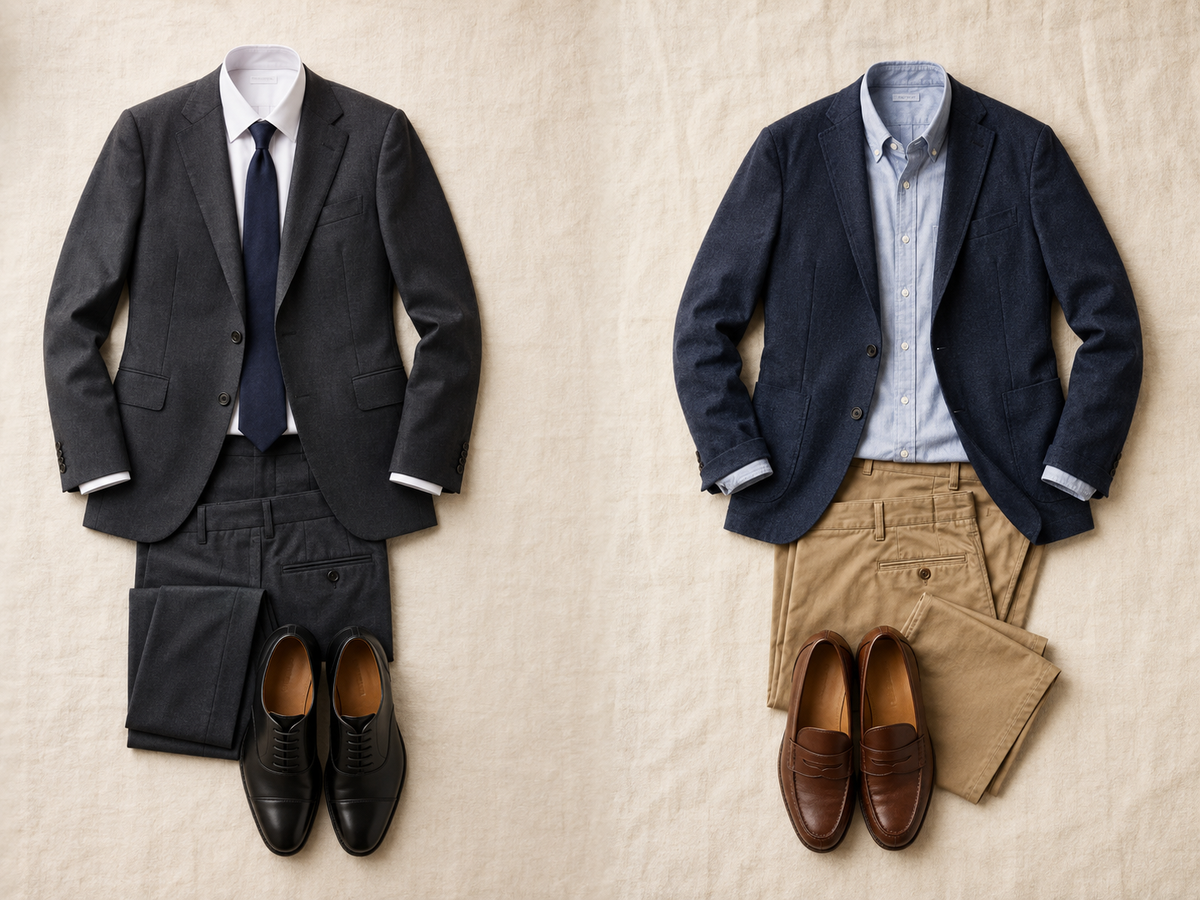
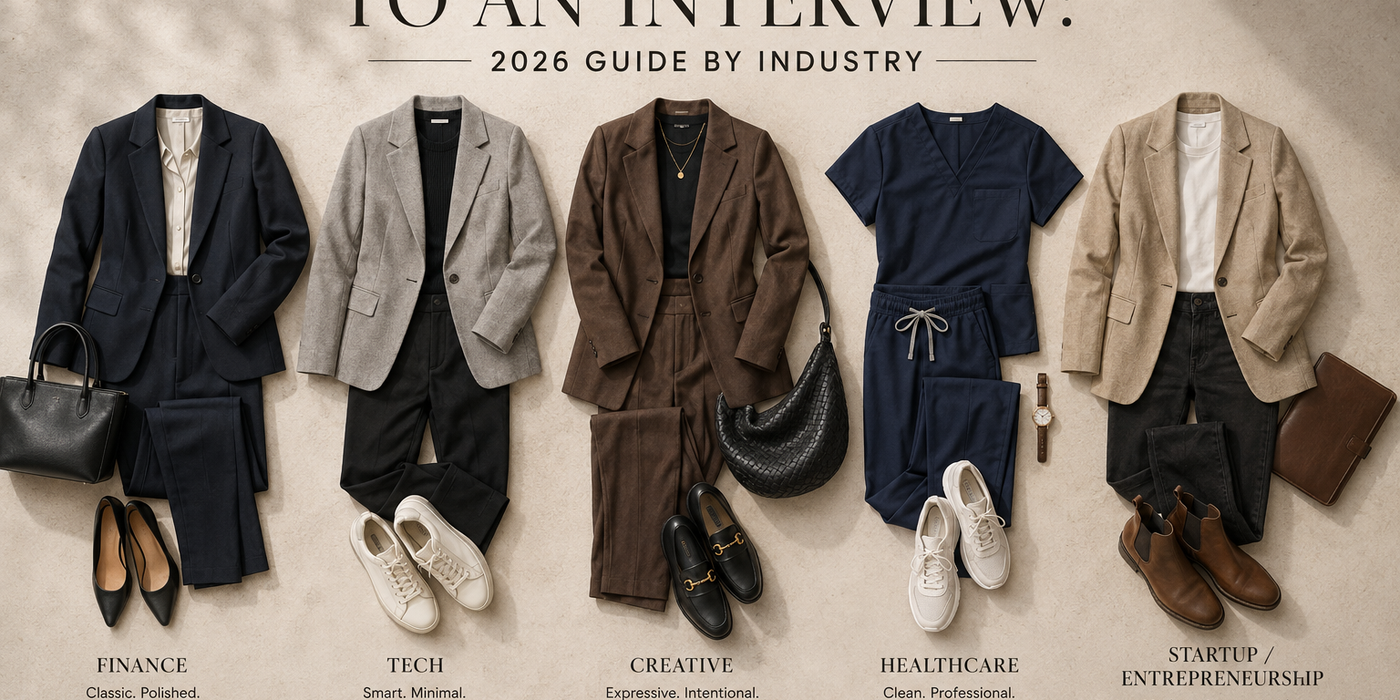
The single most reliable rule across every industry is the one-level-above principle: identify the company's everyday dress standard, then step one rung up the formality ladder for the interview. According to Samuel Baron Clothiers, 2026 industry guidance consistently splits into two broad camps — formal attire for finance, law, consulting, and government; smart casual to business casual for tech, startups, creative roles, healthcare, education, retail, and hospitality.
Here's how that plays out sector by sector:
- Finance / Law / Consulting / Government: Full suit in navy or charcoal (men); tailored suit separates or a structured sheath dress (women). Dress shirt and conservative tie for men. Leather oxford shoes. No exceptions — these industries still read underdressed as unprepared.
- Tech / Startups / Creative: Smart casual is the norm. A blazer is optional but adds credibility. Clean, well-fitted separates in neutral tones; polished shoes; no visible logos or loud patterns. Dressing too formally can signal poor cultural awareness in these environments.
- Healthcare / Hospital: A common mistake here is treating scrubs as interview wear — scrubs are for the role, not the interview. The default is business casual: blazer with trousers or a blouse, conservative colors, closed-toe shoes. Closed-toe is especially important in healthcare settings, where it signals awareness of practical workplace standards.
- Retail: Reflect the brand's aesthetic, elevated one level. Polished business casual works universally; demonstrating style awareness matters more here than in most other sectors. Avoid both extremes — overly casual reads as disengaged, overly formal reads as tone-deaf.
- Fast Food / Hospitality (entry-level): No suit required, but no athleisure either. Dark trousers, a clean collared top, and closed-toe shoes communicate effort and reliability — exactly what these roles prioritize.
- Education: Smart casual to business casual, in approachable, conservative colors. The goal is to look like someone students and parents would trust on first impression.
"Dress one level above the expected office standard for the interview." — Samuel Baron Clothiers
That single sentence is the unifying thread. Every industry recommendation above is just an application of it.
What Shoes to Wear to an Interview
Applying the "one level above" rule to your outfit means nothing if your shoes contradict it. Footwear is the detail interviewers notice — and the easiest place to quietly undermine an otherwise polished look.
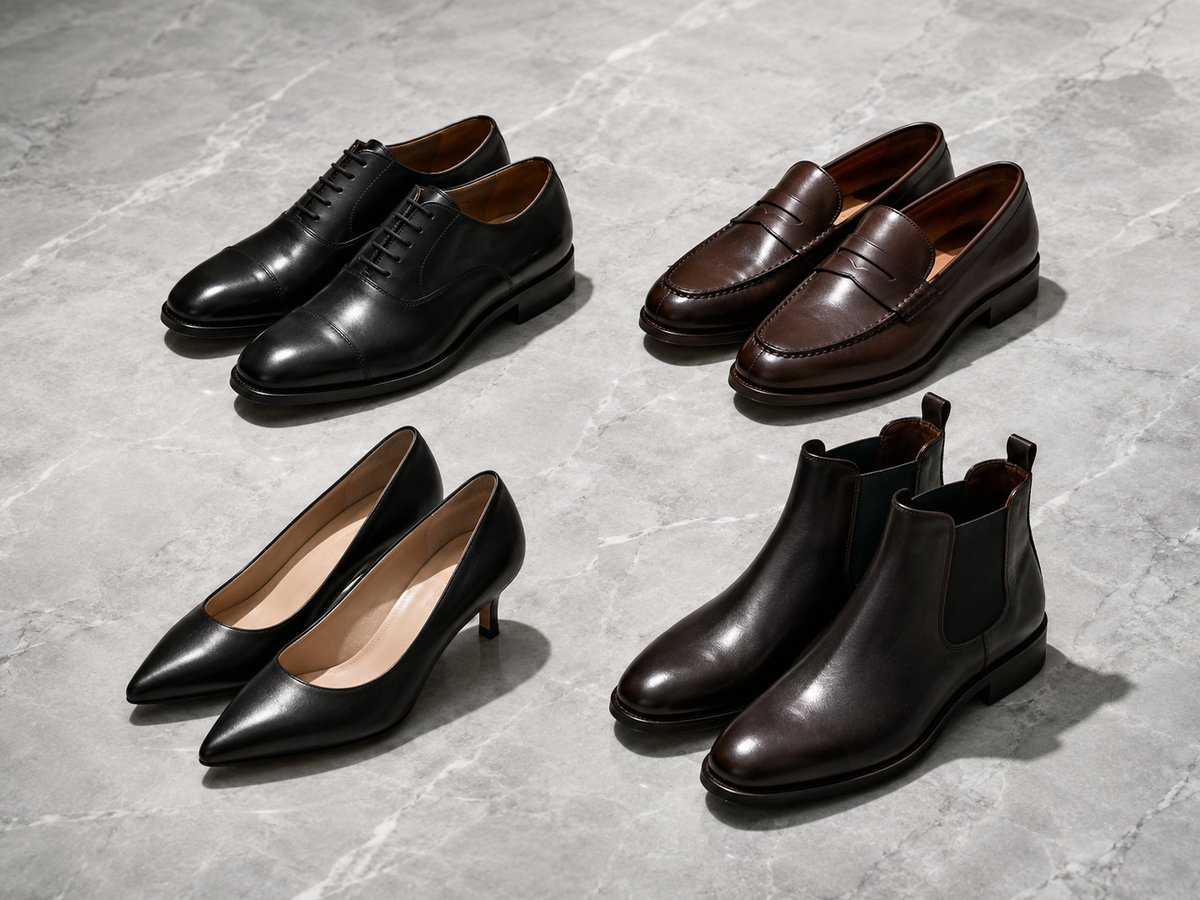
The right choice depends on formality tier. For formal interviews (finance, law, consulting), men should wear leather oxfords or derbies: black with charcoal or black suits, dark brown or oxblood with navy or gray. Women should opt for closed-toe court pumps or kitten heels in the same neutral palette. Polished closed-toe shoes remain the most dependable default across all formal settings.
For business casual roles, leather loafers work for both men and women; block-heel ankle boots are a strong women's option. In smart casual environments — tech, creative, startups — clean, minimal leather or canvas sneakers and Chelsea boots are acceptable. Athletic trainers, open-toe sandals, and flip-flops are not, regardless of how casual the office looks day-to-day.
The universal rule is simple: clean, unscuffed, heel in good repair. A wipe-down the night before is non-negotiable. Before buying anything new, audit what you already own — a clean pair of loafers frequently meets the brief without a single purchase.
Wardrobe-First: How to Build Your Interview Outfit From What You Already Own
Most interview attire advice assumes you'll shop. The smarter move is to audit first.
Follow three steps:
- Audit every candidate piece. Lay out anything you'd consider wearing. Assess each item for fit, condition, and formality level — not sentiment or price paid.
- Match to your industry's formality tier. Using the "one level above" framework from earlier in this guide, identify which pieces already qualify and which fall short.
- Identify the single gap item. Only after steps one and two should you consider buying anything — and usually it's one piece: a blazer, a pressed shirt, or a clean pair of shoes.
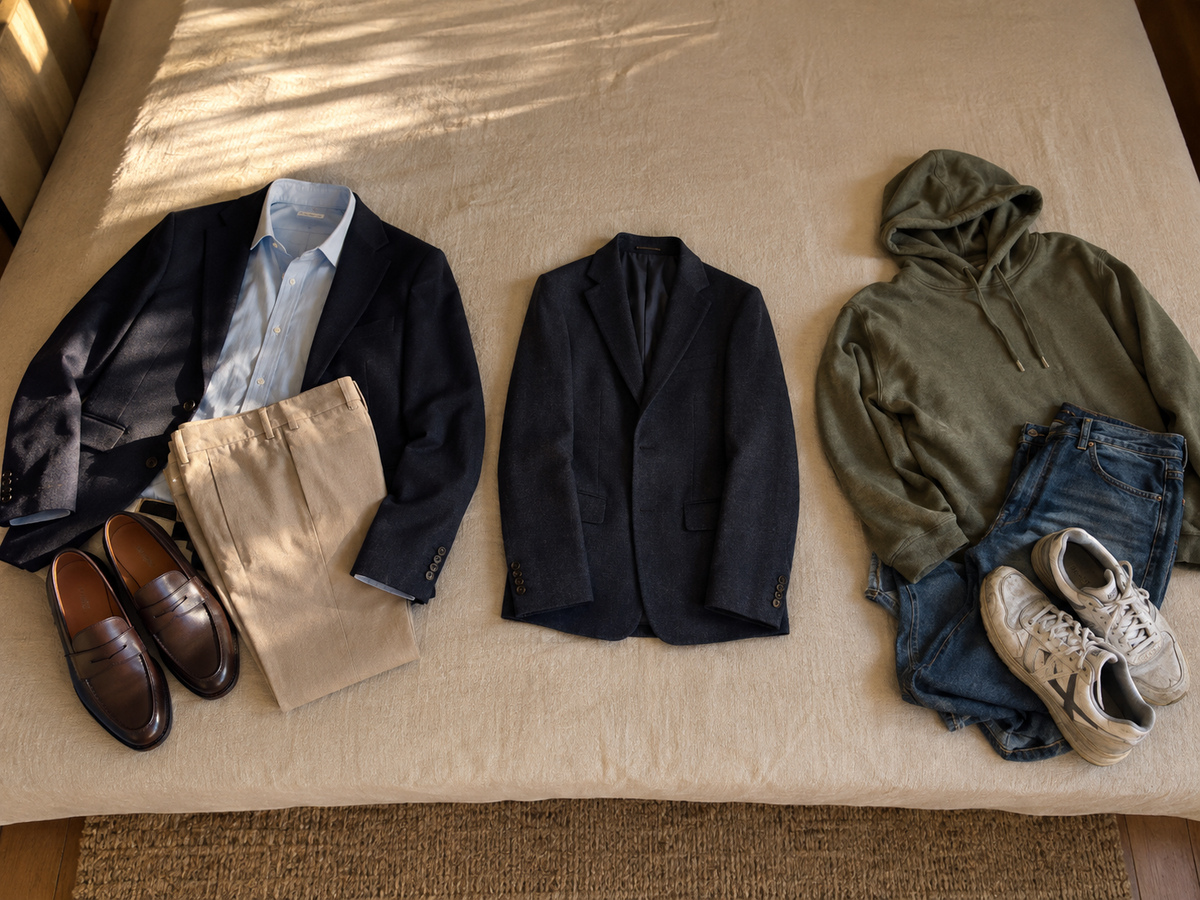
The reality is that most people already own 80–90% of a solid interview outfit. The gap is rarely a full wardrobe overhaul. Business New Trend's 2026 reporting notes that stretch wool, recycled blends, and performance fabrics are now mainstream interview wear — which means accessible, comfortable pieces you likely already own are entirely appropriate.
This is where Elara comes in. Rather than guessing which pieces work together, Elara knows your wardrobe, understands the occasion, and surfaces what already qualifies — then identifies the one missing piece, if any. No shopping required to start.
Frequently Asked Questions
Can I wear open-toe shoes to an interview? Closed-toe shoes are the safest choice across all formality levels and industries. Open-toe sandals and open-back styles read as too casual for interview settings, even in relaxed dress codes. Stick with closed-toe pumps, loafers, oxfords, or ankle boots.
What if I can't afford new interview clothes? You likely don't need to buy anything. Start by auditing what you already own. A well-fitted blazer from a thrift store, clean trousers you already have, and polished shoes you can borrow often make a complete interview outfit. Fit matters far more than price or newness.
How do I know what a company's dress code is before the interview? Check the company website for photos of employees, scroll through their social media, or call the hiring manager and ask directly: "What's the typical dress code for your office?" Most people are happy to answer. If you can't find the answer, default to business casual — it's the safest middle ground across industries.
Should I dress differently for a virtual interview? Treat a virtual interview the same as in-person. Dress one level above the company's everyday standard from the waist up. The camera only captures half your outfit, but dressing fully puts you in the right headspace and protects you if you stand up.
What if the company says "dress however you want"? Don't take that literally. It usually means the dress code is relaxed, so smart casual is appropriate. Still apply the "one level above" rule: if employees wear street clothes, you wear smart casual. If they wear smart casual, you wear business casual.
Conclusion: Dress With Intention, Not Anxiety
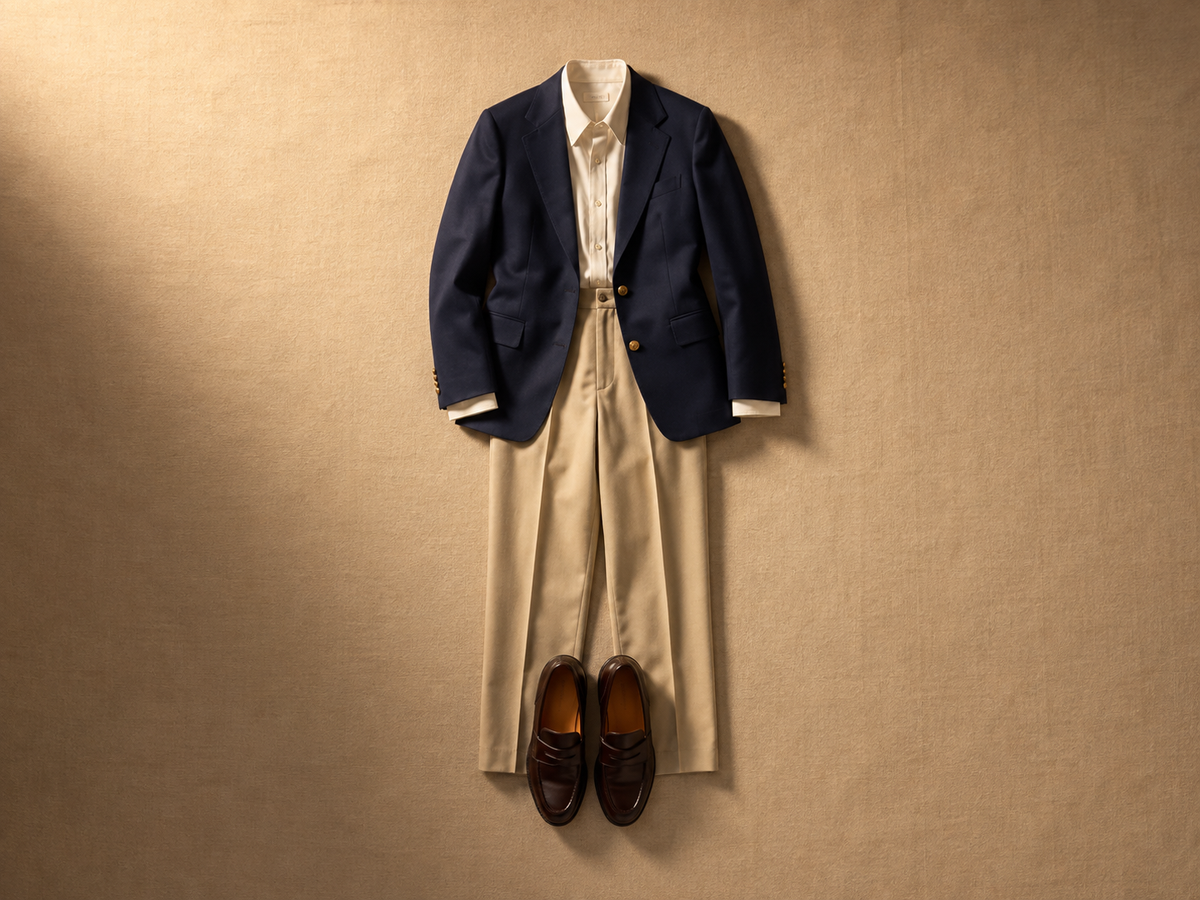
Interview dressing feels high-stakes because it is — but the framework makes it manageable. Know your industry's formality baseline. Apply the "one level above" principle. Start with what you already own.
The anxiety most people feel comes from guesswork. Replace the guesswork with a clear process — audit your wardrobe, match to your industry tier, identify one gap if it exists — and the decision becomes straightforward. As Samuel Baron Clothiers puts it, the modern interview look is about quiet confidence and a refined silhouette, not conspicuous fashion statements.
The best interview outfit is the one that lets you walk in focused on the conversation, not the clothes.
If you want that process done for you, Elara can scan your existing wardrobe and surface a complete interview outfit — no shopping required to get started.
Your AI Stylist is Here.
live on the App Store & Google Play
Available on iOS and Android for seamless access anytime, anywhere.