
What to Wear for Christmas in Australia: Hot-Weather Outfit Guide
Australian Decembers average 26°C in Sydney and 30°C in Brisbane and Perth. Four outfits for lunch, the beach, church and a cool change, plus UV-smart fabrics.
 Mehul AgarwalFounder & CEO
Last updated: November 2026
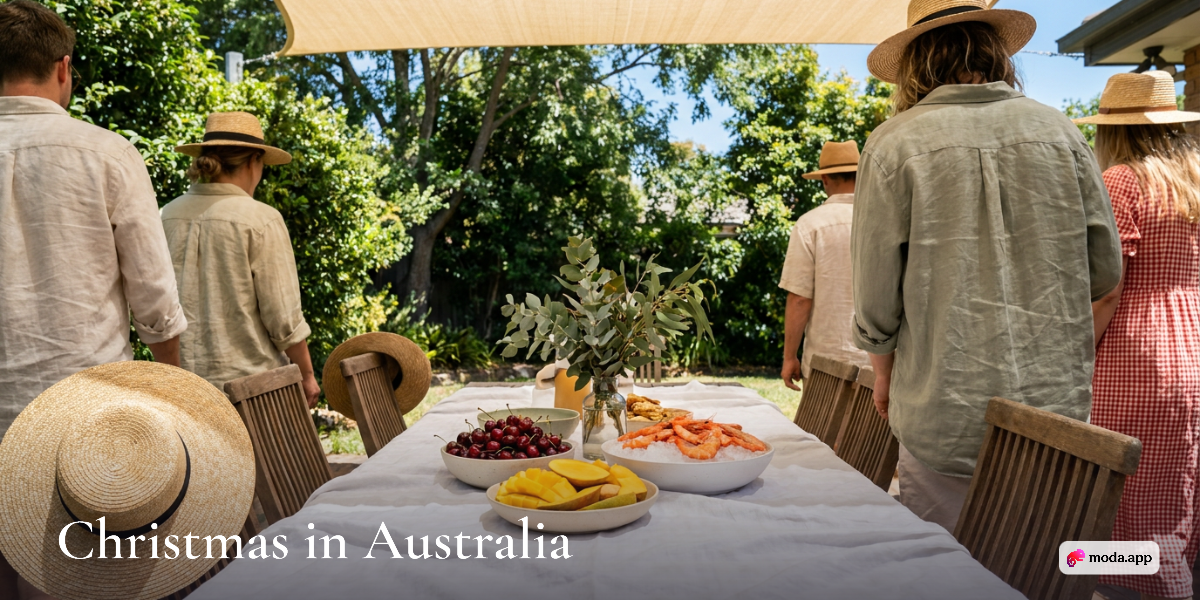
Quick answer: Dress for summer, not snow. Bureau of Meteorology averages put December highs at about 26°C in Sydney, 30°C in Brisbane and Perth and 25°C in Melbourne, and Cancer Council Australia says you need sun protection whenever the UV Index is 3 or above, which covers most of a December day. Pick loose linen or cotton in a tight weave, a collar or sleeves for anything outdoors, a broad-brim hat, and one light layer if you live in Melbourne, Hobart or Canberra, where a cool change can drop the day into the teens.
Northern-hemisphere Christmas advice (velvet, knits, boots) falls apart at 30 degrees. This guide covers what Australian Christmas weather actually looks like city by city, four outfits for the four most common Christmas Day plans, and the fabric and sun rules that make the difference between a comfortable lunch and a sunburnt one.
How hot is Christmas Day in Australia?
Expect a warm to hot day almost everywhere, with a wide spread between cities and between years. These are the December averages from the Bureau of Meteorology's 1991 to 2020 records, as summarised by Current Results:
- Darwin: 33°C high, 26°C low, humid wet-season weather with storms.
- Brisbane: 30°C high, 19°C low.
- Perth: 30°C high, 16°C low, usually dry.
- Adelaide: 28°C high, 16°C low.
- Canberra: 27°C high, but a 12°C low, so mornings and evenings are cool.
- Sydney: 26°C high, 18°C low.
- Melbourne: 25°C high, 12°C low.
- Hobart: 21°C high, 12°C low.
Averages hide the swings. The Bureau's own Christmas Day 2025 forecast had Perth at 39°C and Brisbane at 32°C with showers, while Melbourne sat at 19°C and Hobart at 17°C under cloud. The Bureau issues its Christmas Day forecast as part of the normal 7-day outlook, so the useful move is to plan two outfits now (a hot-day one and a cool-change one) and choose between them once the forecast lands around 18 December.
Dress for the UV, not the temperature
In an Australian summer the sun is the bigger risk than the heat, so your outfit is part of your sun protection. Cancer Council Australia and ARPANSA say protection is needed whenever the UV Index is 3 or above, that peak-summer UV averages 11 or more across most of the country on clear days, and that unprotected skin can be damaged in as little as 15 minutes at that time of year. They also stress that cloud and cooler temperatures are not a reliable sign that UV is low.
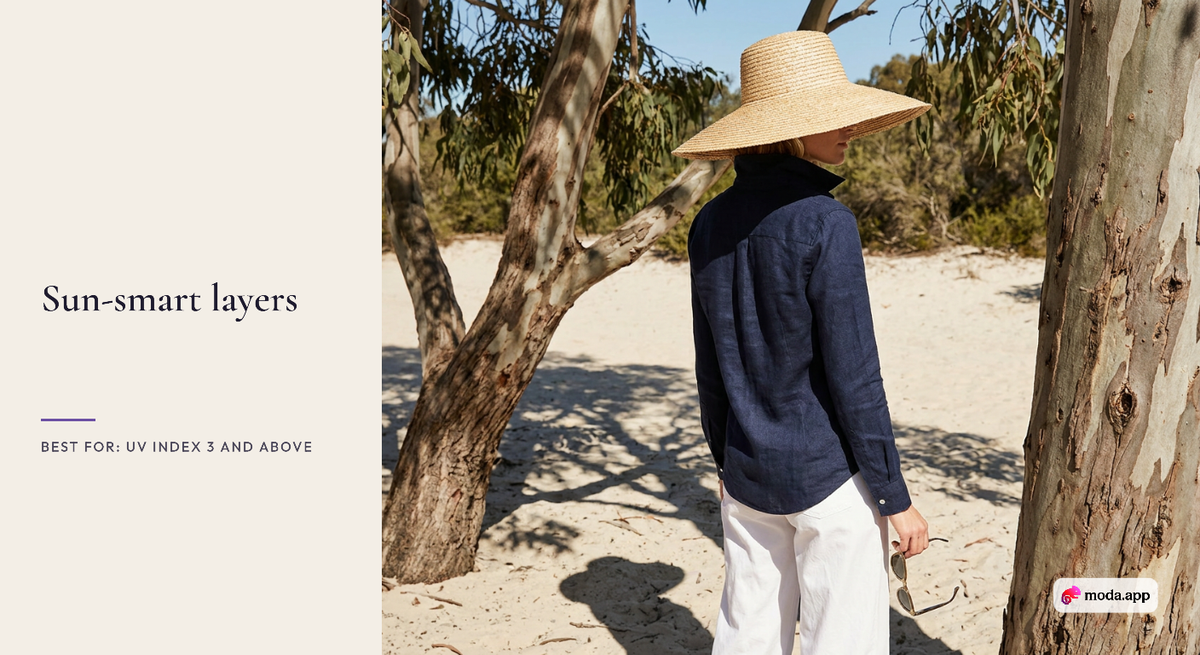
What that means for clothes, according to Cancer Council's guidance on sun-protective clothing:
- Look for UPF 50 or 50+ on swimwear, rash vests and beach shirts. There are only four UPF ratings (15, 30, 50 and 50+). Cancer Council calls 50 and 50+ excellent protection, and a garment has to cover the torso and about three quarters of the upper arm to carry a rating at all.
- Tighter weave beats thinner fabric. A tightly woven or knitted fabric blocks more UV than an open, gauzy one. Hold a shirt up to the light: if you can see pinpricks of light through it, the sun can get through too.
- Collars and longer sleeves do real work. Cancer Council recommends tops with collars and sleeves of at least three-quarter length for time outdoors. A camp-collar linen shirt or a three-quarter-sleeve cotton dress covers the back of the neck and shoulders, the spots that burn first at a backyard lunch.
- Stretched or wet fabric protects less. A tight top stretched over the body, or a cotton tee that is wet from the pool, lets more UV through, which is why a dedicated rash vest is worth it for the beach.
- Darker colours absorb more UV than pale ones. Navy, deep green and dark red protect better than white, though they also feel warmer in direct sun, so save them for shaded or indoor parts of the day.
Add a broad-brim hat, SPF50 or 50+ sunscreen on anything the outfit leaves bare, sunglasses, and shade for the hottest part of the day. The free SunSmart Global UV app and ARPANSA's website show your local UV Index and the hours when protection is needed.
Four Christmas outfits for Australian weather
Most Australian Christmas Days follow one of four plans. Each look below works with clothes many people already own, with notes on what to change for humidity, wind or a cooler city.
1. Long Christmas lunch at home or with family
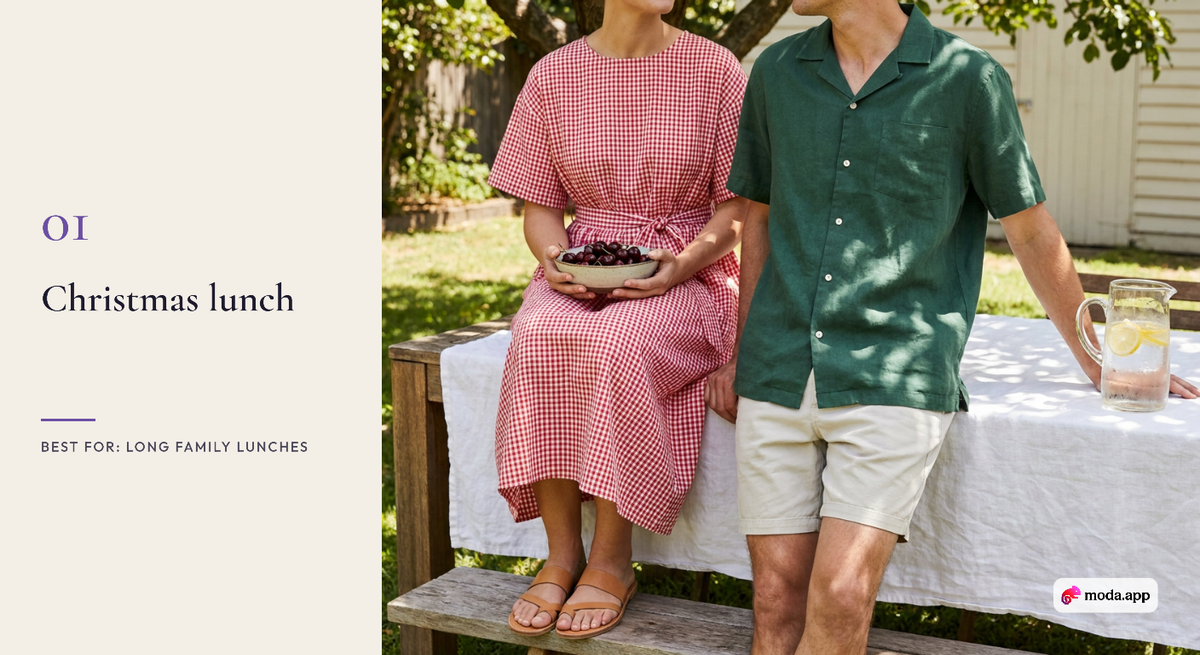
The look: a loose linen or cotton midi dress with a tie waist, or a short-sleeve camp-collar linen shirt with tailored cotton shorts or light chinos. Flat leather sandals or canvas sneakers.
Why it works: lunch often runs for hours and moves between the kitchen, the table and the backyard. Loose linen lets air move across the skin, and Cancer Council notes that lightweight natural fabrics such as linen, cotton and hemp help keep you cooler than synthetic equivalents. A collar and sleeves cover the shoulders when the table ends up outside.
Make it festive: Christmas colours in summer weights read better than novelty prints in polyester. Try a deep green linen shirt, a red gingham dress, or a white outfit with one red accessory. If you plan to iron linen at 7am and sit in it for six hours, accept some creasing, or see our guide to getting wrinkles out without an iron.
2. Beach, pool or backyard cricket Christmas
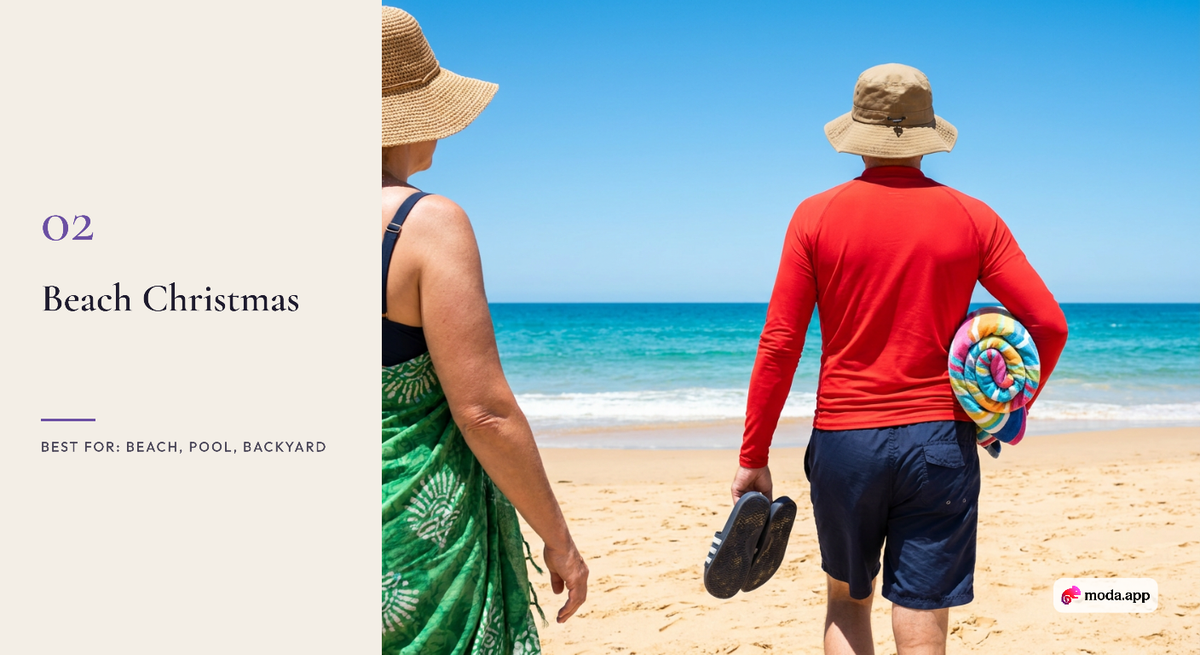
The look: swimwear under a long-sleeve UPF 50+ rash vest or a loose long-sleeve beach shirt, board shorts or a cotton sarong, a broad-brim hat and thongs or slides you can kick off.
Why it works: this is the plan where you spend the most hours in direct midday sun and get wet, the two conditions in which ordinary cotton protects least. A rated rash vest keeps its protection in the water, and a sarong or shirt goes over swimwear for the walk back to lunch.
Make it festive: a red or green rash vest, a Christmas-print sarong or a festive bucket hat does the job without adding heat. Leave the Santa hat for photos only, because it offers no shade to your face or neck.
3. Christmas church service or a restaurant lunch
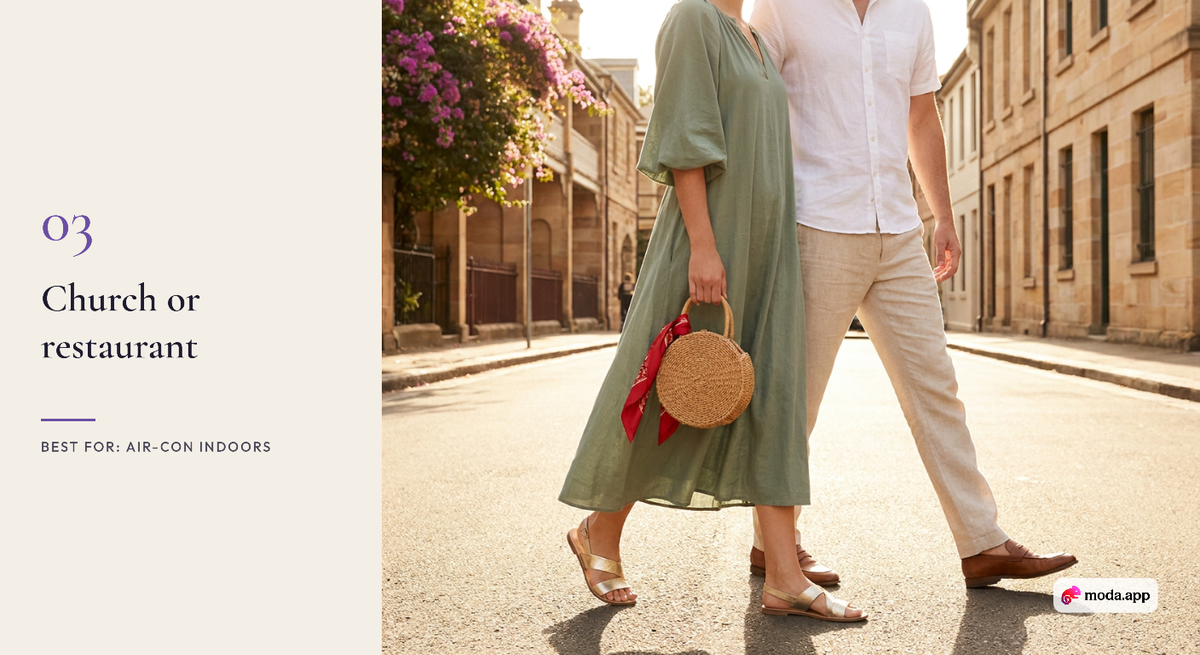
The look: a midi or maxi dress with sleeves or a light cardigan, or cotton or linen trousers with a short-sleeve button-up or polo. Loafers, low block heels or smart leather sandals.
Why it works: a church service or restaurant usually means air-conditioning inside and heat outside. Many churches have no formal dress code, but covered shoulders and a hem at or below the knee is a safe, respectful middle ground if you are visiting a congregation you don't know. Breathable trousers in a light colour look smarter than shorts without trapping heat.
Make it festive: a metallic sandal, a silk scarf tied to a bag, or a small red or gold piece of jewellery adds occasion without a heavy fabric. Midnight Mass on Christmas Eve is different again; our guide to what to wear to Midnight Mass covers the cooler late-night version.
4. Melbourne, Hobart or Canberra cool-change Christmas
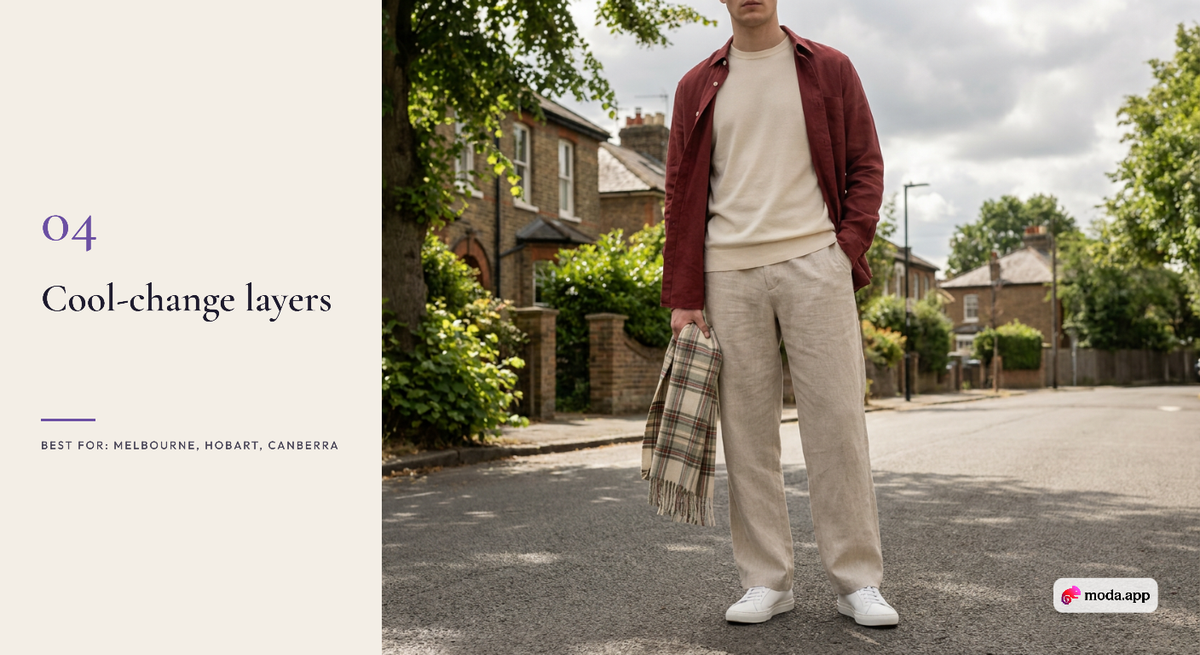
The look: a cotton shirt dress, or a fine cotton knit top with linen trousers, plus a light layer you can add and remove: a linen-blend overshirt, an unlined cotton jacket or a fine merino cardigan. Closed shoes such as leather loafers or sneakers.
Why it works: these cities have the coolest December lows in the Bureau's averages (12°C in Melbourne, Hobart and Canberra), and the 2025 Christmas forecast put Melbourne at 19°C and Hobart at 17°C. A day can start cool, hit the high twenties by lunch and then cool sharply. One breathable layer covers that whole range better than a single warm outfit.
Make it festive: a red or forest green overshirt, a tartan scarf for the evening, or a cream knit with gold jewellery. Keep the layer packable so it can live on the back of a chair once the sun comes out.
Fabrics that keep you cool, and the ones to skip
The right fibre and weave matter more in 30°C heat than the cut of the outfit. Use this as a quick guide when choosing what to wear:
- Linen: the best choice for heat. It is breathable, dries quickly and stands slightly away from the body. It creases, which is part of its character.
- Cotton poplin, seersucker and voile: crisp and cool. Seersucker's puckered texture holds fabric off the skin; voile is very light but often loosely woven, so it offers less sun protection outdoors.
- Light merino: surprisingly good for changeable southern cities because it handles both a cool morning and a warm afternoon without smelling after a long day.
- Skip velvet, heavy satin, sequins on synthetic mesh and thick knits for daytime events in hot cities. They trap heat and show sweat. Save them for an air-conditioned evening party.
- Watch polyester "festive" shirts. Cheap novelty prints are often printed on tightly woven polyester that blocks UV but traps moisture, so they feel clammy by mid-afternoon.
Hot-weather Christmas mistakes to avoid
A few small choices make or break a long hot Christmas Day:
- Planning one outfit for every city. A Perth-style 39°C day and a Hobart-style 17°C day need different clothes. Check the Bureau's forecast a week out and keep a backup.
- Treating a shady lunch as sun-safe. Reflected light and long hours outdoors add up. Keep shoulders covered and reapply sunscreen after swimming.
- New shoes for a long day. Christmas often involves standing in kitchens and walking to the beach. Wear sandals or sneakers you have already broken in.
- White linen with beetroot and prawn sauce. If you wear pale colours to lunch, keep a stain plan ready: blot, rinse with cold water and treat before the stain dries.
FAQ
What do people wear for Christmas in Australia?
Mostly summer clothes. Common choices are linen or cotton dresses, short-sleeve shirts with shorts or light trousers, sandals, and swimwear with a rash vest for a beach or pool Christmas, with festive colours or accessories rather than winter fabrics.
Is it hot on Christmas Day in Australia?
Usually, yes. The Bureau of Meteorology's December averages range from about 21°C in Hobart to 30°C in Brisbane and Perth and 33°C in Darwin, and individual Christmas Days can be much hotter or cooler. In 2025 the Bureau forecast 39°C for Perth and 17°C for Hobart.
What should I wear to a Christmas lunch in summer?
A loose linen or cotton dress, or a camp-collar linen shirt with shorts or chinos, plus comfortable sandals. Choose sleeves or a collar if any of the lunch is outdoors, and add a broad-brim hat for time in the sun.
What should I wear to a beach Christmas in Australia?
Swimwear under a UPF 50+ rash vest or long-sleeve beach shirt, board shorts or a sarong, a broad-brim hat and slides. Cancer Council recommends sun protection whenever the UV Index is 3 or above, which covers most of a summer day.
What should I pack for Christmas in Melbourne?
Pack for both heat and a cool change: breathable linen or cotton for warm hours and a light layer such as an overshirt, unlined jacket or fine merino cardigan, because December lows in Melbourne average about 12°C.
Plan Christmas Day from the clothes you already own
Elara is an AI personal stylist that learns your wardrobe. Add your clothes to your digital closet, ask the styling chat for a hot-day and a cool-change Christmas look, and save both to your Calendar so the decision is made before the forecast arrives. Try Elara free.
Your stylist, in your pocket
Stop reading about outfits. Start wearing them.
Elara knows your closet, shops every store and gets you dressed for any occasion.