Kibbe Body Type: Find Your Type & Style Guide
Kibbe body type is a yin/yang styling framework organizing bodies into 13 image identities across 5 families. Learn how to find your type with photo methods and apply it to real wardrobe decisions.

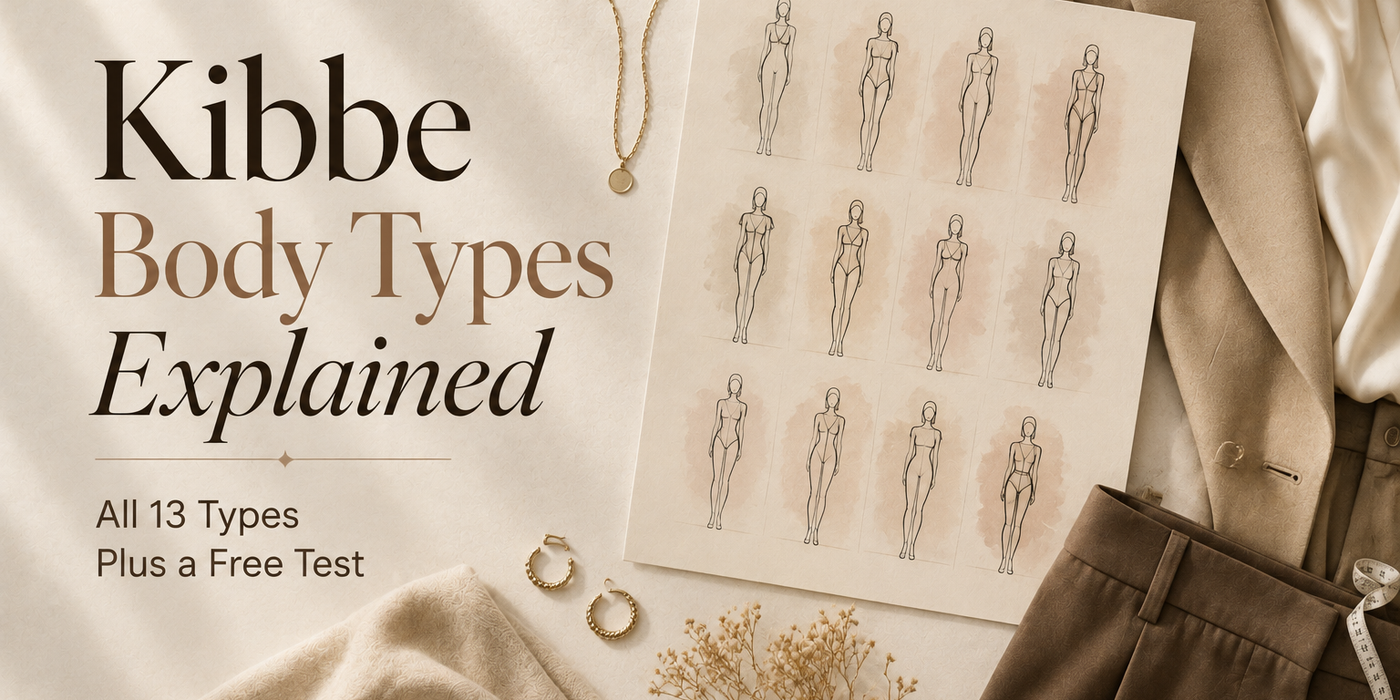
Kibbe Body Types Explained: All 13 Types Plus a Free Test
Table of Contents
- Introduction: Why Kibbe Still Matters in 2026
- What Is the Kibbe Body Type System? A Quick History
- All 13 Kibbe Body Types Explained
- How to Find Your Kibbe Body Type: Tests, Tools & Photo Methods
- Kibbe Body Types for Men and Plus-Size Bodies
- From Type to Wardrobe: How to Actually Use Your Kibbe Type
- FAQ: Common Questions About Kibbe
- Key Takeaways for Your Wardrobe
- Conclusion: Kibbe as a Styling Tool, Not an Identity Label
Key Takeaways
- The Kibbe system organizes bodies into 5 families and 13 image identities (10 actively emphasized today), according to Vox.
- Kibbe is best understood as a styling language—covering line, scale, and fabric compatibility—not a body-shape quiz.
- Modern assessment is shifting toward photo-based and AI-assisted tools using full-length neutral images.
- No verified demographic data exists on type prevalence; anecdotal claims about "common" types should be treated skeptically.
- Knowing your Kibbe type delivers real value only when applied to actual wardrobe decisions.
Introduction: Why Kibbe Still Matters in 2026
The Kibbe system is a yin/yang-based styling framework that has outlasted every body-shape trend that came after it because it addresses something the others ignore: proportion, line, and the relationship between your natural silhouette and your clothes. According to Vox, the system organizes bodies into 13 image identities across 5 broad families — and while the quiz format made it famous, that framing has always undersold it.
What's changing right now is significant. As of 2026, Kibbe is being used less as a rigid categorization tool and more as a practical styling language for line, scale, and fabric compatibility. That's the version worth learning. This article covers all 13 types, how to assess yourself using both traditional and photo-based methods, and — critically — how to translate your type into real wardrobe decisions.
What Is the Kibbe Body Type System? A Quick History
The Kibbe system emerged as a yin/yang-based framework for organizing bodies into 5 broad families — Dramatic, Natural, Classic, Gamine, and Romantic — with 13 distinct image identities nested within them. According to Vox, those 13 types remain the foundational reference point for the system, even as modern practice has evolved.
The framework runs on a yin/yang axis. Yang characteristics are sharp, angular, and elongated — think strong bone structure, straight lines, and a vertical silhouette. Yin characteristics are soft, rounded, and petite — curved bone structure, fuller flesh, and gentle contours. Most people, and most Kibbe types, blend both in different proportions. A Soft Classic sits near the balanced center; a Dramatic sits at the far yang extreme; a Romantic sits at the far yin extreme.
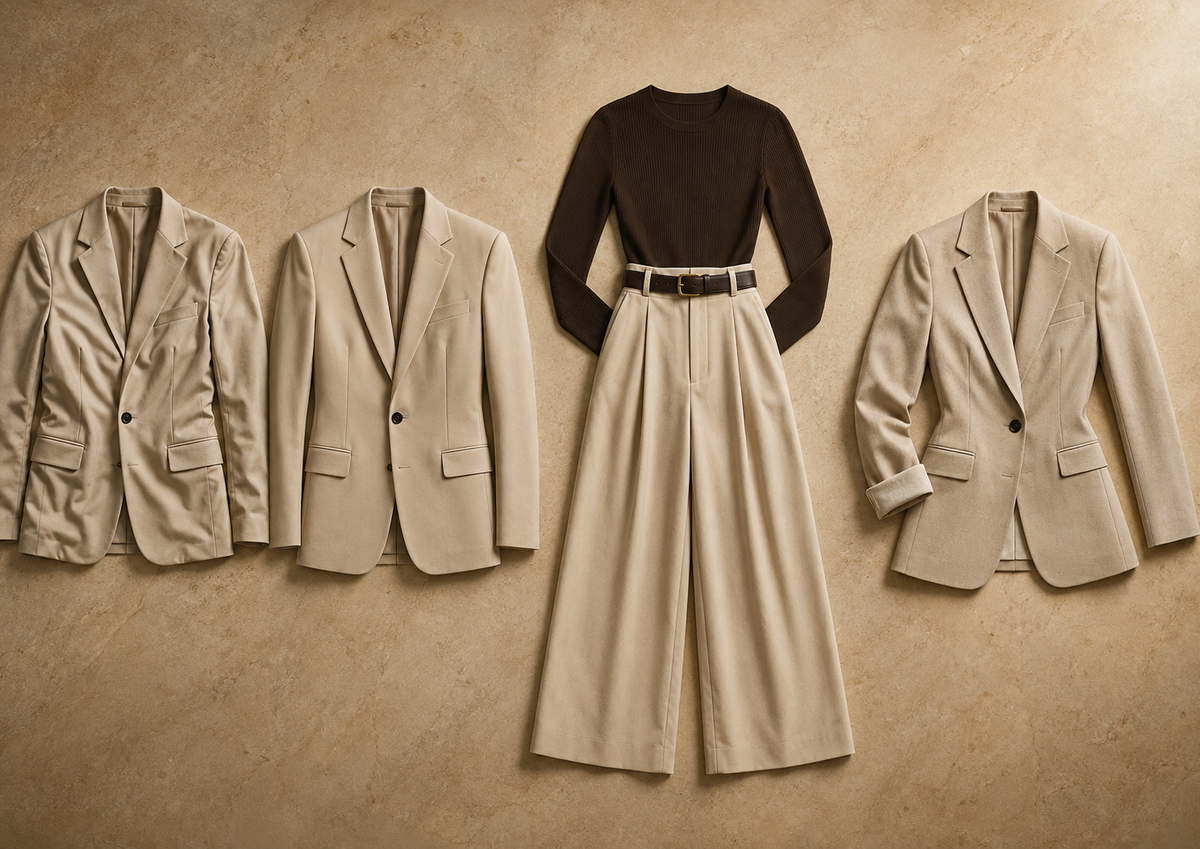
The original model carried all 13 identities, including "pure" versions of Classic and Gamine. Modern Kibbe community practice, as reflected across sources including kibbebodytypes.net and theconceptwardrobe.com, has shifted toward 10 active image identities after those pure balanced types were largely de-emphasized. The 13-type model still circulates widely online, which is why both numbers appear in current discussions — neither is wrong, they just reflect different eras of the system.
One clarification worth making explicit: Kibbe is a self-assessment style system, not a medically validated classification. It measures aesthetic line and proportion — how your body's natural geometry interacts with clothing silhouette — not health, fitness, or body composition. That distinction matters, because it's what separates Kibbe from the kind of prescriptive body-typing that tells people what they can't wear.
All 13 Kibbe Body Types Explained
With the yin/yang framework established, the 13 image identities become much easier to navigate. According to Vox, "there are 13 body, or 'image identity,' types in Kibbe's system, grouped into five broad families." Each family shares a dominant energy — yang (angular, elongated, sharp) or yin (soft, rounded, curved) — and the types within each family represent variations in how that energy expresses itself.
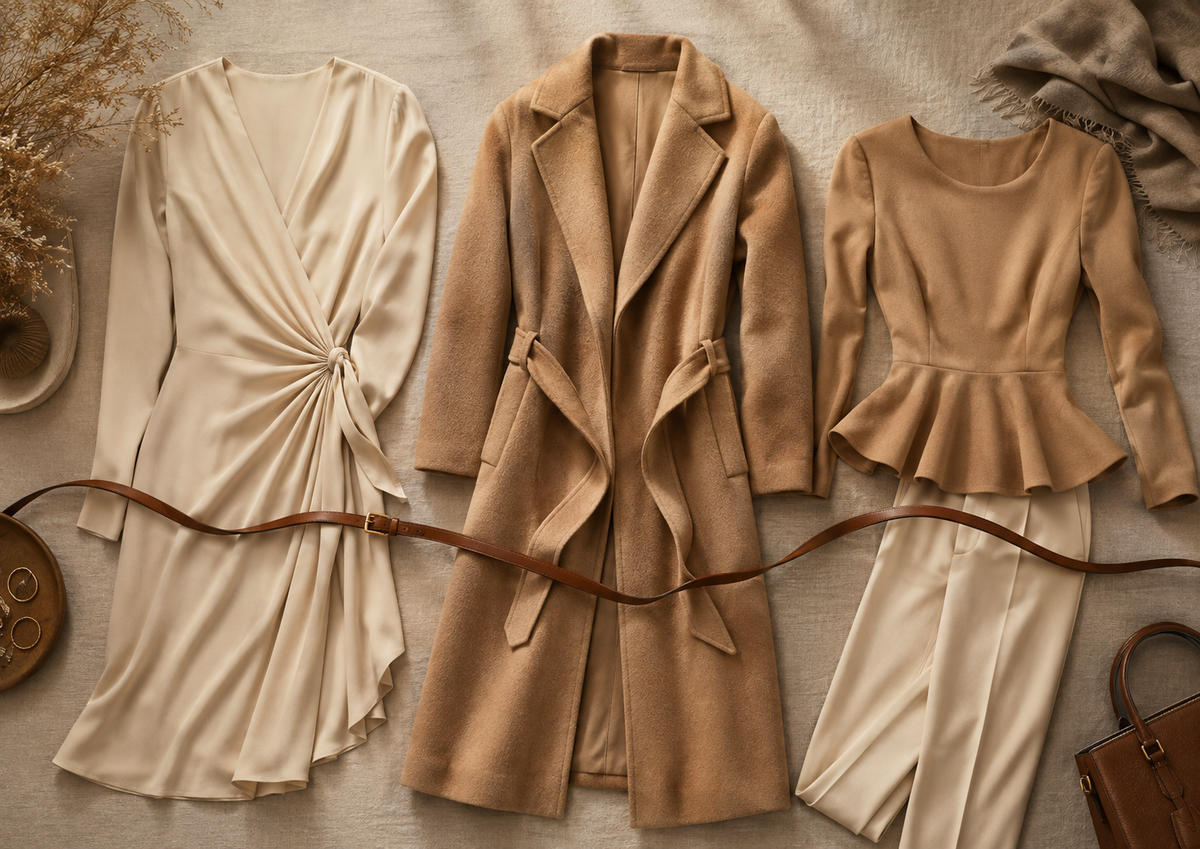
Dramatic Family — Pure Yang
Dramatic is the most yang type in the entire system: tall, sharp-boned, with a narrow, elongated frame and angular facial features. Flesh sits close to the bone with minimal softness. Signature lines are sleek and unbroken — long columns, minimal layering, structured fabrics like crepe or wool suiting. This is the type at the farthest yang end of the spectrum.
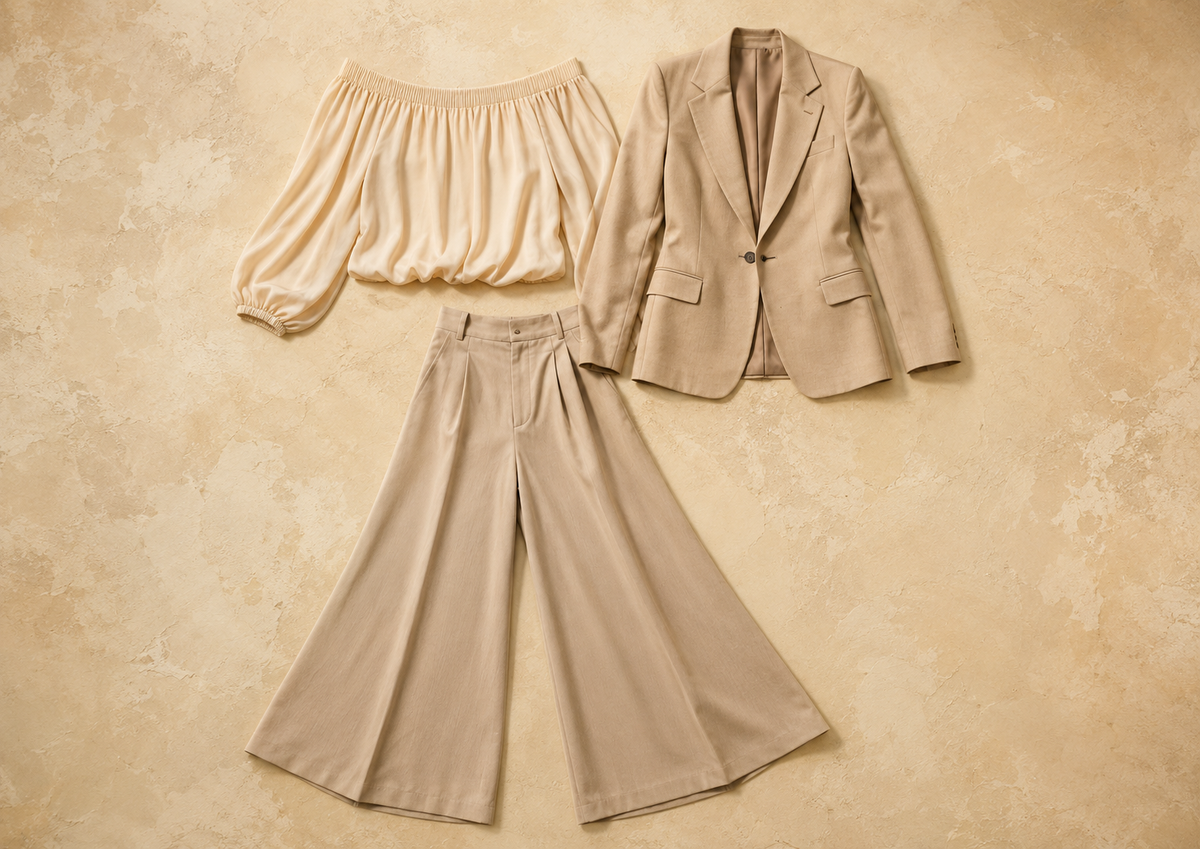
Natural Family — Yang-Dominant with Ease
- Flamboyant Natural: Large-scale, broad-shouldered, with blunt bone structure and a loose, unconstructed feel. Works best in relaxed, oversized silhouettes with natural fabrics.
- Natural: Moderate yang with a slightly softer frame than Flamboyant Natural. Thrives in easy, unfussy shapes — think wide-leg trousers and unstructured blazers.
- Soft Natural: Yang bone structure with a yin overlay of soft flesh and gentle curves. Drape and ease remain key, but softer fabrics and slightly more fitted shapes come into play.
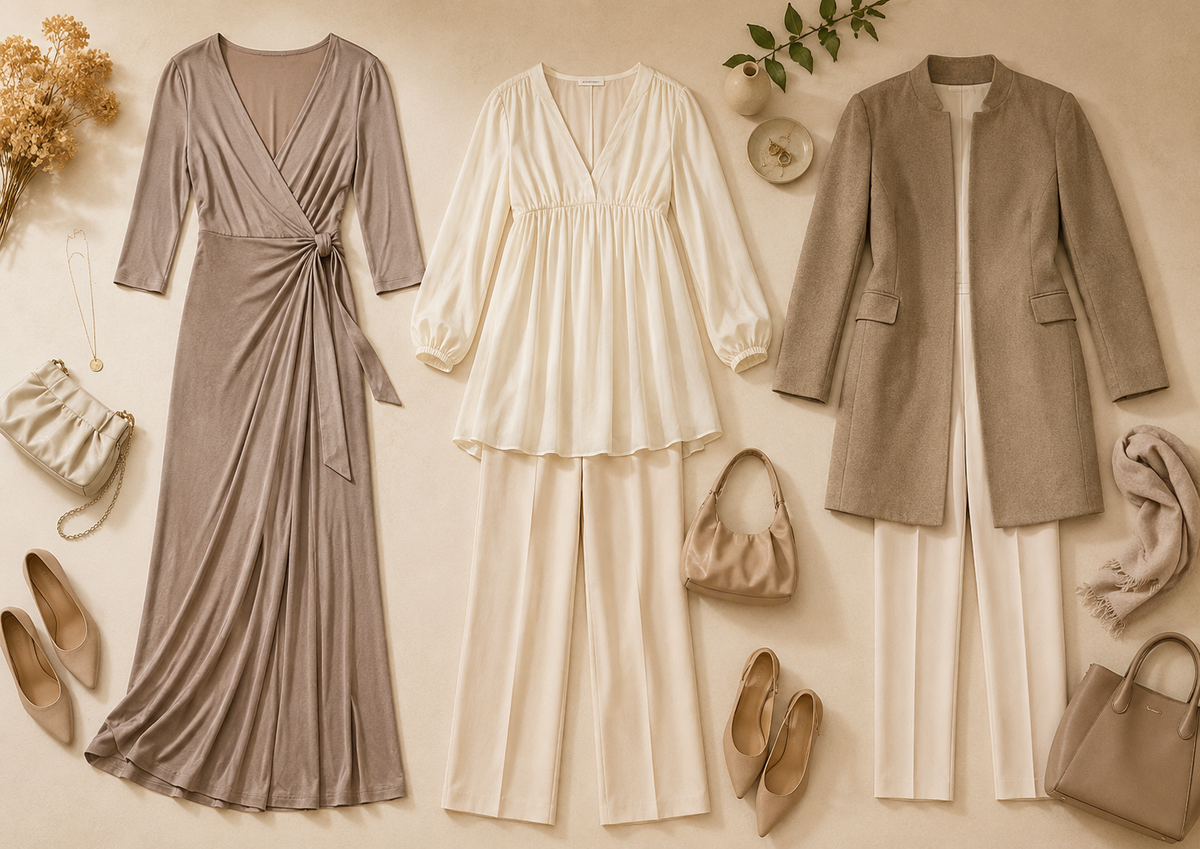
Classic Family — Balanced Yin/Yang
- Dramatic Classic: Balanced overall, but with a sharper, more elongated bone structure. Tailored, precise silhouettes work best.
- Classic: The most evenly balanced type — moderate bone structure, moderate flesh, no dominant feature. Clean, symmetrical lines and timeless tailoring suit this type well.
- Soft Classic: Balance tips slightly toward yin, with softer flesh and more delicate features. Flowing fabrics and gentle draped lines flatter most.
The modern Kibbe community now emphasizes 10 active image identities; the pure Classic and pure Gamine types have been de-emphasized in practice, though all 13 remain valid reference points. — kibbebodytypes.net, theconceptwardrobe.com
Gamine Family — Petite with Yang Contrast
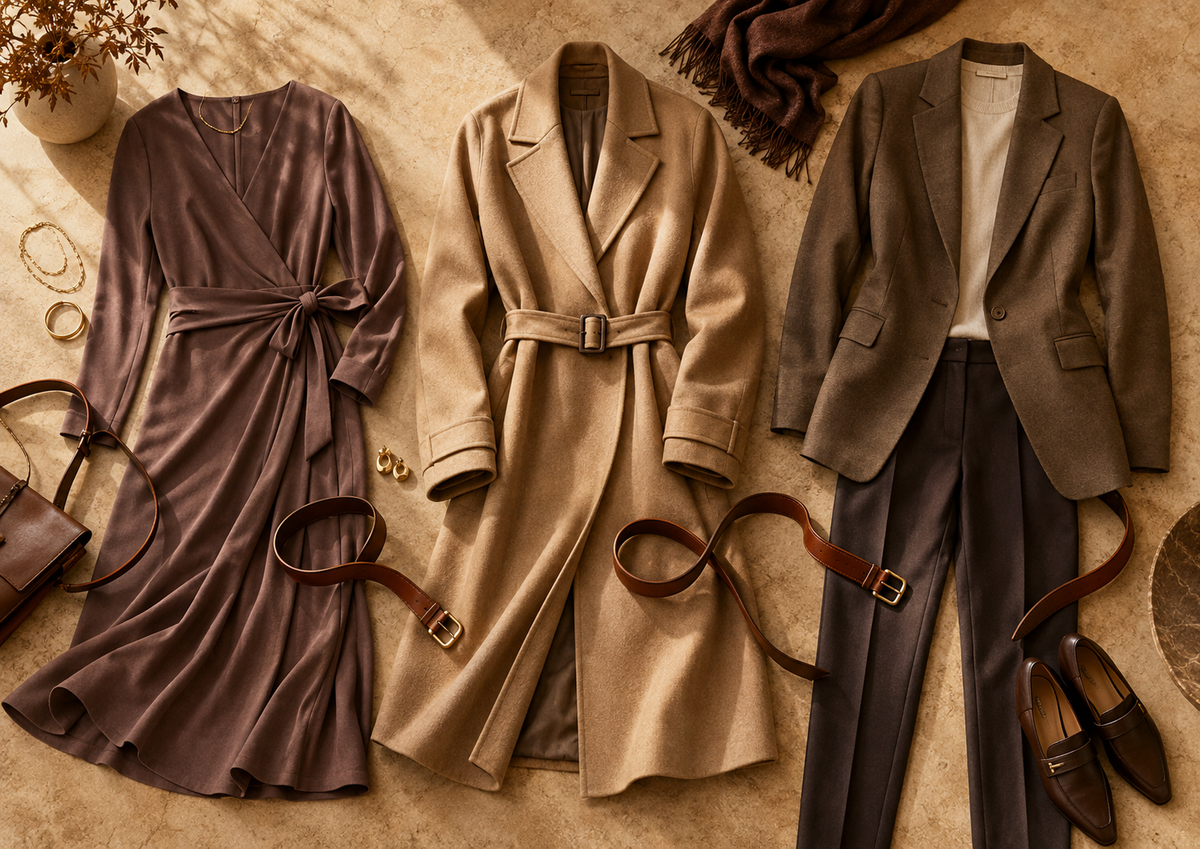
- Flamboyant Gamine: Small frame but with sharp, angular bone structure — a striking contrast of petite scale and bold yang lines. Works well with bold prints, geometric shapes, and contrast dressing.
- Gamine: Balanced mix of yin and yang on a small frame. Playful, graphic, or mixed-pattern looks echo the type's inherent contrast.
- Soft Gamine: Small and angular in structure but with a soft, rounded overlay. Delicate details, small-scale prints, and fitted silhouettes work best.
Ready to upgrade your wardrobe?
Get the Elara app for AI-powered styling and virtual try-ons.
Romantic Family — Pure Yin
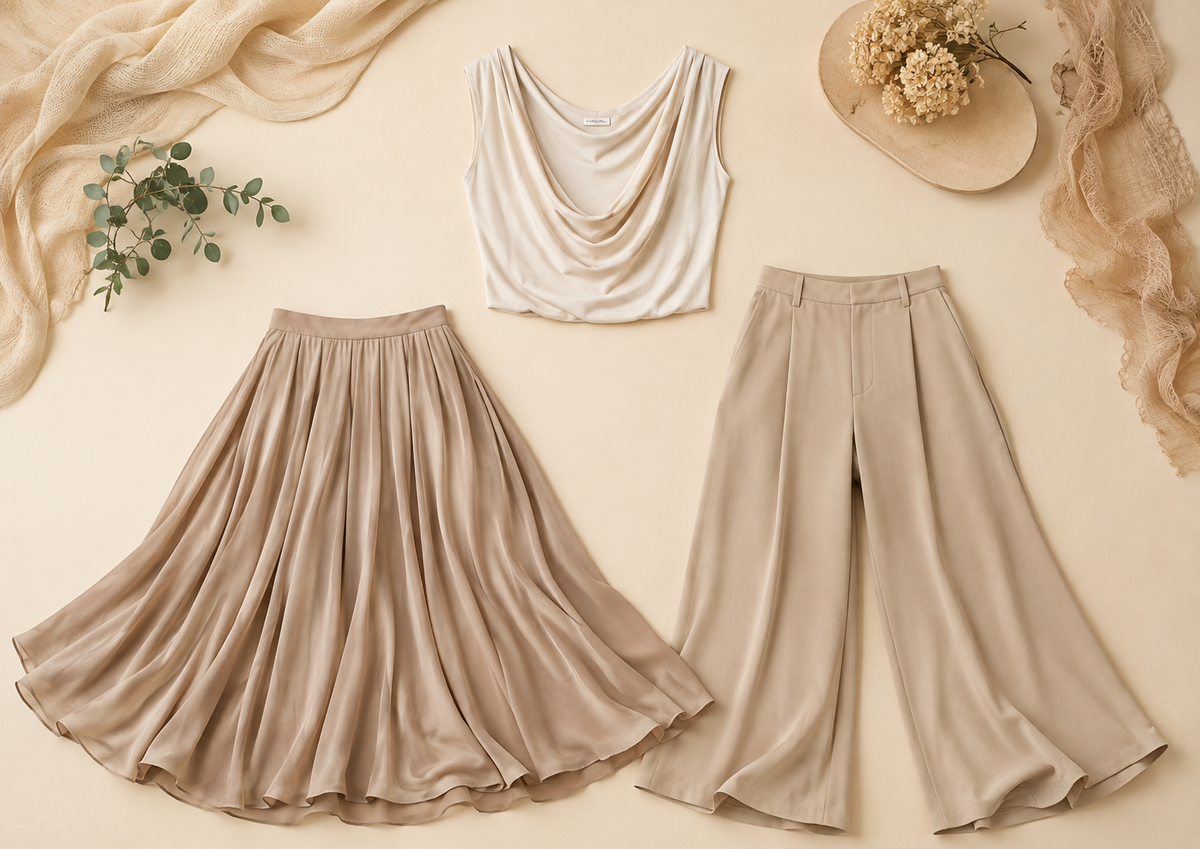
Theatrical Romantic and Romantic sit at the opposite end of the spectrum from Dramatic — the most yin types in the system. Both share a soft, rounded, lush physical character: curved bone structure, full flesh, and delicate, soft facial features. The Theatrical Romantic adds a slight dramatic sharpness to the mix. Both types are best served by soft, draped, body-skimming silhouettes, feminine details like ruching and lace, and fabrics with natural drape and weight.
The contrast between Dramatic (pure yang) and Romantic (pure yin) illustrates the full range of the system: one is all elongated angles and sharp lines, the other all curves and softness. Every other type lives somewhere on the continuum between them.
How to Find Your Kibbe Body Type: Tests, Tools & Photo Methods
Two main methods exist for identifying your Kibbe type: the classic written questionnaire and the increasingly popular photo-based approach. Both assess the same underlying qualities — bone structure, flesh distribution, and facial features — but they reach those answers differently.
The written questionnaire walks you through a series of questions organized by physical category: bone structure (angular vs. rounded, long vs. short), flesh (soft and full vs. taut and minimal), and facial features (sharp vs. delicate, prominent vs. soft). Your answers cluster toward a type based on dominant patterns. The limitation is that self-reporting physical characteristics in the abstract is harder than it sounds — most people misjudge their own bone structure.
The photo-based method sidesteps that problem. According to multiple style sources including gabriellearruda.com and theenvironmentalblog.org, the workflow looks like this:
- Wear fitted basics — a plain fitted top and slim or straight-leg trousers or a bodycon dress.
- Stand in natural posture against a neutral, uncluttered background.
- Take a full-length photo (have someone else take it, or use a timer).
- Assess the image for line (angular vs. curved), width (narrow vs. broad), and softness vs. angularity — not your weight, clothing size, or how you feel about your body.
This approach works because Kibbe measures geometric line, not mass. A photo makes that geometry visible in a way that abstract self-description rarely does.
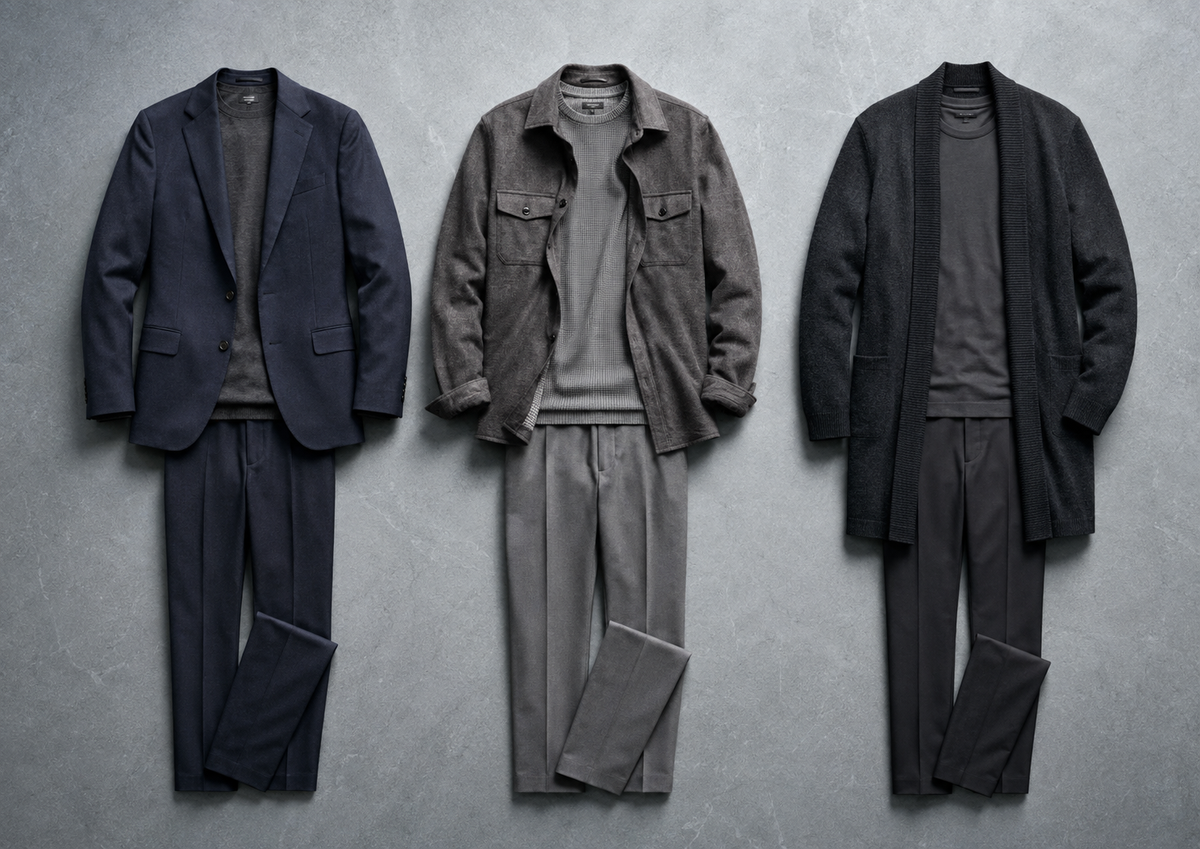
The newest development is AI-assisted Kibbe tools. Platforms like prismatest.com and flowith.io now package the questionnaire into image-based quizzes and photo-upload workflows that map user images to Kibbe categories — making the process faster and more accessible for beginners.
One caveat applies to every method: no Kibbe test is definitive. The system is designed for styling guidance and self-discovery, not precise scientific categorization. Treat your result as a strong starting hypothesis, not a final verdict — especially if you land near the border between two types.
Kibbe Body Types for Men and Plus-Size Bodies
The yin/yang framework at the core of Kibbe applies to any body, regardless of gender. The five families — Dramatic, Natural, Classic, Gamine, Romantic — describe geometric line and proportion, not sex-linked physical traits. That said, online Kibbe content skews heavily toward women. This reflects marketing and platform adoption patterns, not any structural limitation of the system itself. Men's Kibbe communities do exist, and all 13 types are discussed within them — yang-dominant types like Dramatic and Flamboyant Natural tend to get more airtime, but that's a content bias, not a prevalence fact.
For plus-size bodies, the answer is equally direct: Kibbe measures line and proportion, not size or weight. A plus-size person can be any Kibbe type. The photo-based method — fitted basics, natural posture, full-length image — works across all body sizes precisely because it's assessing geometric shape, not mass. The key is using genuinely fitted clothing in the photo, so the body's natural lines are visible rather than obscured.
Transparency matters here: no official 2026 statistics exist on Kibbe type prevalence by gender, size, or ethnicity. The only numeric dataset available is a 2020 Reddit poll of 366 votes from r/Kibbe — a self-selected, non-representative sample. Any content claiming to know which types are "most common" among specific demographics is working from anecdote, not data. The demographic skew in Kibbe content — predominantly aimed at white women — reflects who has historically produced and consumed that content online, not who can or does use the system.
From Type to Wardrobe: How to Actually Use Your Kibbe Type
That demographic context matters because it shapes how Kibbe gets taught—but it doesn't change what the system actually delivers when applied correctly. Knowing your type is the starting point, not the destination. The practical value comes from translating that label into three specific styling decisions: line, scale, and fabric.
Line refers to which silhouettes and hemlines work with your natural proportions. A Dramatic type carries elongated, angular lines—so sharp vertical cuts and minimal detail reinforce that geometry. A Soft Classic, by contrast, benefits from gentle curves and symmetry, not stark minimalism or exaggerated volume.
Scale governs everything from print size to accessory weight: a Flamboyant Natural can carry bold jewelry and oversized patterns; a Gamine type gets overwhelmed by them.
Fabric is where yin/yang balance becomes tactile—Dramatics suit structured, crisp materials like tailored wool or stiff silk; Romantics suit draped jersey, chiffon, and anything that moves with the body.
According to multiple 2026 Kibbe content sources, including theenvironmentalblog.org, the system is increasingly used as a filter for navigating trend cycles—not a rulebook. When oversized silhouettes dominate runways, a Soft Natural can adapt them; a Theatrical Romantic probably can't without losing her lines entirely. Kibbe becomes a decision-making tool, not a restriction.
This is where wardrobe auditing gets practical. Pull out your existing pieces and check them against your type's line, scale, and fabric criteria. A Soft Natural who owns mostly sharp-tailored blazers and structured trousers has a genuine mismatch—those pieces are fighting her natural ease rather than working with it. Identifying that gap before shopping saves money and closet space.
Once you know your type, Elara's AI maps that styling language directly onto your actual closet—surfacing pieces that align with your lines, flagging what's working against you, and recommending only purchases that fill real gaps rather than adding more noise.
FAQ: Common Questions About Kibbe
Can I be two Kibbe types at once?
Not exactly. The system is designed to place you in one type. However, you may land near the border between two types — for example, between Soft Natural and Soft Classic. If that happens, test both sets of styling guidelines against your actual closet and see which one produces better outfit results. That's your answer.
Does my Kibbe type change if I gain or lose weight?
No. Kibbe measures bone structure and natural line, not weight or body composition. Your type stays the same across weight fluctuations. However, how clothing drapes and reads on your body may shift slightly with significant weight change — so revisit your styling guidelines if you've experienced a major shift, but your core type category doesn't change.
What if my Kibbe type doesn't match my personal style?
Kibbe is a tool for harmony between your body and clothing silhouette — not a style identity. You can be a Classic type who loves edgy, avant-garde fashion. The system tells you which silhouettes will flatter your proportions; your personal taste tells you which aesthetic you want to express. Use Kibbe to find the edgy pieces that actually work with your lines, not as a reason to abandon your taste.
Is Kibbe the same as color analysis or seasonal color typing?
No. Kibbe addresses line, proportion, and silhouette. Color analysis (seasonal color typing, undertone analysis) addresses which hues complement your skin, hair, and eyes. Both systems are useful, and they work independently. You can be a Dramatic type with a cool undertone, or a Romantic with a warm undertone. They're separate lenses.
Key Takeaways for Your Wardrobe
- Identify your type using photos. The photo-based method is faster and more accurate than written questionnaires because it makes your body's geometric line visible.
- Translate type to three decisions: line, scale, and fabric. Don't memorize rules — focus on how your type's silhouettes, print sizes, and fabric weights interact with your actual body.
- Audit your closet against your type. You don't need to rebuild from scratch. Pull existing pieces and see which ones harmonize with your lines and which ones fight them.
- Use Kibbe as a filter, not a rulebook. It's a decision-making tool for navigating trends and filling wardrobe gaps, not a restriction on what you can wear.
- Apply your type to real shopping decisions. The value of knowing your Kibbe type emerges only when you use it to buy smarter and style what you already own.
Conclusion: Kibbe as a Styling Tool, Not an Identity Label
Kibbe's real value in 2026 isn't the label you land on—it's the styling language that label gives you for daily decisions. The shift is firmly toward using the system for line, scale, and fabric guidance rather than identity sorting.
The framework itself is straightforward: 5 families, 13 image identities (10 actively emphasized today), assessed through photo-based methods that read proportion and line rather than size or weight. But as Vox and others have noted, Kibbe remains a self-assessment style system, not a medically validated classification—no system perfectly captures every body, and it works best as a starting framework, not a final verdict.
Use it as a lens, not a verdict. The next step after finding your type is applying it to the wardrobe you already own.
Discover how Elara maps your Kibbe type to your real wardrobe — joinelara.com
Your AI Stylist is Here.
live on the App Store & Google Play
Available on iOS and Android for seamless access anytime, anywhere.