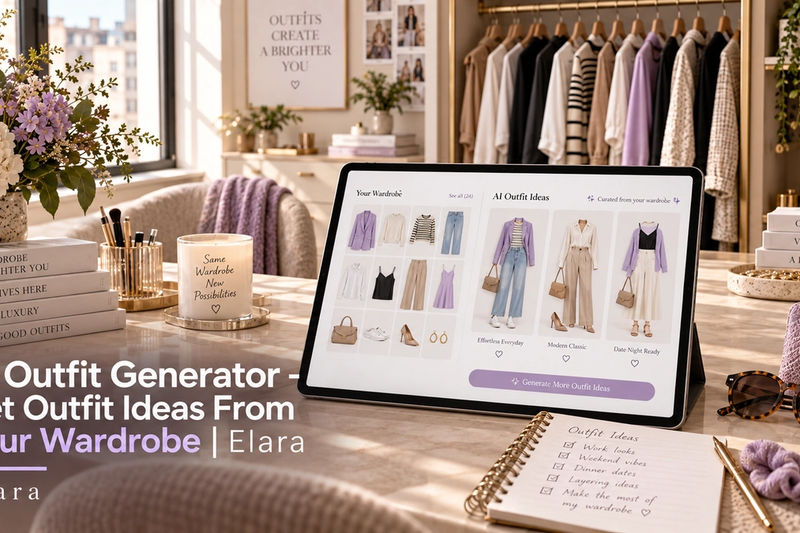
India's Fashion Market: Why Elara Is Built for It
India's fashion market grows 10.5% yet faces 35-50% return rates. Elara's wardrobe-first AI solves structural problems: return regret, fragmentation, and price pressure.


Elara: The Styling Solution Built for India 2026
Table of Contents
- Why India's Fashion Market Is Harder Than It Looks
- The Three Structural Problems Every Indian Shopper Faces
- How Elara Is Built for This Market — Feature by Feature
- The B2B2C Opportunity: Why Indian Fashion Brands Need Elara Too
- India's Difficulty Is Elara's Advantage — The 2026 Thesis
- Frequently Asked Questions
- Start Here
Key Takeaways
- India's apparel market is growing at 10.5% in FY26 (Unicommerce), yet e-commerce return rates hit 35–50% in apparel categories — growth and waste coexisting at scale.
- Elara's wardrobe-first AI maximizes what users already own before recommending new purchases, directly cutting return regret and fragmented spending.
- Elara operates B2B2C: serving individual shoppers and giving fashion brands a high-intent distribution channel.
- India's complexity isn't a problem Elara works around — it's the problem Elara was built to solve.
Why India's Fashion Market Is Harder Than It Looks
India's apparel market is projected to grow 10.5% in FY26, according to Unicommerce — a number that looks like an open invitation. Look closer, and the conditions behind that headline tell a different story.
The supply side is already under stress. After the US introduced tariffs totaling 50%, India's textile and apparel exports dropped 13% year-on-year (Mumbai Mirror and IndiatTimes). That's a significant blow given that the US accounts for nearly 30% of India's total textile and apparel export base. When export revenue contracts at that scale, manufacturers face margin compression that eventually travels downstream — to brands, to retailers, and to the shelf price a consumer sees.
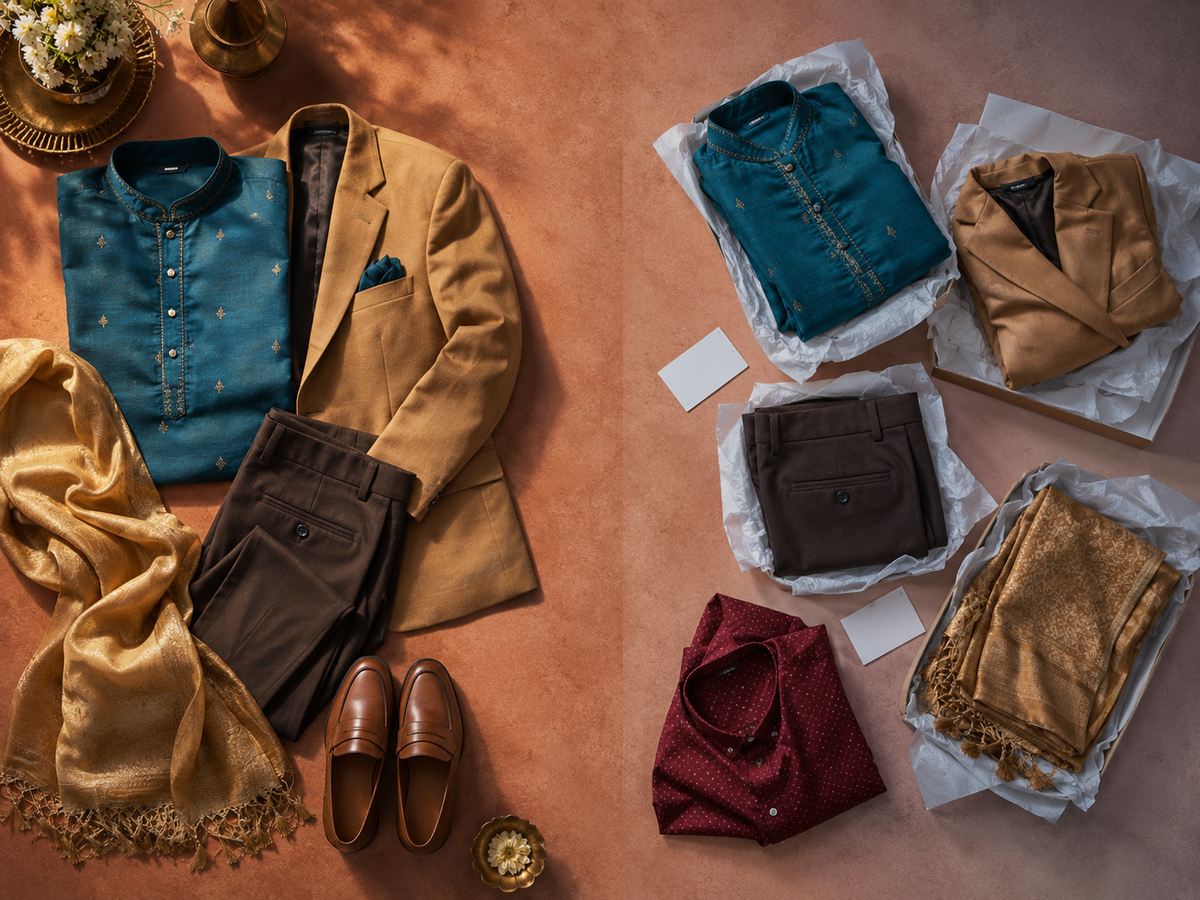
McKinsey's 2026 State of Fashion report captures the mood precisely. Industry executives no longer describe conditions as merely uncertain — they now use the word "challenging," with tariffs ranked as the single biggest operational hurdle. That shift in language matters: uncertainty implies temporary turbulence; challenging implies structural difficulty that demands a strategic response.
Domestic demand faces its own pressure point. The GST increase from 12% to 18% on products above a certain price threshold (BusinessWorld) lands hardest on the categories Indian consumers care most about: winter wear, festive outfits, and wedding-occasion clothing. These aren't peripheral purchases. Festive and bridal dressing sit at the emotional and commercial center of Indian fashion culture. Taxing them more steeply doesn't kill demand — it sharpens the scrutiny every purchase receives.
The result is a market that rewards a very specific kind of player. Generic trend-chasing platforms built for Western consumption patterns, or apps that push volume over relevance, have no structural answer to these pressures. India rewards operational discipline, deep local relevance, and genuine versatility — the ability to help a shopper do more with what they already have, and buy smarter when they do spend. That's not a description of most fashion apps. It is, precisely, a description of Elara.
The Three Structural Problems Every Indian Shopper Faces
The headline frustrations of Indian fashion shopping — buying something that doesn't fit, rotating the same five outfits, blowing a budget on a piece that never gets worn — aren't bad luck or poor personal taste. They are predictable outputs of three structural problems baked into how the market operates.
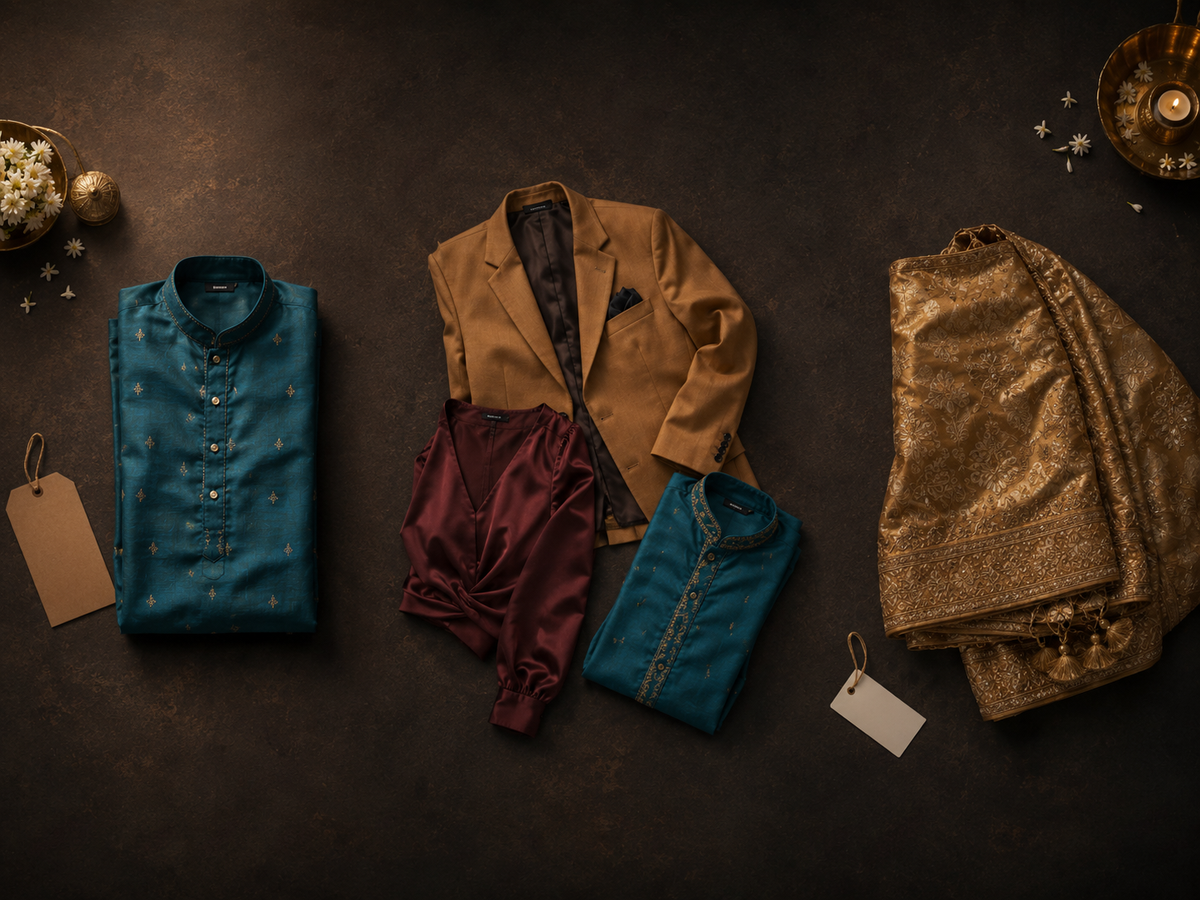
Problem 1 — The Return Trap
Return rates in Indian e-commerce apparel run between 35% and 50% across some categories (Unicommerce and Technavio). That figure deserves to sit with you for a moment: nearly one in two purchases in certain segments comes back. The causes aren't mysterious. Sizing is inconsistent across brands — a medium from one label fits nothing like a medium from another. Shoppers buy from product images that bear little resemblance to how an item looks on their body or integrates with their existing wardrobe. Impulse purchases made in a scrolling session rarely survive contact with a real closet. The consumer experience on the other side of this is a cycle of anticipation, disappointment, and the low-grade friction of packaging returns, waiting for refunds, and starting over. It drains time, money, and the motivation to shop at all.
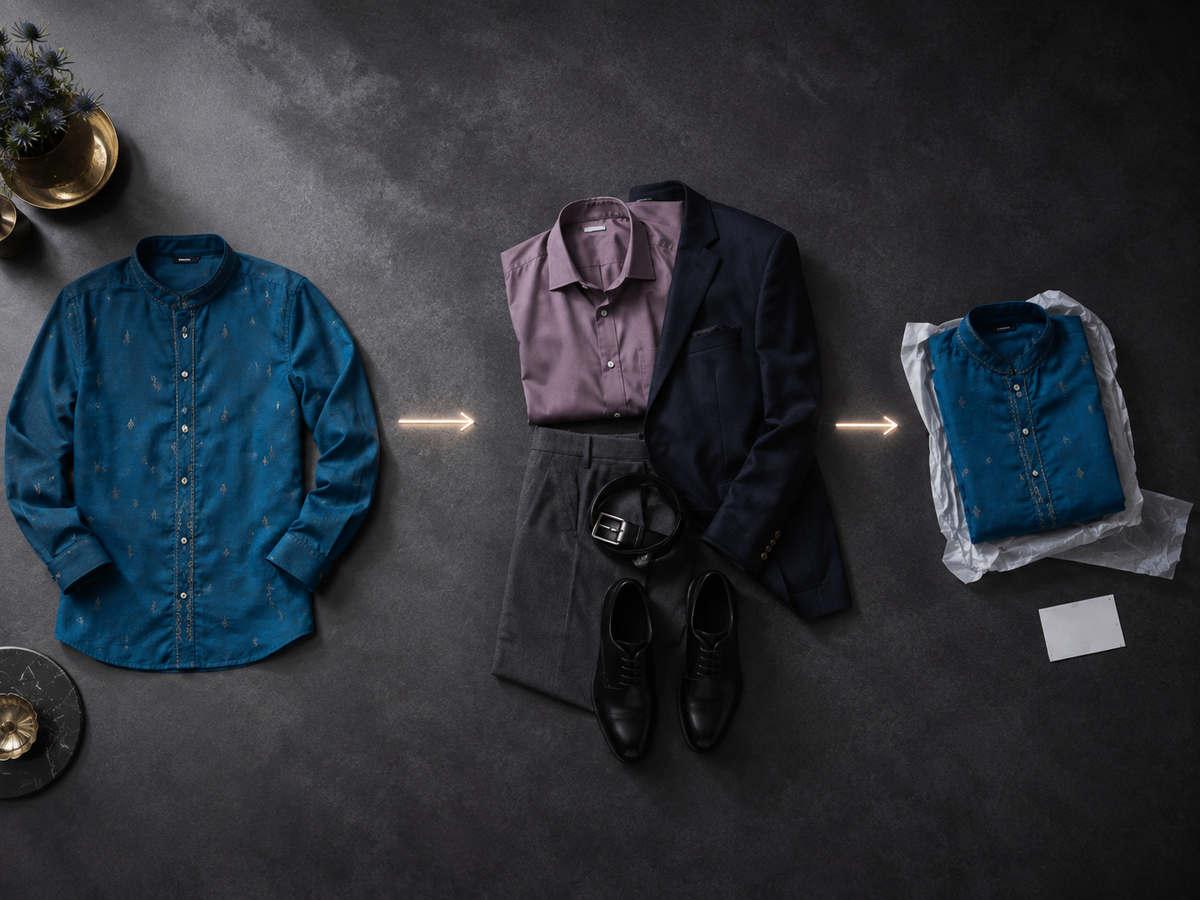
Problem 2 — The Fragmentation Problem
Organized retail accounts for only about 45% of apparel sales in India as of 2025 (Unicommerce). The remaining majority of the market operates across unorganized channels — local markets, small boutiques, regional brands — with wildly inconsistent sizing standards, variable quality, and no unified brand logic. For a shopper trying to build a coherent wardrobe, this landscape offers no reliable guide. There is no consistent north star for fit, quality, or style compatibility. Every purchase is its own gamble, and the cognitive load of navigating it accumulates into decision fatigue that most shoppers solve by defaulting to familiar, safe choices — which is exactly how the "nothing to wear" paradox persists even in a full closet.
Ready to upgrade your wardrobe?
Get the Elara app for AI-powered styling and virtual try-ons.
Problem 3 — The Value Squeeze
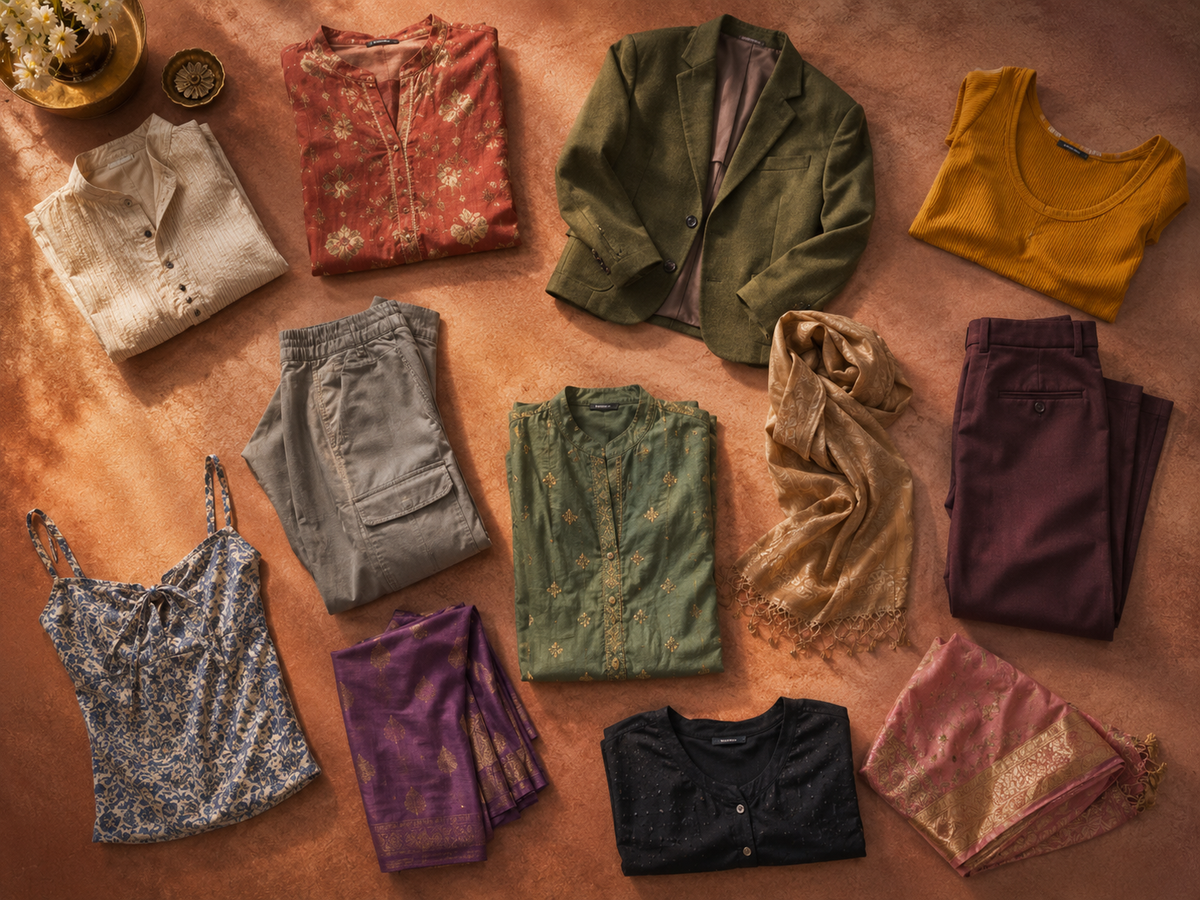
Mass market and fast fashion represent roughly 60% of India's apparel market and are growing at 8–10% annually (IMARC Group). That growth reflects real consumer demand — but it coexists with genuine financial pressure. The GST increase on higher-priced items (BusinessWorld) pushes shoppers toward either trading down or scrutinizing premium purchases far more carefully. Current Indian consumer behavior shows value and versatility as the core purchase criteria — not trend-following, not brand prestige. Every rupee spent on clothing now needs to justify itself against a harder question: will this actually work with what I already own, and will I wear it more than twice?
These three problems — the return trap, the fragmentation problem, and the value squeeze — aren't random consumer frustrations. They are predictable, structural features of how the Indian fashion market is built. And they are exactly what a wardrobe-first AI was designed to solve.
How Elara Is Built for This Market — Feature by Feature
Solving structural problems requires structural solutions — not feature lists dressed up as intelligence. Elara's core capabilities map directly, and deliberately, to the three pain points that define the Indian fashion experience.
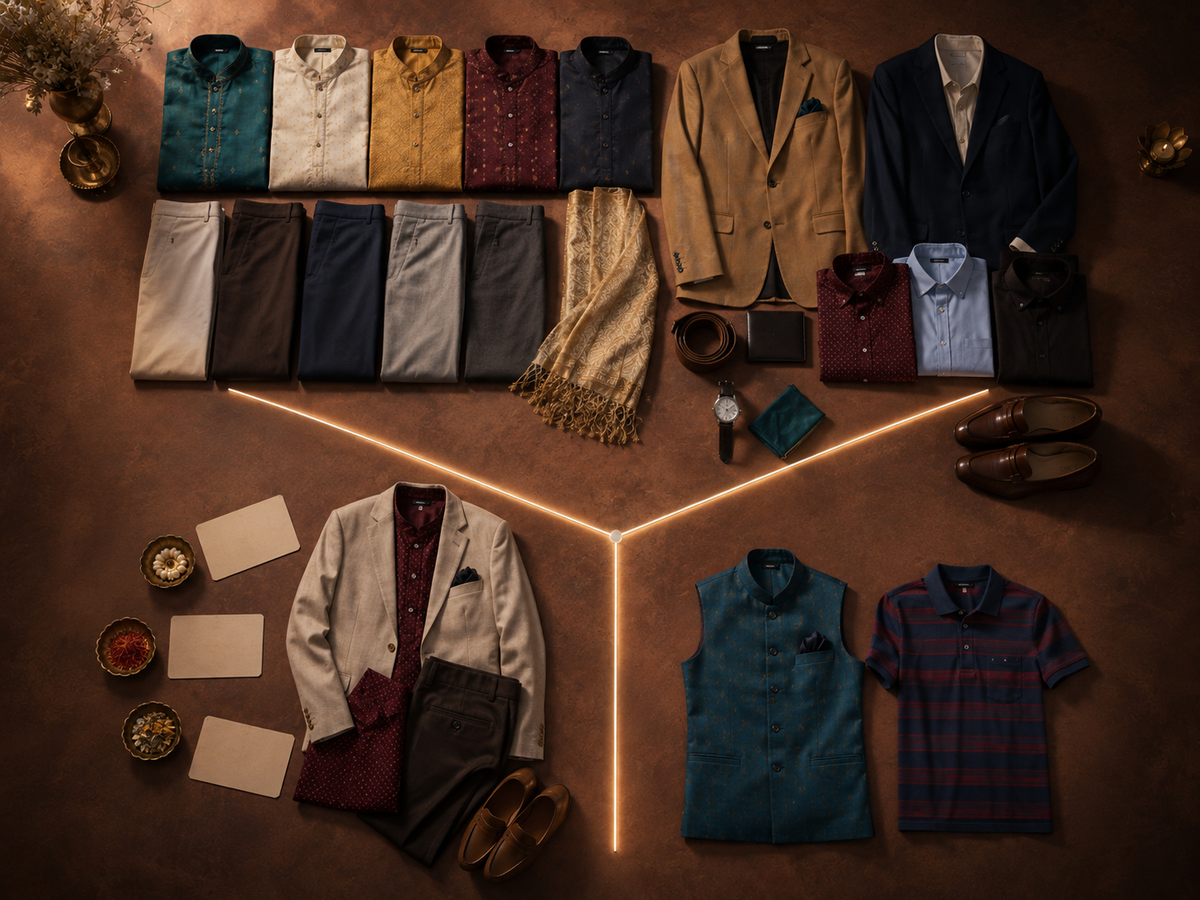
Wardrobe-First Intelligence starts where every other app stops: your existing closet. Before Elara suggests a single new purchase, it digitizes what you already own and surfaces outfit combinations you haven't considered. Return rates of 35–50% in Indian apparel e-commerce are driven largely by impulse purchases that don't integrate with existing wardrobes (Unicommerce and Technavio). Elara breaks that cycle at the source — you see what you have, you wear more of it, and you buy less of what you'll regret.
Conversational AI That Learns You is the direct counter to fragmentation. Organized retail accounts for only about 45% of Indian apparel sales as of 2025 (Unicommerce), which means shoppers navigate a wildly inconsistent landscape with no reliable guide. Elara's AI adapts to your personal style, body type, occasion context, and wardrobe history — and it keeps learning. Unlike trend-feed competitors that reset with every scroll, Elara builds a continuous, compounding understanding of who you are and what actually works for you.
Smart Shopping Recommendations operate on a gap-filling logic, not a volume-pushing one. When Elara recommends a purchase, it's because a specific, identifiable gap exists in your wardrobe — a versatile base layer, a transitional piece for festive-to-casual wear. This maps precisely to the dominant shift in Indian consumer behavior: value and versatility as the core purchase criteria, not trend-chasing.
What Elara Is NOT
- Not a trend feed. Elara doesn't surface what's popular this week — it surfaces what works for you this morning.
- Not a shopping platform. Elara has no incentive to push purchase volume. Its value compounds when you buy less and wear more.
- Not a generic recommendation engine. Platforms like Aiuta, Klodsy, Indyx, and Whering each solve a slice of the problem — outfit planning, wardrobe cataloging, or shopping assistance. Elara integrates all three into a single intelligent layer that knows your wardrobe before it knows the market.
The B2B2C Opportunity: Why Indian Fashion Brands Need Elara Too
The return problem looks different depending on which side of the transaction you're on. For consumers, a 35–50% return rate means wasted time and budget drain. For brands, it's a profitability crisis — reverse logistics, restocking costs, and inventory uncertainty that compounds across every SKU. Return rates and sizing inaccuracy remain among the most significant profitability constraints in Indian online fashion (Unicommerce and Technavio). The consumer inconvenience and the brand margin problem are the same structural failure, viewed from opposite ends.
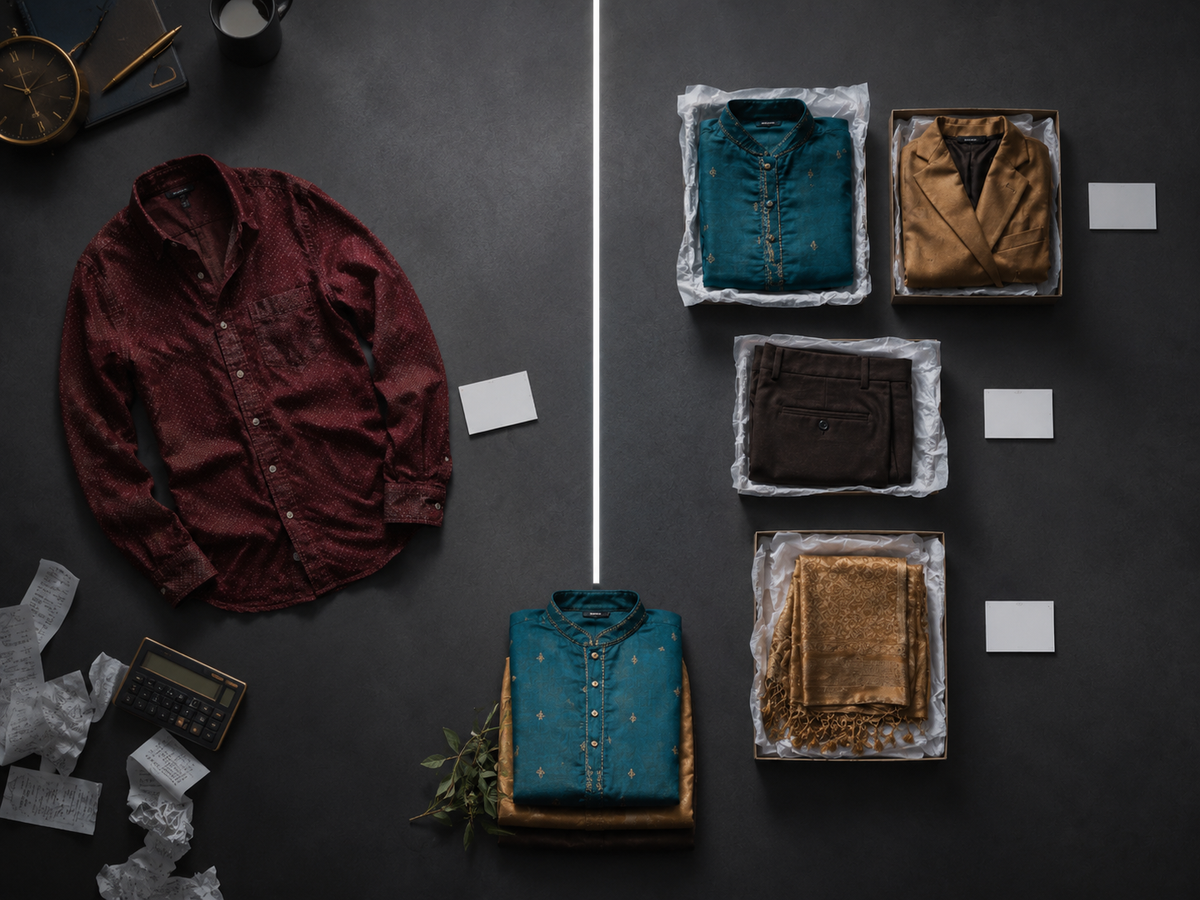
Elara's context-aware recommendations address this from the brand side as directly as from the consumer side. When a user asks Elara whether a specific kurta works with what they already own, the answer is grounded in their actual wardrobe — not a generic size chart or a styled lookbook shot. That specificity reduces mismatched purchases before they happen, which means fewer returns reaching the brand's reverse logistics chain.
The distribution advantage compounds this. Brands that partner with Elara don't reach users mid-scroll on a passive social feed. They surface products to users already in active styling mode — someone who has opened their wardrobe, identified a gap, and is actively looking to fill it. That's a fundamentally higher-intent touchpoint than programmatic advertising. As margins tighten and competition intensifies, brands are prioritizing disciplined market selection and disciplined growth over volume-chasing. Elara's model is built exactly for that posture. Fragmented manufacturing and inconsistent compliance make it harder than ever to justify broad, low-conversion distribution. Elara offers the opposite: a style-aware 24–34 demographic, already engaged, already in purchase consideration.
Fashion brands and retailers ready to reach high-intent shoppers at the moment of decision can explore the Elara partner program at joinelara.com.
India's Difficulty Is Elara's Advantage — The 2026 Thesis
Every structural difficulty in the Indian fashion market — the 35–50% return rates, the fragmented retail landscape, the GST-driven price pressure on festive and occasion wear, the 13% drop in textile exports following US tariffs — has a direct counterpart in Elara's design. That alignment isn't coincidental. It's the brief.
McKinsey's 2026 State of Fashion report describes industry conditions as "challenging" — a word executives now reach for more often than "uncertain," with tariffs cited as the number-one hurdle. Platforms built for Western markets, or for trend-following use cases, have no structural answer to India's specific complexity. A recommendation engine trained on London or New York shopping behavior cannot navigate the GST threshold dynamics that make a winter shawl a considered purchase, or the sizing inconsistency that turns a confident online buy into a reluctant return. Generic tools produce generic outcomes.
Elara was built on the premise that India's difficulty is the product requirement. Wardrobe-first intelligence answers price sensitivity. Conversational AI that learns you answers fragmentation. Gap-filling purchase logic answers the value-and-versatility shift that defines the core consumer behavior of this market cycle. As 2026 tightens conditions further — through tariff headwinds, margin pressure, and a consumer base that has grown more disciplined — Elara's positioning becomes more valuable, not less.
The 10.5% revenue growth projected for India's apparel market in FY26 by Unicommerce is real. So is the difficulty beneath it. The brands and consumers who navigate that difficulty well will be the ones with the right intelligence layer in place.
Frequently Asked Questions
How long does it take to set up my wardrobe on Elara?
You don't need to upload everything at once. Start by adding the pieces you wear most often — your everyday basics and favorites. Elara learns from those initial items and begins offering outfit suggestions immediately. You can add more pieces over time as you discover new combinations and gaps in your wardrobe.
Will Elara recommend clothes I can't afford?
No. Elara's recommendations are built on gap-filling logic, not trend-chasing or volume-pushing. When it suggests a purchase, it's because a specific gap exists in your wardrobe — and the recommendation respects your budget and shopping patterns. The goal is to help you spend smarter, not more.
How does Elara handle sizing inconsistency across brands?
Elara learns your fit preferences across different brands and body contexts. As you add items to your wardrobe and provide feedback on what works, the AI builds a personalized fit profile. Over time, it understands not just your size, but how different brands fit you — so recommendations account for those variations.
Start Here
Consumers: Begin your free wardrobe session at joinelara.com.
Brand and retail partners: Explore the Elara partner program at joinelara.com.
Your AI Stylist is Here.
live on the App Store & Google Play
Available on iOS and Android for seamless access anytime, anywhere.