What to Wear to Graduation: Outfit Ideas & Tips
Graduation outfit ideas for graduates and guests that work across ceremony, photos, and parties. Learn which silhouettes, colors, and anchor pieces transition seamlessly through the entire day.

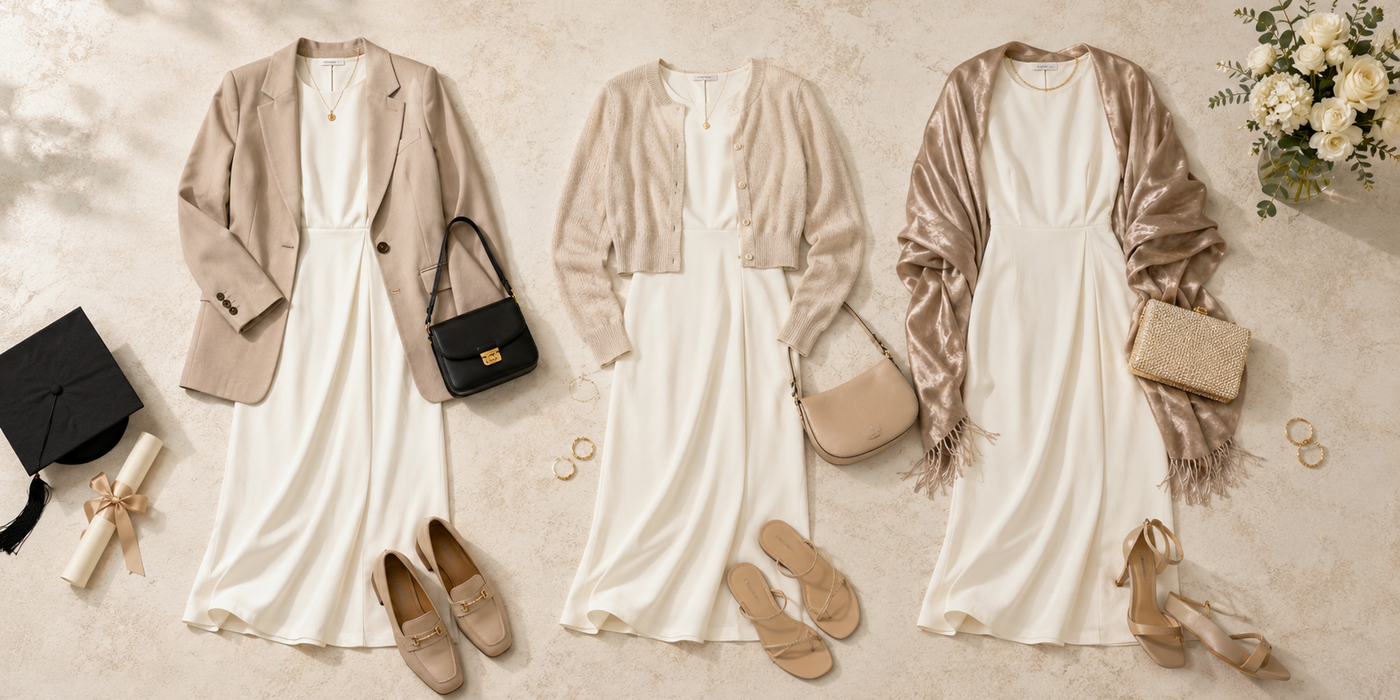
What to Wear to Graduation: One Piece, Multiple Looks
Table of Contents
- Introduction: The $6.8 Billion Occasion You're Probably Overthinking
- Why 2026 Graduation Style Is Different (And Why It Matters to You)
- The Colors and Silhouettes Dominating 2026 Graduation Season
- How to Build Your Graduation Look From What You Already Own
- Guest Outfit Guide: How to Look Polished Without Upstaging the Graduate
- The Ceremony-to-Party Transition: One Outfit, Three Moments
- FAQ: Your Graduation Outfit Questions Answered
- TL;DR: What to Wear to Graduation in 2026
- Conclusion: Your Graduation Look Is Already Closer Than You Think
Key Takeaways
- Graduation outfits in 2026 must work across three distinct moments — the ceremony, photos, and the after-party — not just one.
- Midi dresses, soft tailoring, and two-piece sets are the most versatile silhouettes for both graduates and guests this season.
- The smartest approach: identify one anchor piece from your existing wardrobe and build outward from there.
- Elara's AI stylist surfaces graduation-ready combinations already in your closet — before you spend a dollar.
Introduction: The $6.8 Billion Occasion You're Probably Overthinking
Americans spent a record $6.8 billion on graduation in 2025, with apparel consistently ranking as one of the top spending categories. That number reflects something real: graduation carries genuine emotional weight, and the outfit is part of how that weight gets expressed.
The problem is that most graduation style advice treats the outfit as a single-moment decision — what to wear to the ceremony. In reality, the outfit has to perform across at least three distinct contexts: two-plus hours seated in a ceremony hall or outdoor quad, a photo session where every detail reads up close, and a dinner or celebration that might run well into the evening. Dressing for one of those moments while ignoring the others is how people end up uncomfortable, overdressed, or reaching for a second outfit before the day is half over.
The 2026 shift makes this even more relevant. Graduation fashion is moving decisively beyond the traditional "little white dress" default toward personal expression with practical versatility — looks that photograph well, feel comfortable during long ceremonies, and transition naturally to celebrations afterward.
This guide takes a different angle from most. Rather than presenting a trend wishlist, it helps both graduates and guests build looks from what they already own — with one strategic piece doing multiple jobs across the whole day.
Why 2026 Graduation Style Is Different (And Why It Matters to You)
The defining shift in 2026 graduation fashion isn't about a specific color or hemline — it's about occasion-aware dressing. Graduation outfits are now expected to satisfy three simultaneous demands: look strong in photographs, feel genuinely comfortable during a ceremony that may run two to three hours seated, and transition without effort into post-ceremony celebrations. That's a more demanding brief than "wear something pretty," and it's why generic trend lists tend to fail people at exactly the moment they need real guidance.
The 2026 graduate aesthetic is built around bold color, statement silhouettes, and details that make you feel like the main character — which captures the mood accurately. This isn't about muted, safe dressing. Graduates and guests alike are reaching for looks with personality: bold spring hues, structural details, and fabrics that catch light. The goal is to feel like the protagonist of the day, not a background extra.
The timing makes practical guidance harder to find. Search interest in "What to Wear to Graduation: Outfit Ideas for Graduates & Guests" peaks sharply in April, May, and June, which means trend content floods social feeds and search results at the exact moment readers are most overwhelmed and least able to filter useful advice from noise. Most of what surfaces is either an aspirational mood board with no practical application, or a generic list of dos and don'ts that ignores the ceremony-to-party transition entirely.
Here's what that gap costs people: they end up buying something new for a single occasion, wearing it once, and still not feeling quite right in the photos. The goals that feel like they're in tension — looking great, feeling comfortable, and not wasting money on a one-wear purchase — are actually entirely compatible. The rest of this guide shows you how to get all three.
The Colors and Silhouettes Dominating 2026 Graduation Season
Starting from the right foundation makes everything else easier. In 2026, that foundation is a clear, usable color palette and a handful of silhouettes that actually work across ceremony seats, outdoor photos, and dinner reservations.
The 2026 graduation color story runs from soft to bold: butter yellow, light blue, pastel lavender, pink, and soft neutrals on one end; cobalt blue and cherry red on the other. White and ivory sit in their own category — traditionally reserved for graduates, they signal the occasion's protagonist. Guests should lean into the spring hues freely; graduates can claim white or ivory as a deliberate choice or opt for any color that photographs well against an outdoor backdrop.
Silhouettes break down by occasion fit:
- Midi dress — ceremony-appropriate in length, dinner-ready in feel, and flattering across body types. It pairs naturally with block heels or strappy sandals already in most closets.
- Mini dress — reads bold and evening-leaning; save it for the after-party or an indoor ceremony with a dinner to follow.
- Maxi dress — handles outdoor settings beautifully — wind-resistant and elegant in photos.
- Two-piece sets — the modern workhorse. Mix the pieces separately later, or wear them together as a polished whole. Structured bodices and corset details deliver statement energy without requiring a complicated outfit.
- Soft tailoring — a blazer over trousers or a structured skirt. The guest's most reliable move.
Satin finishes, lace, and subtle sequin details elevate a simple silhouette without demanding a new outfit — and statement shoes are consistently identified as the single biggest styling lever.
A satin midi already in your closet, paired with heeled mules and a lace-trim cami underneath, covers most graduation scenarios without a single new purchase.
How to Build Your Graduation Look From What You Already Own
Before opening a single shopping tab, ask yourself: "Which piece in my closet already hits a 2026 graduation color or silhouette?" That question is the entire method — and it almost always surfaces something usable.
The anchor piece approach works like this: identify one item you already own that fits the occasion by color, silhouette, or fabric, then build outward with accessories and layers. The anchor does the heavy lifting; everything else is refinement.
Three scenarios cover most wardrobes:
1. You have a dress. A midi or structured mini in any 2026 color — butter yellow, cobalt, even a soft neutral — is already 80% of the outfit. Elevate it with statement earrings, strappy heeled sandals, and a satin or structured clutch. The dress stays the same; the accessories shift it from daytime to dinner.
Ready to upgrade your wardrobe?
Get the Elara app for AI-powered styling and virtual try-ons.
2. You have separates. A silk or satin blouse paired with tailored trousers, or a structured top with a midi skirt, creates the visual effect of a two-piece set — one of the most prominent 2026 silhouettes — without buying one. The key is matching the formality level of both pieces.
3. You have a blazer. A well-cut blazer is a guest outfit anchor on its own. Wear it over a slip dress for ceremony formality, then remove it for photos to let the dress speak. Pair it with wide-leg trousers and a satin cami for a look that reads polished across every moment.
The satin finishes and subtle shine that dominate 2026 graduation styling mean that a single satin piece — a blouse, a skirt, even a bag — can pull a more casual outfit into ceremony-appropriate territory.
Elara's AI stylist can digitize your existing wardrobe and surface exactly these combinations in a single conversation, so you see what you already own before deciding what to buy. Start at joinelara.com.
Guest Outfit Guide: How to Look Polished Without Upstaging the Graduate
Graduation guests carry a specific, underacknowledged styling pressure: look photo-worthy and celebratory, but never compete with the person whose day it is. The principle that resolves this is straightforward — polished-but-celebratory, not competing. That means one refined spring color, a ceremony-appropriate length, and one statement element. Nothing more needs to happen.
The safest guest silhouettes are the midi dress in a spring color, a tailored two-piece set, and satin separates. All three are versatile enough to move from a two-hour seated ceremony to an evening dinner without a wardrobe change. They photograph well at a distance and in close-ups, and none of them require constant adjusting — which matters more than most guests anticipate during a long ceremony.
Formality varies by venue, and the outfit should follow:
- Outdoor garden ceremony: Midi dress in pastel lavender or light blue + a wedge heel (stable on grass, elevated in photos).
- Indoor university hall: Tailored separates in cobalt or a soft neutral + a heeled mule. The structure of the venue supports a more polished silhouette.
- Evening dinner celebration: Satin slip dress + a blazer. Remove the blazer for dinner; keep it on for photos if the venue runs cool.
Three things to avoid as a guest: all-white or all-ivory (graduate territory, full stop), overly casual fabrics like jersey or washed linen that read underdressed against the ceremony's formality, and anything with a neckline, hem, or waistband that needs readjusting every twenty minutes during a seated event.
Most guests already own a midi dress or a blazer that anchors a complete guest look. The satin finish or statement shoe detail that 2026 styling favors is often already in the closet too — it just hasn't been paired intentionally yet.
The Ceremony-to-Party Transition: One Outfit, Three Moments
That wardrobe-first logic applies just as powerfully once you zoom out from the outfit itself to the full arc of graduation day. The real styling challenge isn't finding one great look — it's making that look work across three distinct moments: the ceremony (seated for two or more hours, possibly outdoors, photographed from a distance), the photo session (close-up, where fabric texture, jewelry, and detail do the heavy lifting), and the celebration (dinner, rooftop, or backyard party where comfort and movement matter as much as aesthetics).
The good news: one anchor piece handles all three with simple adjustments, no outfit change required.
Graduate example. Start with a butter yellow midi dress — a color that photographs warmly, reads celebratory without competing with academic regalia, and sits squarely in the 2026 palette. For the ceremony, layer a structured cardigan or blazer over it: the formality reads correctly from the audience, and you stay comfortable through a long sit. For photos, remove the layer and add statement earrings — suddenly the dress is the story, and the close-up details land. For the party, swap flats for heeled sandals and introduce a mini bag. Same dress, three distinct registers.
Guest example. A cobalt two-piece set works identically. Blazer on for the ceremony — polished, occasion-appropriate. Blazer off for photos — the set's color and silhouette speak for themselves. Same outfit to the party, with a bold lip added. Total additional effort: under two minutes.
The defining shift is toward outfits that photograph well, feel comfortable during long ceremonies, and transition easily to celebrations afterward. Main character energy and practical comfort are not competing priorities. The right anchor piece delivers both.
FAQ: Your Graduation Outfit Questions Answered
Q: Can I wear the same outfit to the ceremony and the after-party?
A: Yes — and that's the whole point of the anchor piece strategy. One dress or two-piece set works across all three moments (ceremony, photos, celebration) with only accessory swaps. You remove a blazer, add heeled sandals, or introduce statement jewelry. The core outfit stays the same. That's how you avoid the pressure to buy multiple pieces for a single day.
Q: What if I don't have anything in my closet that fits 2026 graduation colors?
A: Start with what you do have. A simple black or navy midi dress, a white blouse with tailored trousers, or even a structured blazer over a slip works as a base. Layer in 2026 color through accessories: a satin clutch in butter yellow, a statement necklace in cobalt, or a pair of heeled sandals in pastel lavender. One accent piece in the right color often does the job without a full outfit overhaul.
Q: How do I know if my outfit is too casual or too formal for a graduation?
A: Check three things: fabric (satin, silk, and structured cotton read formal; jersey and washed linen read casual), length (midi and maxi are ceremony-appropriate; mini reads evening), and fit (tailored and structured read formal; loose and relaxed read casual). If two of the three hit formal territory, you're in the right zone. If all three skew casual, add a blazer or structured layer.
Q: Should I buy something new, or work with what I have?
A: Work with what you have first. Most closets already contain a midi dress, a blazer, or tailored separates that anchor a complete graduation look. Accessorize with pieces you own. If you find a genuine gap after that — say, you need heeled sandals or a structured clutch — buy one intentional piece that works with multiple outfits. That's smarter than a one-wear purchase.
Q: How can I make sure my outfit photographs well without looking overdone?
A: Photographs favor satin finishes, structured silhouettes, and statement details over busy patterns or overly trendy pieces. A solid-color midi dress in butter yellow or cobalt, paired with statement earrings and a satin clutch, photographs beautifully without feeling costume-like. Avoid all-over prints, excessive ruffles, or anything that distracts from your face and silhouette.
TL;DR: What to Wear to Graduation in 2026
- Graduates: Claim white, ivory, or a bold spring color (butter yellow, cobalt, pastel lavender). Anchor your look with a midi dress or two-piece set that works seated, photographed, and at a dinner table.
- Guests: Choose a midi dress or tailored separates in a spring color. Avoid white/ivory. One statement element (earrings, shoes, or a clutch) is enough.
- For both: Start with a piece you already own. Layer with accessories and a blazer to shift the look across three moments without changing outfits.
- The real strategy: One anchor piece from your closet, simple accessory swaps, zero one-wear purchases.
Elara's AI stylist surfaces graduation-ready combinations already in your wardrobe, so you see what you can wear before you decide what to buy. Start at joinelara.com.
Conclusion: Your Graduation Look Is Already Closer Than You Think
The best graduation outfit isn't the one that arrived in a rush delivery box the night before. It's the one that holds up through a two-hour ceremony, photographs beautifully in afternoon light, and still feels like you at the dinner table afterward — built from pieces you already love, not assembled under pressure.
The 2026 shift makes this easier, not harder. Graduation dressing has moved decisively toward personal expression paired with practical versatility. That rewards intentional dressing over impulse buying — which means the person who knows their wardrobe has a genuine advantage over the person who shops reactively.
Your closet probably already has the foundation. A midi dress in the right color, a blazer that elevates anything it touches, a pair of heeled sandals waiting for the right occasion. You just need a stylist who can see those pieces together.
Elara's AI stylist does exactly that — scanning your existing wardrobe to surface graduation-ready combinations you already own, before you spend a dollar. See what your closet can already do →
Your AI Stylist is Here.
live on the App Store & Google Play
Available on iOS and Android for seamless access anytime, anywhere.