Best Wardrobe App 2026: AI vs Organizers
Best wardrobe app depends on your needs: organization tools like Stylebook, AI decision-makers like Elara, or free options like Whering. Compare pricing, features, and find your perfect fit.

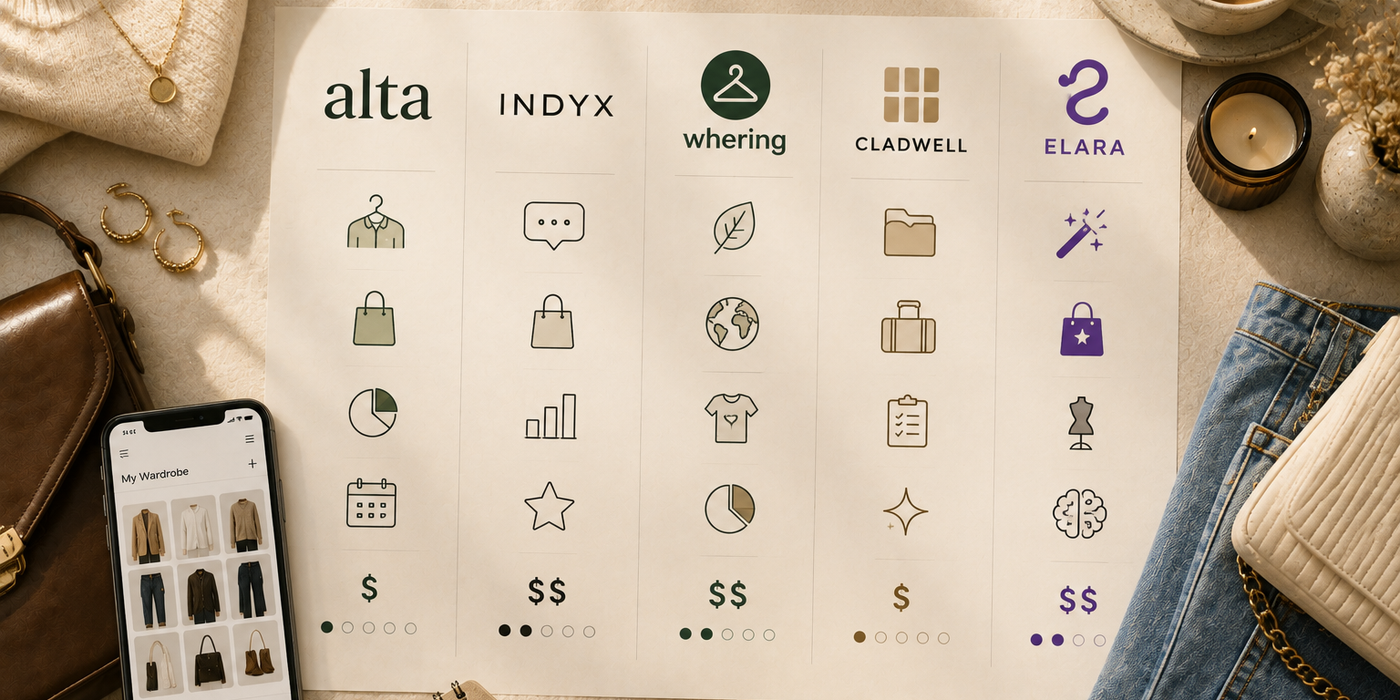
Best Wardrobe Apps 2026: Alta vs Indyx vs Whering vs Cladwell vs Elara (Pricing Compared)
Table of Contents
- Key Takeaways
- Introduction: The 2026 Wardrobe App Problem Nobody Talks About
- Why the Wardrobe App Market Split in 2026
- Alta vs Indyx vs Whering vs Cladwell vs Elara: Feature & Pricing Breakdown
- The Gap Nobody's Filling: AI That Actually Learns Your Style
- Wardrobe Apps for Men (and Why Gender Labels Are Becoming Obsolete)
- How to Choose the Right Wardrobe App for You (Decision Framework)
- Conclusion: The Best Wardrobe App Is the One That Solves Your Actual Problem
Key Takeaways
- The 2026 wardrobe app market has split into organization-first tools (Stylebook, Indyx) and AI-decision-first platforms (Alta, Elara) — choosing the wrong type wastes time.
- Whering is the strongest free option; Stylebook costs €4.99 with no free tier.
- 56% of Gen Z consumers already shop outside their gender (Kittl, 2026), making rigid gender categories an outdated design choice.
- Elara is the only app that bridges wardrobe, personal preferences, and shopping decisions through a single conversational AI layer.
Introduction: The 2026 Wardrobe App Problem Nobody Talks About
Finding the best wardrobe app in 2026 is harder than it should be — not because there are too few options, but because most comparison guides treat fundamentally different products as if they solve the same problem. The best AI wardrobe app for someone drowning in decision fatigue is a completely different product than the best wardrobe app for someone who wants a meticulous digital catalog. Conflating them is where most people go wrong.
According to wardrowbe.com's 2026 market analysis, the wardrobe app space has clearly split into two distinct product philosophies: apps that organize clothes and apps that decide what to wear. Pick an organizer when you need a decision-maker, and you end up with a beautiful catalog you never open. Pick an AI outfit generator when your real problem is wardrobe chaos, and you get suggestions that feel generic because the app has no idea what you actually own or like.
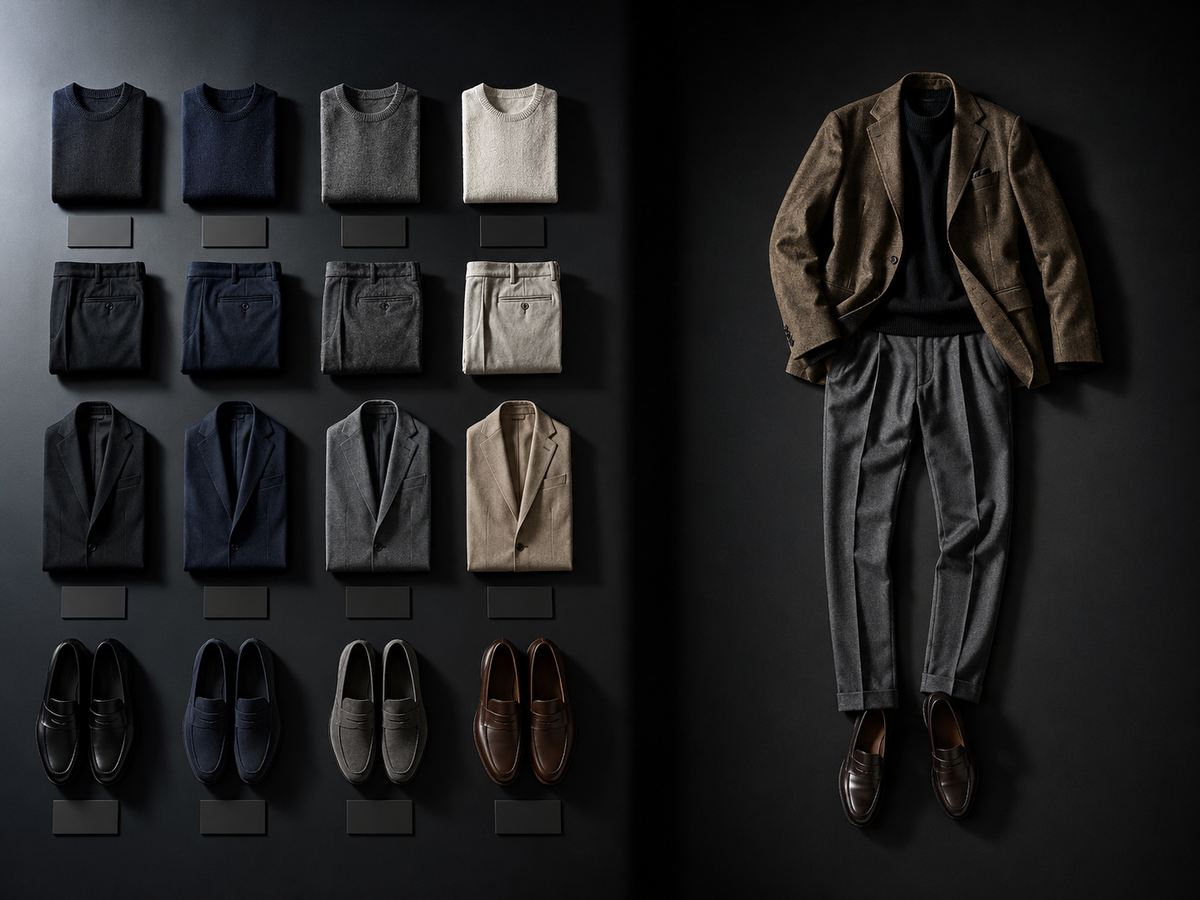
This guide cuts through that confusion. Each app covered here is mapped to the specific problem it solves — with pricing, feature breakdowns, and a clear recommendation framework — so you can identify the right tool in under five minutes.
Why the Wardrobe App Market Split in 2026
The wardrobe app market didn't always look like this. Early apps were essentially digital closets: photograph your clothes, tag them, browse them. Useful, but limited. What changed in 2026 was the maturation of on-device AI and the growing consumer demand for apps that do something with that catalog, not just store it.
The result, as multiple 2026 comparison sources including wardrowbe.com document, is a clear split between two product philosophies.
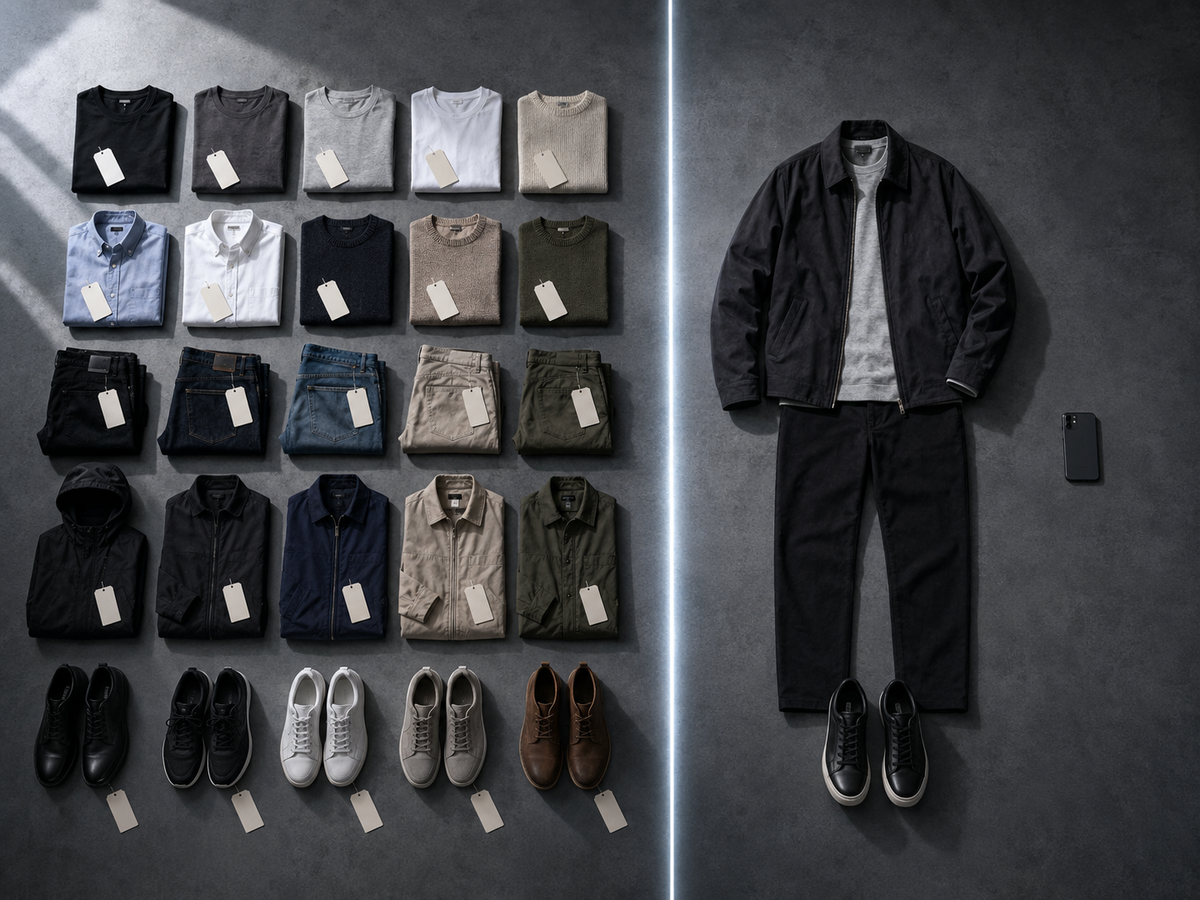
Organization-first apps — Stylebook and Indyx are the clearest examples — prioritize cataloging accuracy, cost-per-wear analytics, manual tagging control, and deep wardrobe insight. They're built for the user who wants to understand their wardrobe. According to 2026 reviews from futurereference.xyz and altadaily.com, Stylebook in particular continues to rank well for users who want hands-on management and granular data.
AI-decision-first apps — Alta and Elara — prioritize reducing daily decision fatigue. The question they answer isn't "what do I own?" but "what should I wear today, given the weather, my schedule, and my personal style?" As wardrowbe.com notes, AI styling has become the primary competitive differentiator in 2026.
Beyond these two camps sits what the most advanced apps are building toward: a stylist layer — intelligent infrastructure that connects a user's wardrobe, their preferences, and their shopping decisions. This is the function Elara is purpose-built for, and it represents the most significant architectural difference between apps in this generation.
The feature set that separates leading apps from laggards now includes auto-tagging with background removal, weather- and occasion-aware outfit suggestions, wear tracking, cost-per-wear analytics, calendar integration, and increasingly virtual try-on and privacy controls (wardrowbe.com, altadaily.com, 2026). Critically, no single app dominates all of these categories — specialization is the 2026 competitive reality, according to analysis from nouva.app and beautyai.app. The right app depends entirely on which problem you're actually trying to solve.
Alta vs Indyx vs Whering vs Cladwell vs Elara: Feature & Pricing Breakdown
Knowing which problem each app solves makes the choice obvious. The five apps most frequently compared in 2026 rankings occupy genuinely different niches — and the pricing structures reflect those differences.
Alta — AI-first outfit planning with a premium feel. Alta appears consistently in multiple 2026 top-10 roundups (altadaily.com, nouva.app) and targets users who want intelligent daily outfit generation rather than manual cataloging. Its standout feature is occasion-aware styling powered by AI. Paid subscription model; no meaningful free tier. Best for: users who want decisions made for them.
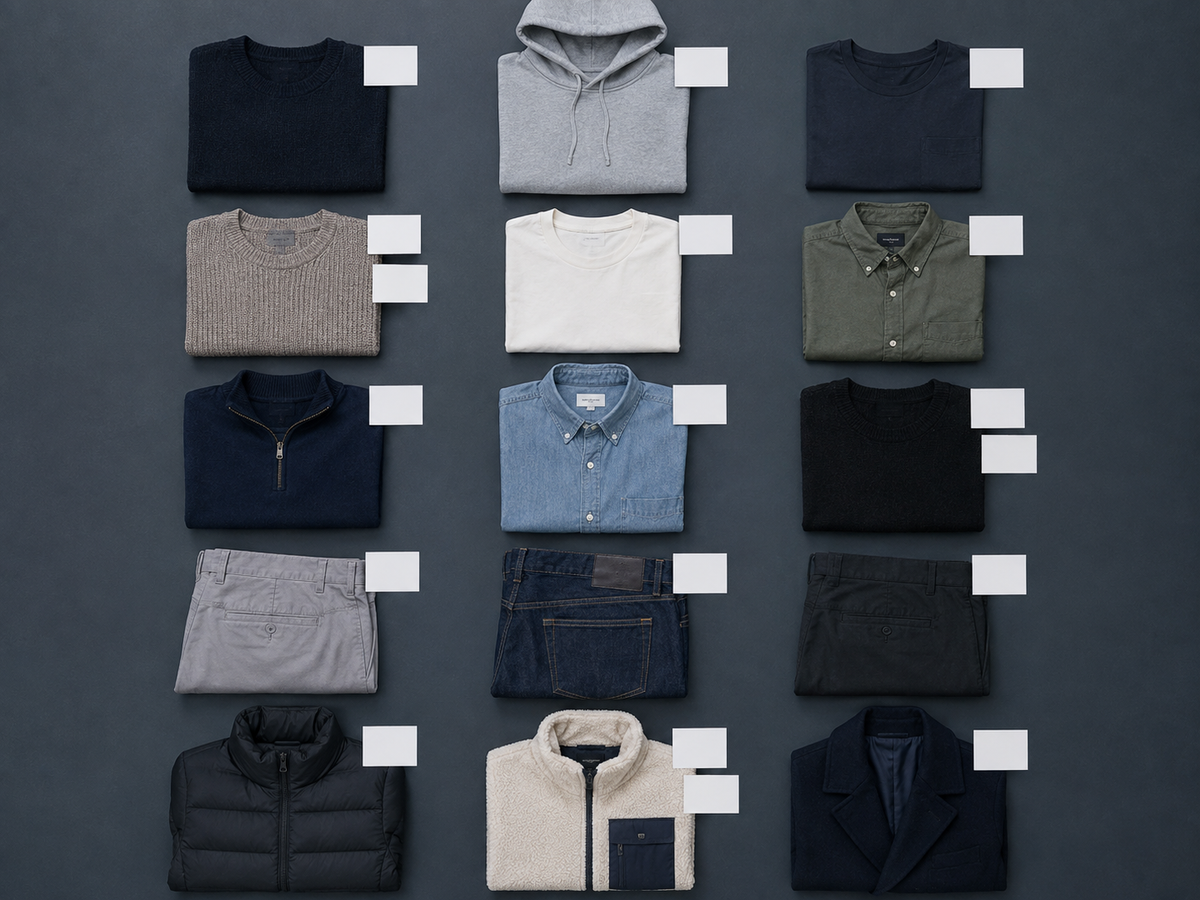
Indyx — The analytics and cataloging leader. Indyx is purpose-built for wardrobe intelligence: cost-per-wear tracking, detailed item metadata, and wardrobe composition analysis. According to multiple 2026 comparison guides including myindyx.com and futurereference.xyz, it ranks among the top choices for users who want comprehensive wardrobe insight. Free tier available with paid upgrade for advanced analytics. Best for: data-driven wardrobe managers. Reddit's "best wardrobe app" threads frequently surface Indyx alongside Whering for exactly this use case.
Ready to upgrade your wardrobe?
Get the Elara app for AI-powered styling and virtual try-ons.
Whering — The strongest free option in the market. Whering's free tier is substantive enough that many users never need to upgrade — a meaningful differentiator when Stylebook, for comparison, costs €4.99 with no free version at all (lekondo.com, beautyai.app, 2026). Whering ranks highly across 2026 sources for sustainability tracking, wear-rate visibility, and impact-conscious features (nouva.app, altadaily.com). Best for: sustainability-focused users who want strong functionality without paying upfront.
Cladwell — The capsule wardrobe specialist. Cladwell's workflow centers on building a streamlined, intentional wardrobe and generating daily outfit suggestions from it. It's the right tool for users actively trying to reduce closet size rather than expand it. Subscription-based. Best for: minimalists and capsule wardrobe builders.
Elara — A different category entirely. Elara isn't competing on cataloging depth or sustainability dashboards. It's a conversational AI stylist that learns your preferences through dialogue, connects your existing wardrobe to your shopping decisions, and acts as a persistent style intelligence layer. Where the other four apps answer "what do I own?" or "what should I wear today?", Elara answers "what do I actually need, and why?" Available at joinelara.com. Best for: users who want a stylist, not a spreadsheet.
The €4.99 Stylebook benchmark (no free version) anchors the paid end of the market — most competing apps have responded by offering meaningful free tiers or freemium structures to lower the barrier to entry.
The Gap Nobody's Filling: AI That Actually Learns Your Style
The most common objection to AI wardrobe apps is a fair one: will suggestions actually match my taste, or will it feel generic after a week? The honest answer depends entirely on how the AI learns — and most apps don't learn at all in any meaningful sense.
Algorithm-only apps work by pattern-matching on metadata: tags, colors, categories, and wear history. This works up to a point. If you wear blue shirts on Mondays, the app notices. What it can't capture is contextual nuance — "I love this blazer for client meetings but would never wear it on a Saturday." Tag-based systems plateau quickly because they have no mechanism for that kind of preference signal. The wardrobe app market, according to wardrowbe.com's 2026 analysis, is actively splitting between apps that organize clothes and apps that make decisions — and the decision-making layer requires something tag systems can't provide.
Conversational AI changes the architecture of learning. Instead of inferring preferences from behavioral data alone, it gathers explicit preference signals through dialogue and feedback loops. You tell it something works or doesn't. It asks why. That context accumulates into a model of your style that gets more accurate over time rather than stagnating.
The most underrated application of this capability isn't outfit generation — it's pre-purchase guidance. According to multiple 2026 comparison sources including lekondo.com and selionai.app, wardrobe apps are evolving from simple closet catalogs into full style systems that support shopping decisions. The practical value: identifying real wardrobe gaps before you shop, rather than after an impulse purchase that doesn't integrate with anything you own.
Elara's conversational AI functions as exactly this kind of stylist layer — connecting wardrobe inventory, personal preferences, and purchase decisions inside a single intelligent system. It's the architecture that makes personalization durable rather than superficial.
Wardrobe Apps for Men (and Why Gender Labels Are Becoming Obsolete)
"Best wardrobe app for men" is a common search, but the more useful question in 2026 is which app handles flexible, non-binary styling well — because the two are increasingly the same question. According to data from kittl.com, 56% of Gen Z consumers already shop outside their gender. Rigid men's/women's app categories aren't a feature at this point; they're a design liability that excludes a significant share of the most active fashion consumers.
What male and gender-fluid users actually need from a wardrobe app is straightforward: genderless closet tagging, fit and silhouette filters (relaxed, oversized, tailored, boxy) rather than gendered section labels, and outfit generation organized by occasion and intention rather than a gender dropdown. Apps that force users into binary categories create friction from the first onboarding screen.
Among the five apps compared here, Indyx and Whering — both of which surface frequently in Reddit's wardrobe app discussions — offer relatively flexible tagging that sidesteps rigid gender categories, making them more usable for gender-fluid wardrobes. Cladwell and Alta still lean on conventional category structures. Elara's personalization-first architecture is naturally inclusive: preferences are built through conversation rather than demographic fields, so the styling model reflects actual taste rather than assumed gender norms.
For male users specifically, traditional picks like Stylebook remain functional for cataloging. But for style-aware men and gender-fluid shoppers who want AI that adapts to how they actually dress — not how an app assumes they should — conversational AI-first platforms are the more capable answer.
How to Choose the Right Wardrobe App for You (Decision Framework)
That personalization-first architecture points directly to the most useful question you can ask before downloading anything: what problem am I actually trying to solve? Most comparison guides skip this step. The 2026 market has specialized enough that matching your problem to the right app matters far more than comparing feature lists side by side.
Here's a framework built around four distinct user problems:
- "I need to organize my closet and understand what I own." → Indyx or Stylebook. Both prioritize cataloging, analytics, and manual control. Stylebook costs €4.99 with no free version, making it the right call for users who want deep wardrobe analytics and are willing to pay upfront.
- "I want to reduce fashion waste and track cost-per-wear." → Whering. It consistently ranks as the strongest free-first option, with wear-rate visibility and sustainability tracking built into its core workflow — not bolted on as a premium feature.
- "I want a capsule wardrobe and daily outfit suggestions." → Cladwell. Its entire product logic is built around intentional, minimal wardrobes with structured outfit planning.
- "I want AI that learns my style and guides smarter shopping decisions." → Elara. This is a categorically different problem — not cataloging, not capsule planning, but building a style intelligence layer that compounds as it learns your preferences, your wardrobe gaps, and your actual taste.
On the free vs. paid question: Whering is the clear answer for users who want meaningful functionality without a subscription. Stylebook requires payment from day one. Elara's value is best measured in ROI terms — fewer impulse purchases that don't integrate with what you already own, and more outfit combinations from clothes you've forgotten you have.
If you want AI that learns rather than just catalogs, Elara's free trial is the lowest-friction way to experience the difference firsthand at joinelara.com.
Conclusion: The Best Wardrobe App Is the One That Solves Your Actual Problem
The central distinction running through this entire guide — organization-first vs. AI-decision-first — is the only lens that actually matters when choosing. Get that right, and the specific app almost selects itself.
What makes Elara categorically different isn't any single feature. It's the compounding effect of a conversational AI that builds a genuine model of your taste over time — not a catalog, not a trend feed, not a generic recommender trained on population-level data. The apps moving ahead are those that function as a connective layer between wardrobe, preferences, and shopping decisions — precisely the function Elara is built around.
The 2026 wardrobe app market will keep moving toward more personalized, conversational, and shopping-integrated experiences. The apps that treat AI as a surface feature will plateau. The ones that treat it as the core product will compound.
If you want a stylist that actually knows you — one that learns your wardrobe, adapts to your taste, and helps you buy less and wear more — joinelara.com is where to start.
Your AI stylist that actually knows you.
Your AI Stylist is Here.
live on the App Store & Google Play
Available on iOS and Android for seamless access anytime, anywhere.