Back to School Outfits: 12 Pieces, 5 Days
Back to school outfits don't require a full wardrobe refresh. Master 12 versatile pieces and create five distinct, trend-current looks for a full week—no repeats, no decision fatigue.

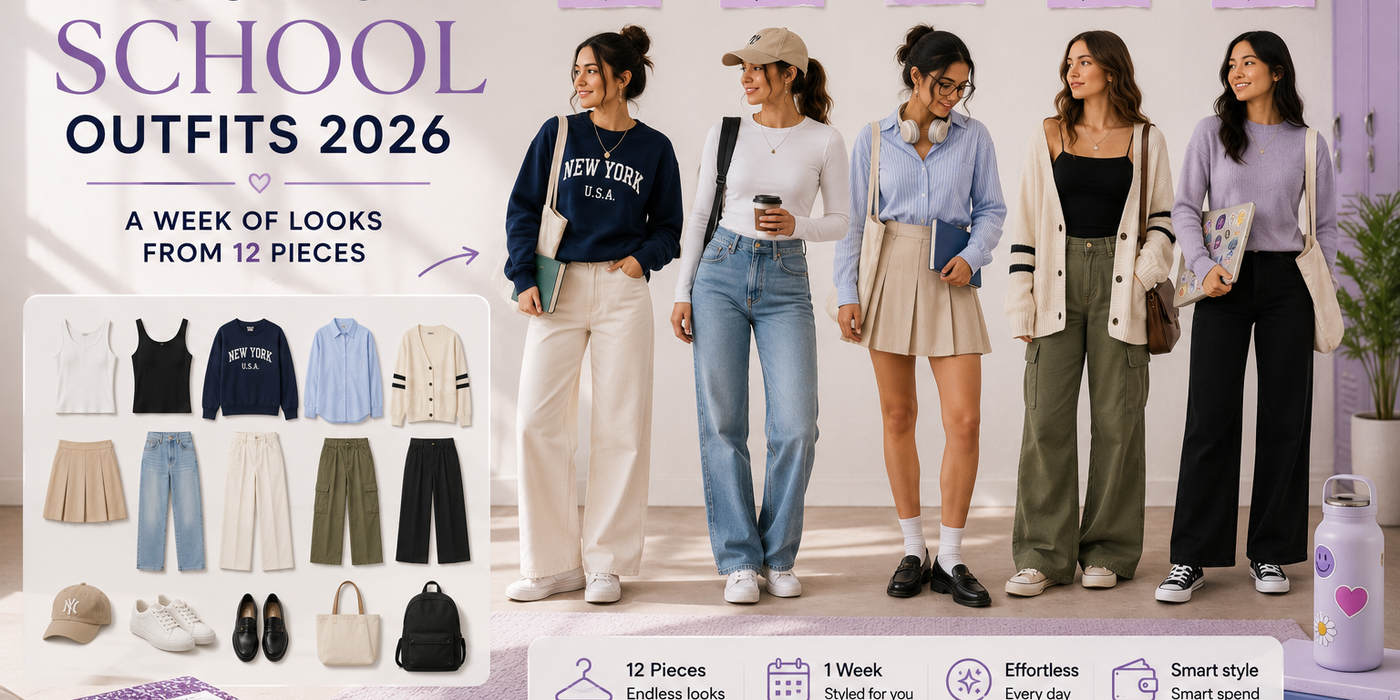
Back to School Outfits 2026: A Week of Looks From 12 Pieces
Table of Contents
- Introduction: Why 'More Clothes' Is the Wrong Answer for Back to School 2026
- The 2026 Back-to-School Trend Landscape (What's Actually Worth Buying)
- The 12-Piece Capsule: Your Back-to-School Wardrobe Foundation
- A Week of Outfits: 5 Days, 5 Looks, 12 Pieces
- How to Extend Your Week: Weekend Looks and Outfit Variations
- Shopping Smart: Filling Real Gaps Before the Rush
- FAQ: Back-to-School Outfits and Capsule Wardrobes
- Key Takeaways: Back-to-School Outfit Planning
- Conclusion: Outfit Planning Is the New Back-to-School Shopping
Key Takeaways
- According to Circana, the 2026 back-to-school apparel season runs midsummer through the holidays—wardrobe planning beats last-minute panic buying
- A core set of 12 versatile pieces can be styled into multiple distinct outfits for a full week of school
- Top 2026 trends—wide-leg denim, Y2K nostalgia, preppy layering, and statement prints—are buildable from pieces you likely already own
- Elara is a wardrobe-first AI stylist that surfaces outfit combinations before recommending anything new
Introduction: Why 'More Clothes' Is the Wrong Answer for Back to School 2026
According to Circana, the back-to-school apparel selling season now stretches from midsummer all the way through Labor Day and into the holiday months. That's not a one-week sprint to the mall—it's a multi-month buying cycle that rewards planning over panic. Yet most students and parents still treat back-to-school shopping like an emergency: rush in, grab everything that looks new, and figure out the rest later.
The real problem isn't a shortage of clothes. It's a shortage of outfit visibility. Most students already own pieces that could carry them through the first weeks of school looking current and put-together—they just can't see the combinations. The result is a closet full of individual items that never quite become outfits, followed by the familiar conviction that nothing works and everything needs replacing.
This article offers a different approach: 12 carefully chosen pieces, styled into five distinct, trend-current looks that cover a full school week of back-to-school outfits. The 2026 trend landscape—comfort-first silhouettes, Y2K nostalgia, preppy layering, and statement prints—runs throughout every outfit, so nothing here will feel dated by October. Elara, an AI stylist built around a wardrobe-first philosophy, operates on exactly this principle: understand what you have before deciding what you need.
The 2026 Back-to-School Trend Landscape (What's Actually Worth Buying)
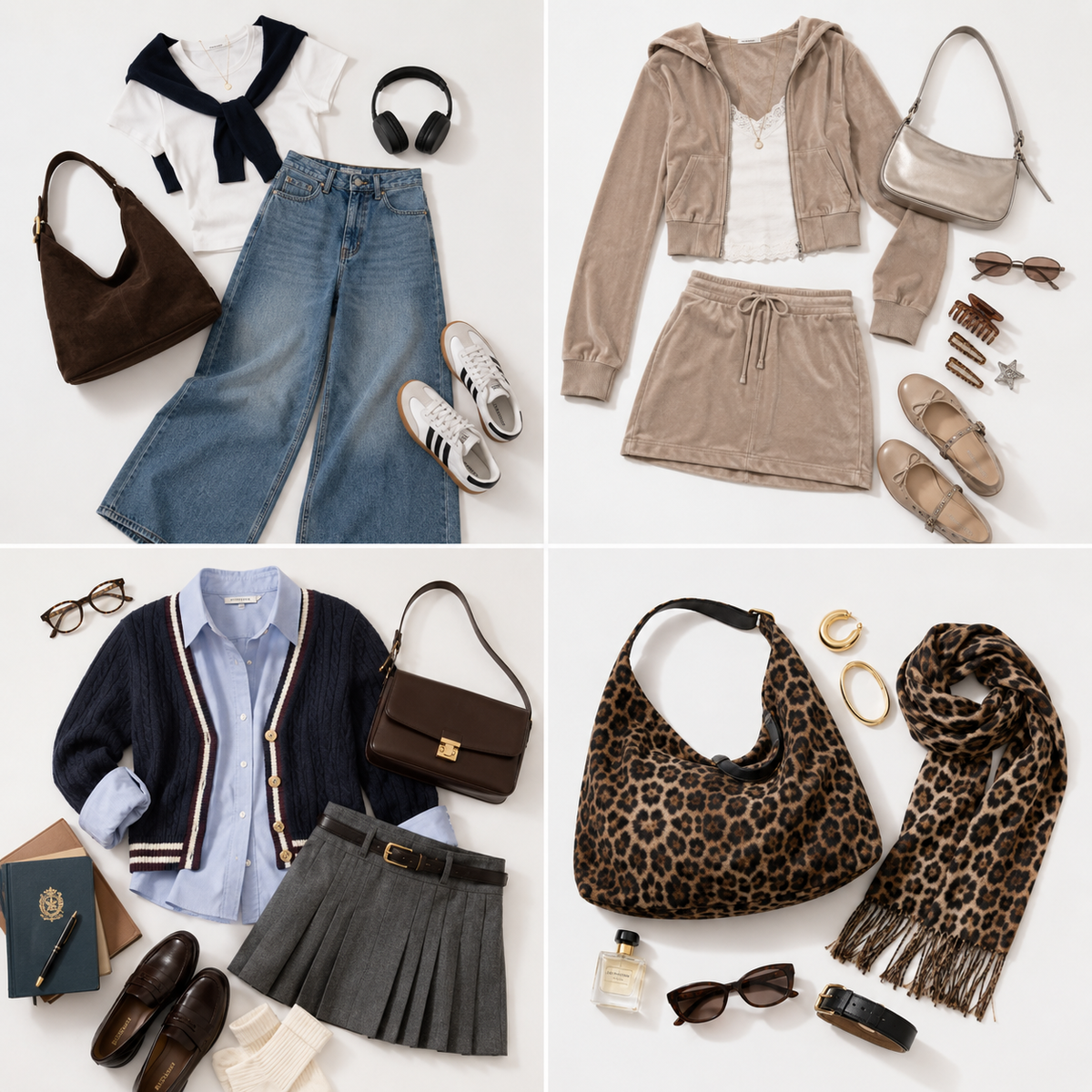
Four trend clusters are dominating 2026 back-to-school fashion. According to heystylehey.com, the strongest signals are comfort-first silhouettes, Y2K and early-2000s nostalgia, preppy layering, and statement prints and accessories. Jenagreen.com reinforces this picture, identifying a comfort-first wardrobe built around wide-leg and relaxed denim, matching sets, and layered basics as the most consistent direction across sources—with Y2K and preppy revival aesthetics driving the strongest overall style energy.
Denim is the standout category. Circana identifies denim as a clear bright spot, popular among teens and now migrating down to children between the ages of five and twelve. The specific silhouettes worth knowing: wide-leg and barrel-leg cuts are the shapes Circana highlights as growing in 2026, pulling denim firmly away from the skinny-fit era that dominated for over a decade.
Circana's data points to denim as a bright spot, popular among teens and now migrating down to children between the ages of five and 12.
Footwear is equally directional. Circana flags low-profile sneakers and Mary Jane-style shoes as the two shapes drawing the most interest as the school season approaches. Both silhouettes work across multiple aesthetics—a Mary Jane reads preppy or Y2K depending on what it's paired with, while a clean low-profile sneaker anchors everything from matching sets to wide-leg denim.
On the print front, Urban Outfitters' 2026 trend data identifies animal prints—leopard, zebra, and especially cow print—as leading statement accents for the season, with cow print trending sharply upward. One animal-print piece (a bag, a scarf, a belt) is enough to make an otherwise neutral outfit feel deliberately on-trend.
The critical reframe: none of these trends are a shopping mandate. They're a filter. Before buying a single wide-leg jean or animal-print tote, use these trend signals to audit what you already own. A barrel-leg silhouette you bought two years ago may be exactly what 2026 is asking for. The trends validate pieces you have—they don't automatically require pieces you don't.
The 12-Piece Capsule: Your Back-to-School Wardrobe Foundation
That audit logic—using trends as a filter rather than a mandate—is exactly what makes a capsule wardrobe work. The goal isn't to buy 12 new pieces. It's to identify which of the 12 you already own and which 1–3 are genuinely missing.
Here's the framework, organized into four categories:
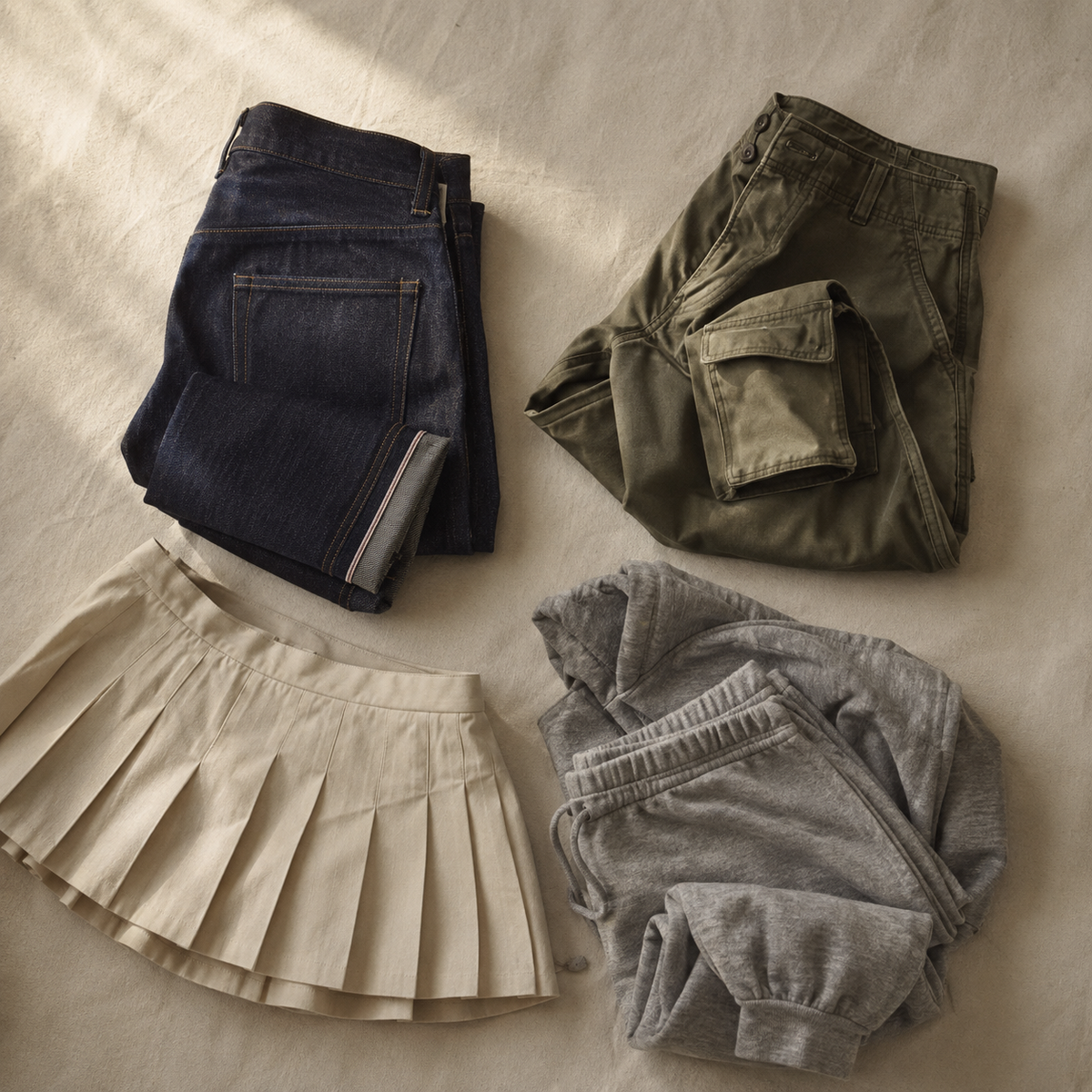
Bottoms (4 pieces)
- Wide-leg or straight-leg denim — the anchor silhouette; Circana confirms wide-leg is the standout denim shape for 2026
- Cargo or utility pants — relaxed fit, functional pockets, works for both casual and layered looks
- Pleated or tennis skirt — the preppy revival piece; pairs with both casual tops and structured layers
- Matching set bottom (jogger or tailored trouser) — functions as a coordinated look with its matching top, or splits into two separate outfits
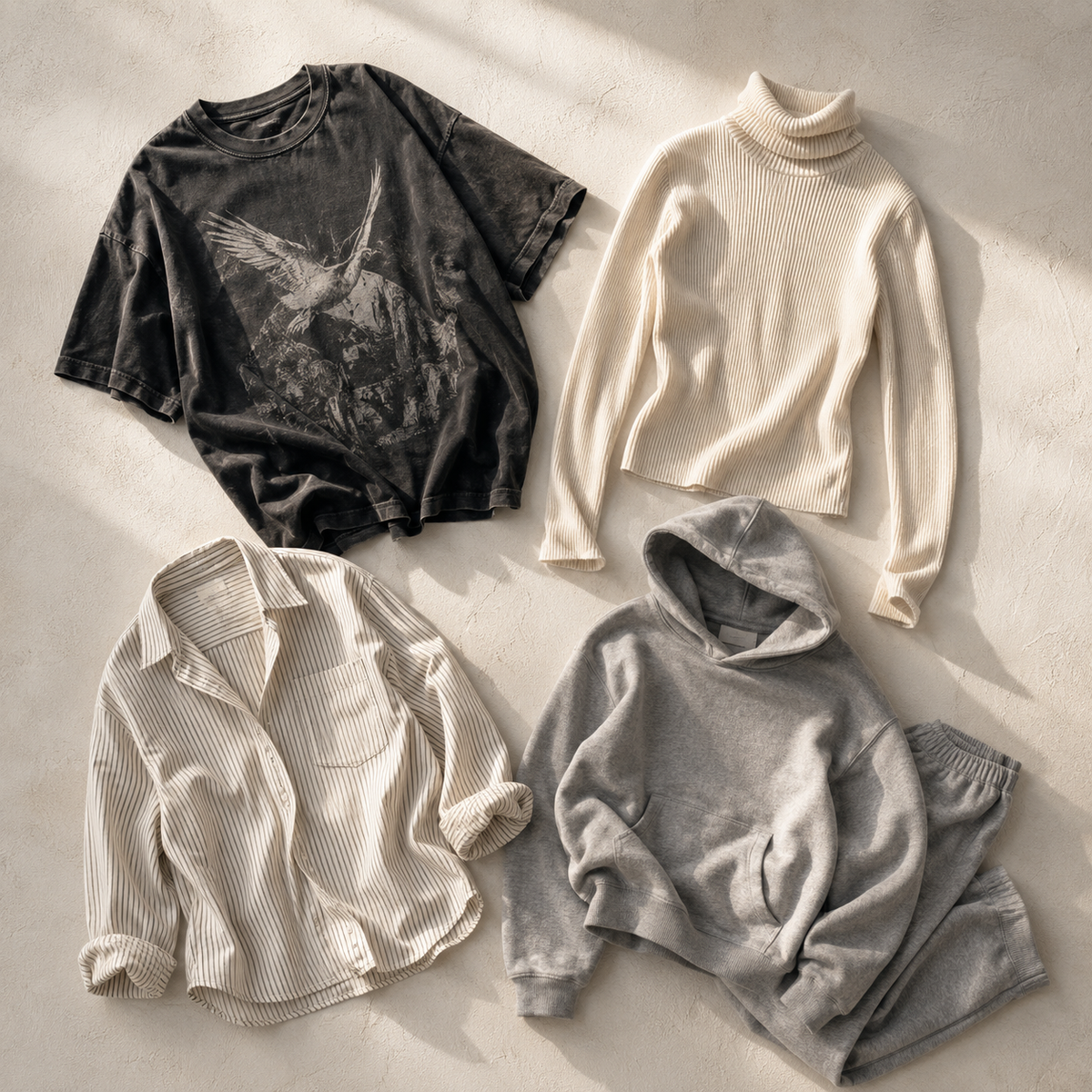
Tops (4 pieces)
- Oversized graphic tee — the Y2K anchor; works tucked, knotted, or worn loose
- Fitted ribbed tank or turtleneck — the layering essential; goes under everything
- Button-down shirt (striped or solid) — open as a layer, tucked as a preppy top, or tied at the waist
- Matching set top (hoodie or sweatshirt) — the other half of your highest-ROI capsule item
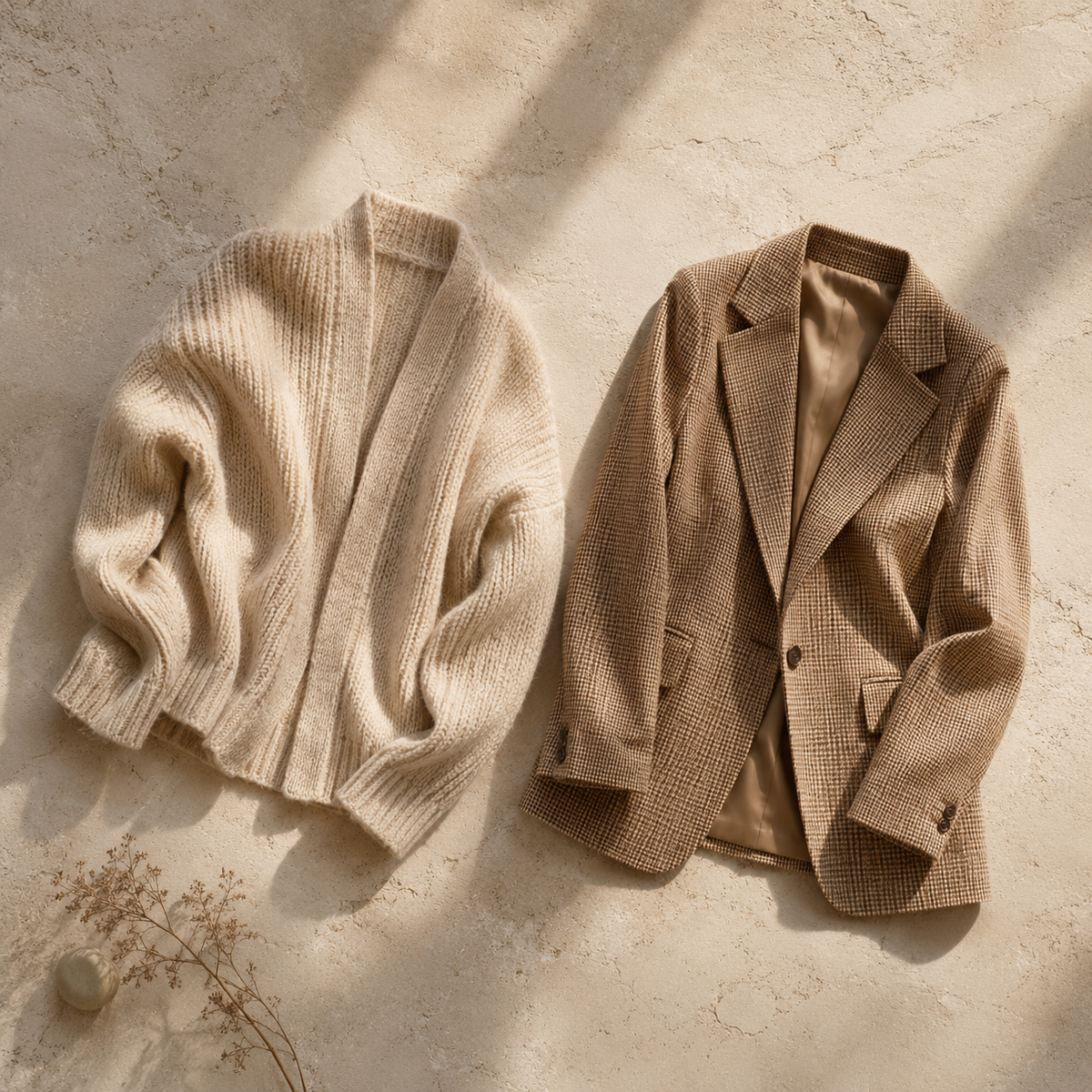
Layers (2 pieces)
- Cardigan or knit sweater — softens structured bottoms, adds warmth without bulk
- Blazer or structured jacket — instantly elevates any combination beneath it
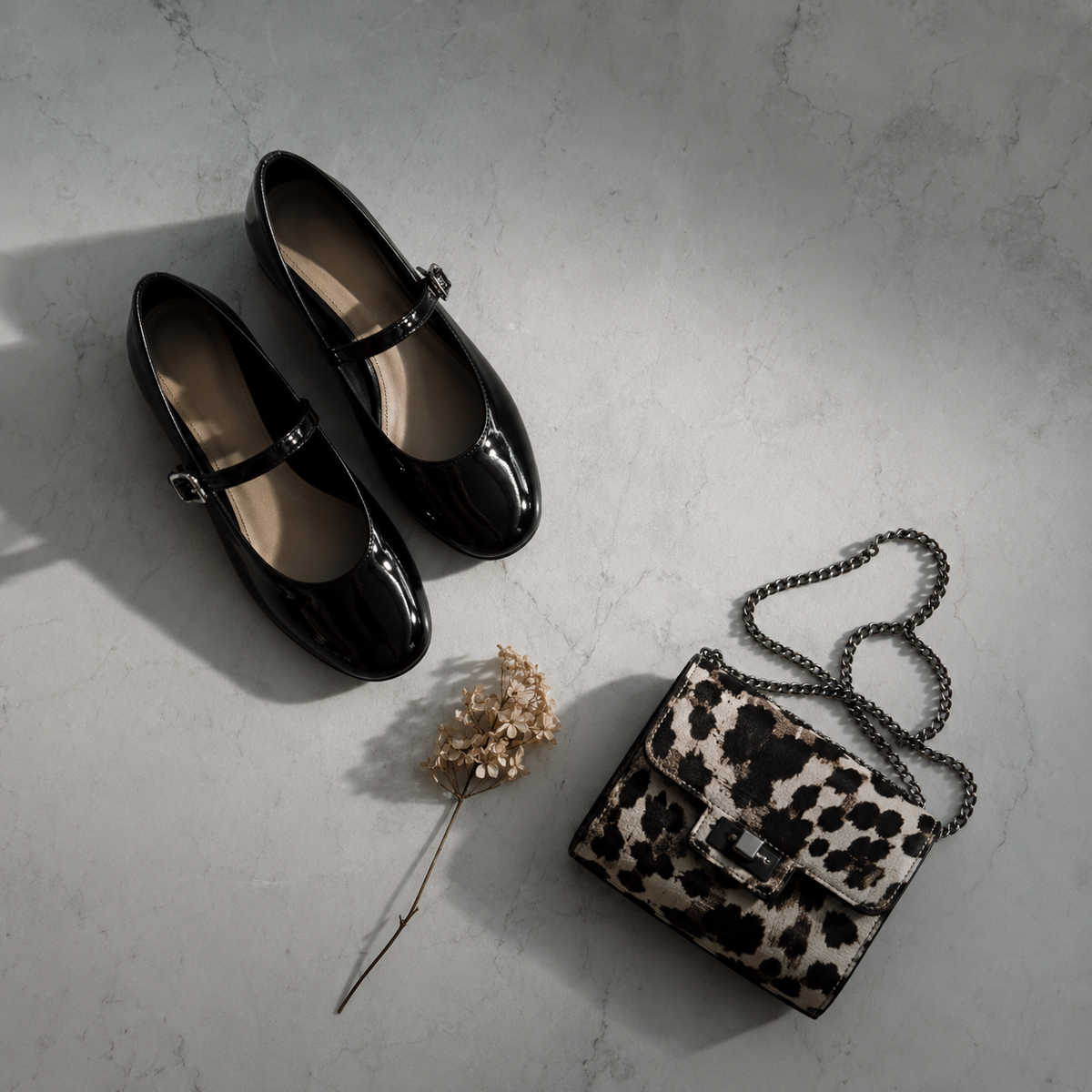
Shoes (1 pair)
Ready to upgrade your wardrobe?
Get the Elara app for AI-powered styling and virtual try-ons.
- Low-profile sneakers or Mary Jane-style shoes — Circana specifically flags both silhouettes as the dominant school footwear direction for 2026
Statement accent (1 piece)
- Animal-print accessory (bag, belt, or scarf) — one piece is enough to make a neutral outfit feel deliberately current, per Urban Outfitters' 2026 trend reporting
The selection logic is strict: every piece must pair naturally with at least three others in the capsule. Most students want clothes that mix and match effortlessly while staying within dress-code boundaries—that's the bar each of these 12 pieces clears. The matching set is the highest-ROI item in the group because it functions as a coordinated two-piece and as two independent pieces in entirely different outfits.
Scan your closet before reading further. Most people already own six to eight of these. The capsule exercise is gap identification, not full replacement.
A Week of Outfits: 5 Days, 5 Looks, 12 Pieces
Every outfit below uses only pieces from the 12-piece capsule. Each is built for a specific school context, because back-to-school outfits aren't one occasion—they're five different ones per week.
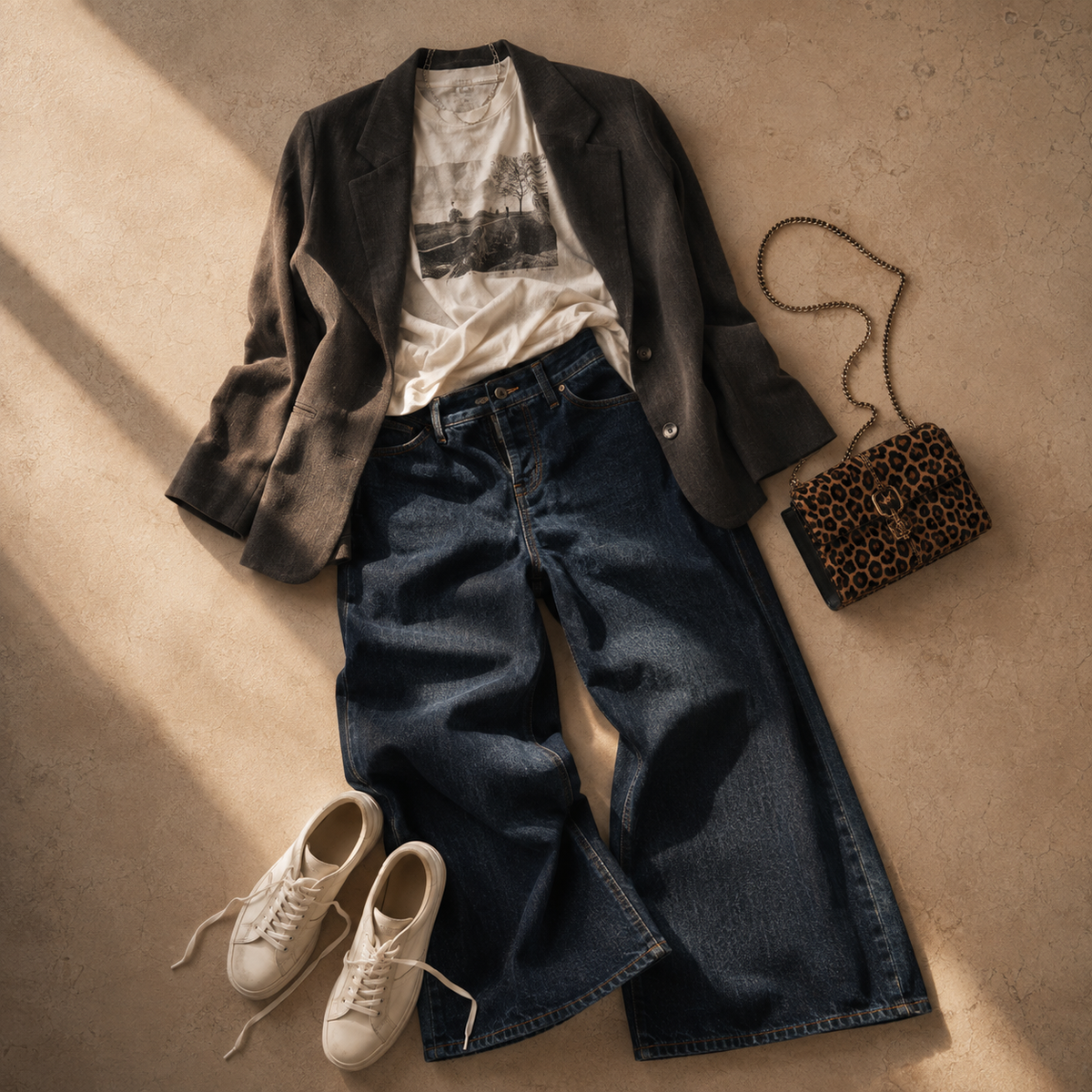
Monday — First Impression Pieces: Wide-leg denim + oversized graphic tee + blazer + low-profile sneakers + animal-print bag Occasion: First day, or any day you want to signal confidence without trying too hard Styling tip: Half-tuck the graphic tee into the denim so the blazer sits cleanly over it—this creates structure without looking stiff. The animal-print bag does the statement work here so the rest of the outfit stays grounded.
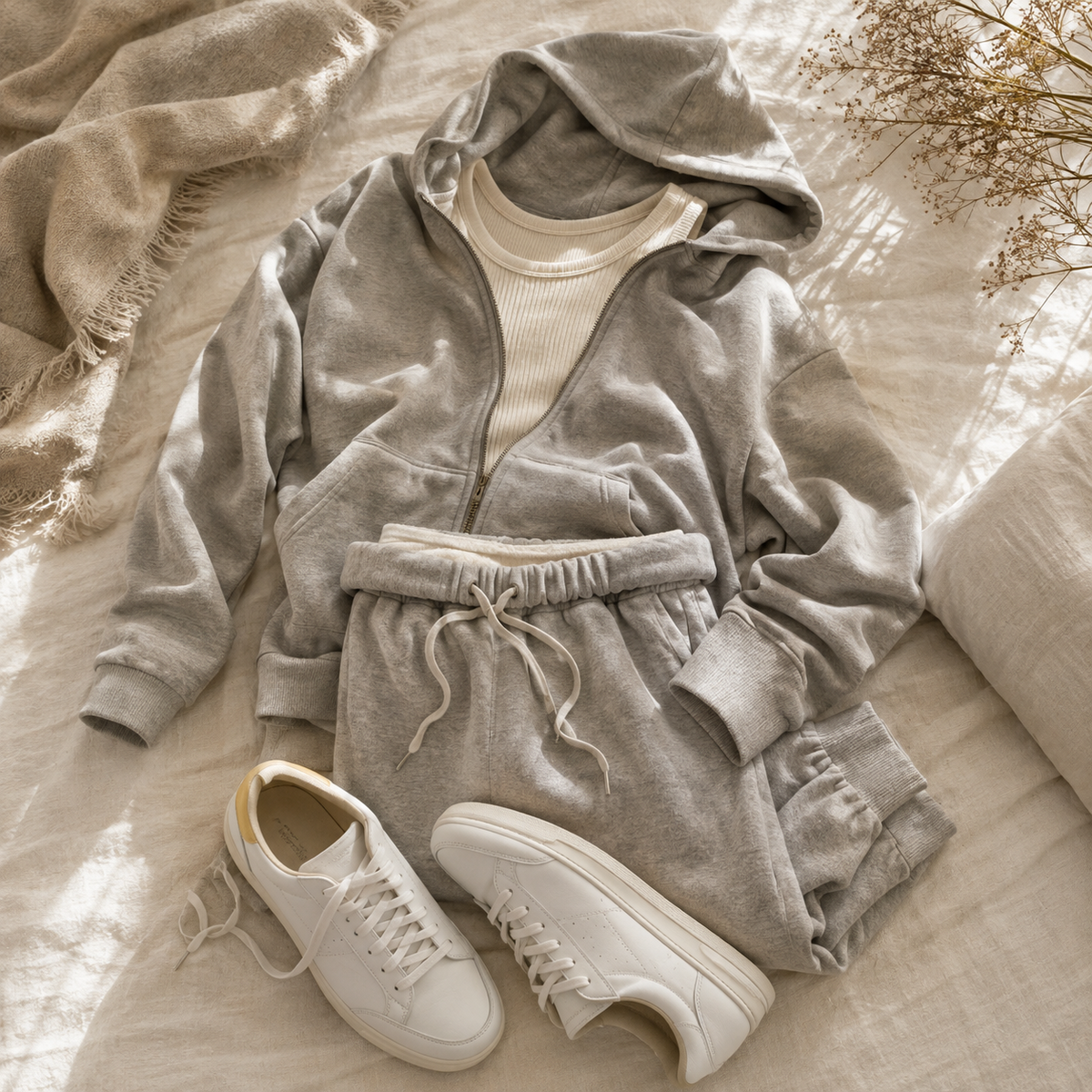
Tuesday — Comfortable & Cool Pieces: Matching set (hoodie + jogger) + ribbed tank underneath + low-profile sneakers Occasion: A low-key class day, lab day, or any schedule with back-to-back movement Styling tip: Let the ribbed tank show at the neckline. It breaks the matching set's monochrome and makes the look feel intentional rather than casual.
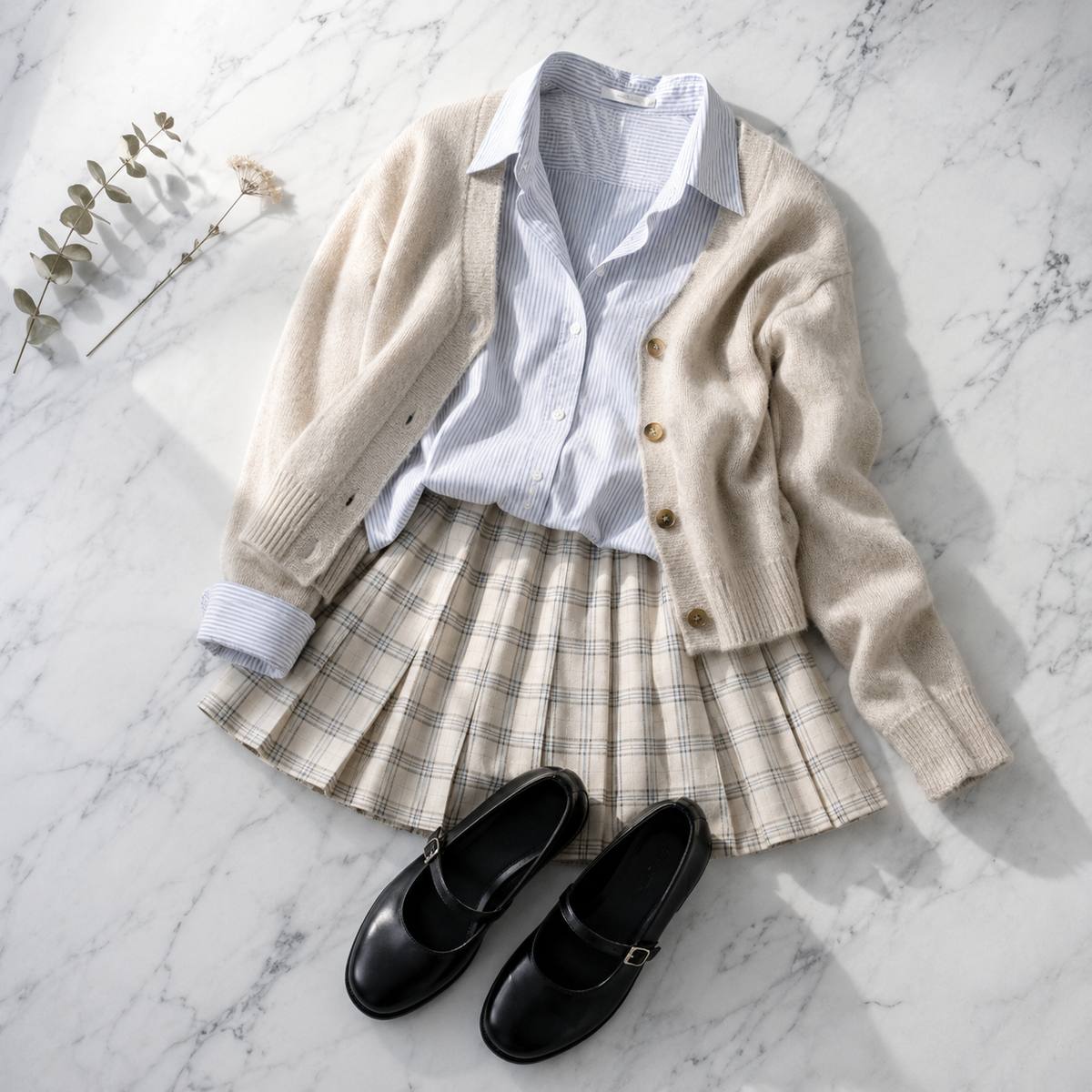
Wednesday — Preppy Revival Pieces: Pleated skirt + button-down (tucked) + cardigan + Mary Jane sneakers Occasion: Presentation day, group project, or any day that benefits from looking put-together Styling tip: Leave the cardigan open and push the sleeves up slightly. Preppy layering reads best when it's slightly undone—fully buttoned cardigans tip into costume territory.
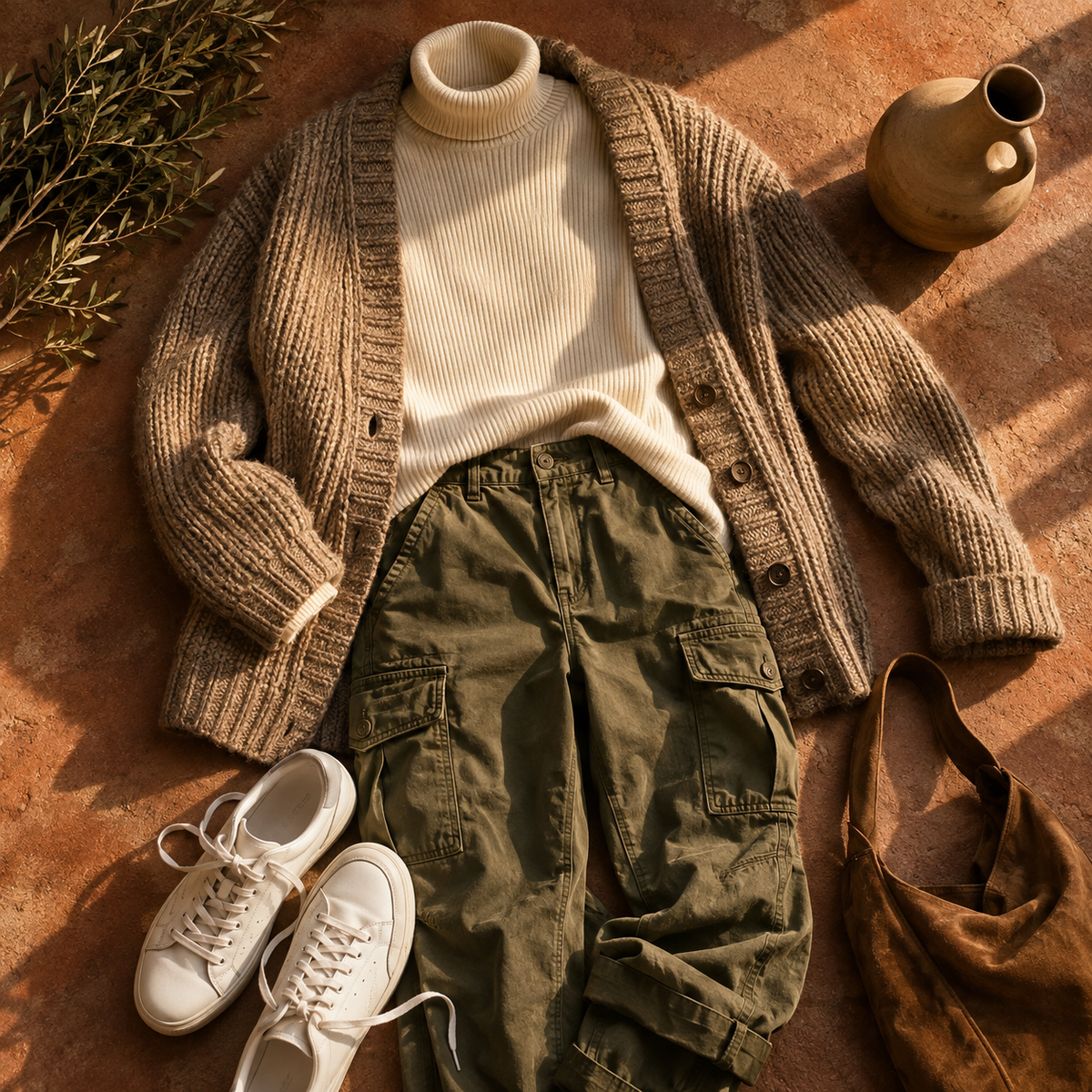
Thursday — Effortless Layers Pieces: Cargo pants + ribbed turtleneck + oversized knit cardigan + low-profile sneakers Occasion: After-school activities, club meetings, or a day with unpredictable weather Styling tip: Tuck just the front of the turtleneck into the cargo pants. The cardigan hangs loose over everything—this layering order keeps the silhouette relaxed rather than bulky.
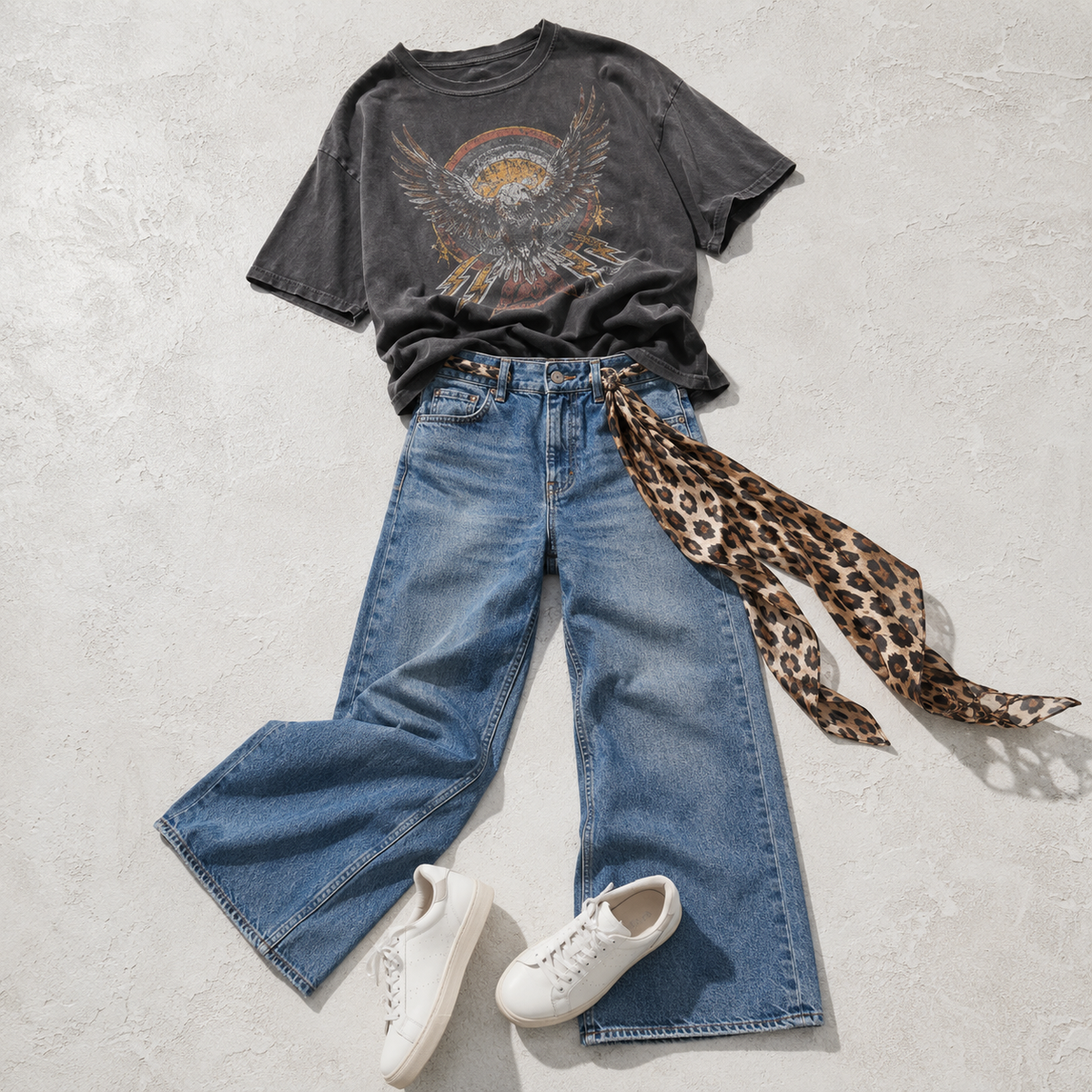
Friday — Statement Day Pieces: Wide-leg denim + graphic tee + animal-print scarf or belt + low-profile sneakers Occasion: Casual Friday, end-of-week social energy, or any day you want to experiment with an accent Styling tip: Tie the scarf through belt loops or knot it loosely around the bag strap instead of wearing it at the neck. One placement shift makes the same accessory read completely differently.
The math: 5 distinct looks, zero outfit repeats, zero decision fatigue—all from the same 12 pieces. Students want wardrobes that photograph well and signal personal style without requiring a new outfit every day. This week delivers exactly that.
How to Extend Your Week: Weekend Looks and Outfit Variations
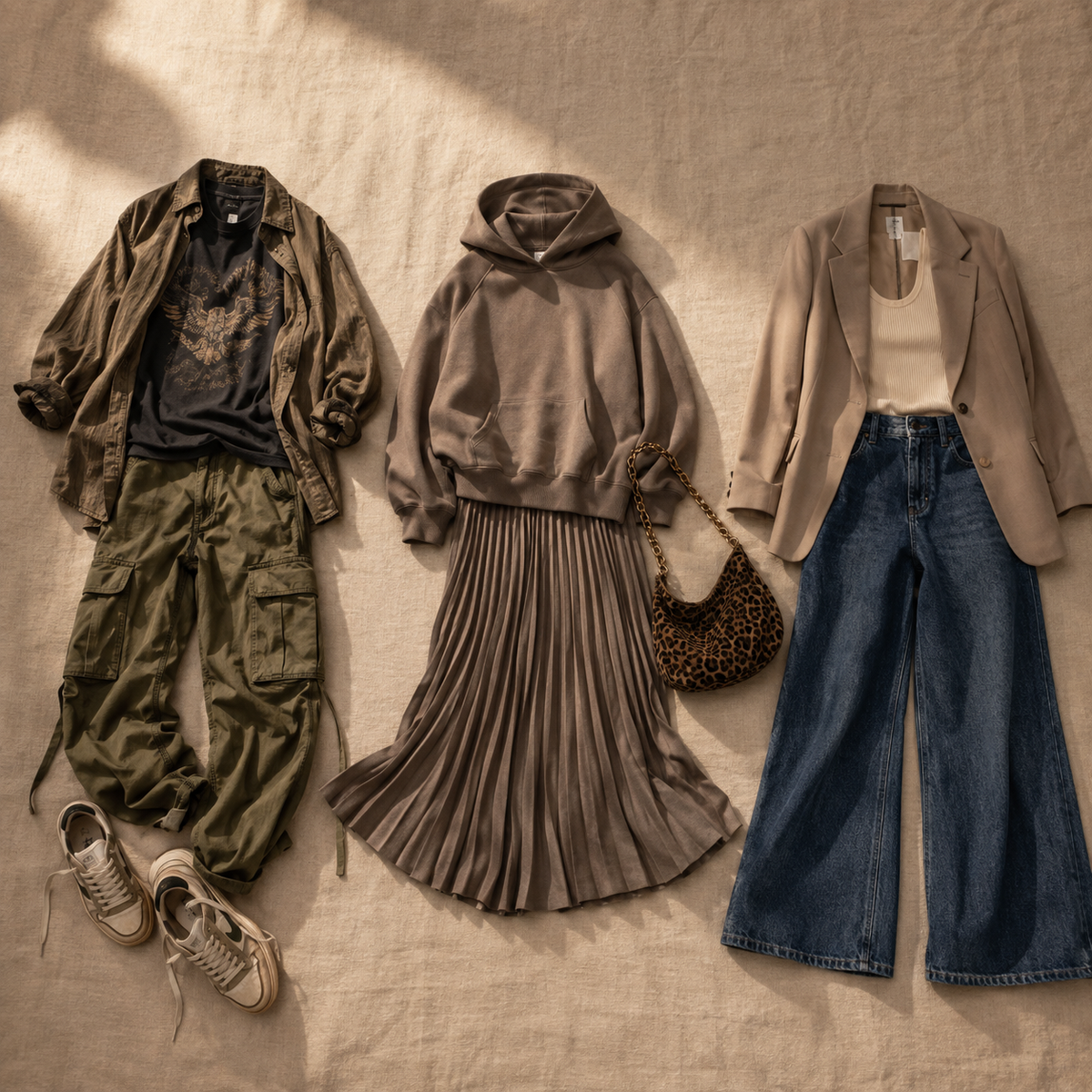
The same 12 pieces don't stop working on Friday. Three remixes that feel noticeably different from the weekday outfits:
- Cargo pants + button-down (worn open, untucked) + graphic tee underneath + sneakers — swap the structured layering order from Wednesday for something looser; the button-down becomes outerwear instead of a top
- Pleated skirt + matching set hoodie + animal-print bag — the hoodie over a skirt breaks the preppy register entirely and shifts the look toward streetwear
- Wide-leg denim + ribbed tank + blazer (no tee) — stripping the graphic tee back to a clean tank under the blazer creates a minimal, almost editorial silhouette from the same three pieces used on Monday
The "I have nothing to wear" feeling almost never comes from an empty closet. Students are moving toward personal expression over uniform dressing—which means the combinations are already there, they're just not visible yet. That's an outfit visibility problem, not a wardrobe size problem.
This is the concept of outfit multiplicity: the goal is more awareness of what you already own, not more clothes. Elara's AI is built around exactly this idea—it surfaces combinations from your existing wardrobe before it ever suggests something new. More back-to-school outfit options, same closet.
Shopping Smart: Filling Real Gaps Before the Rush
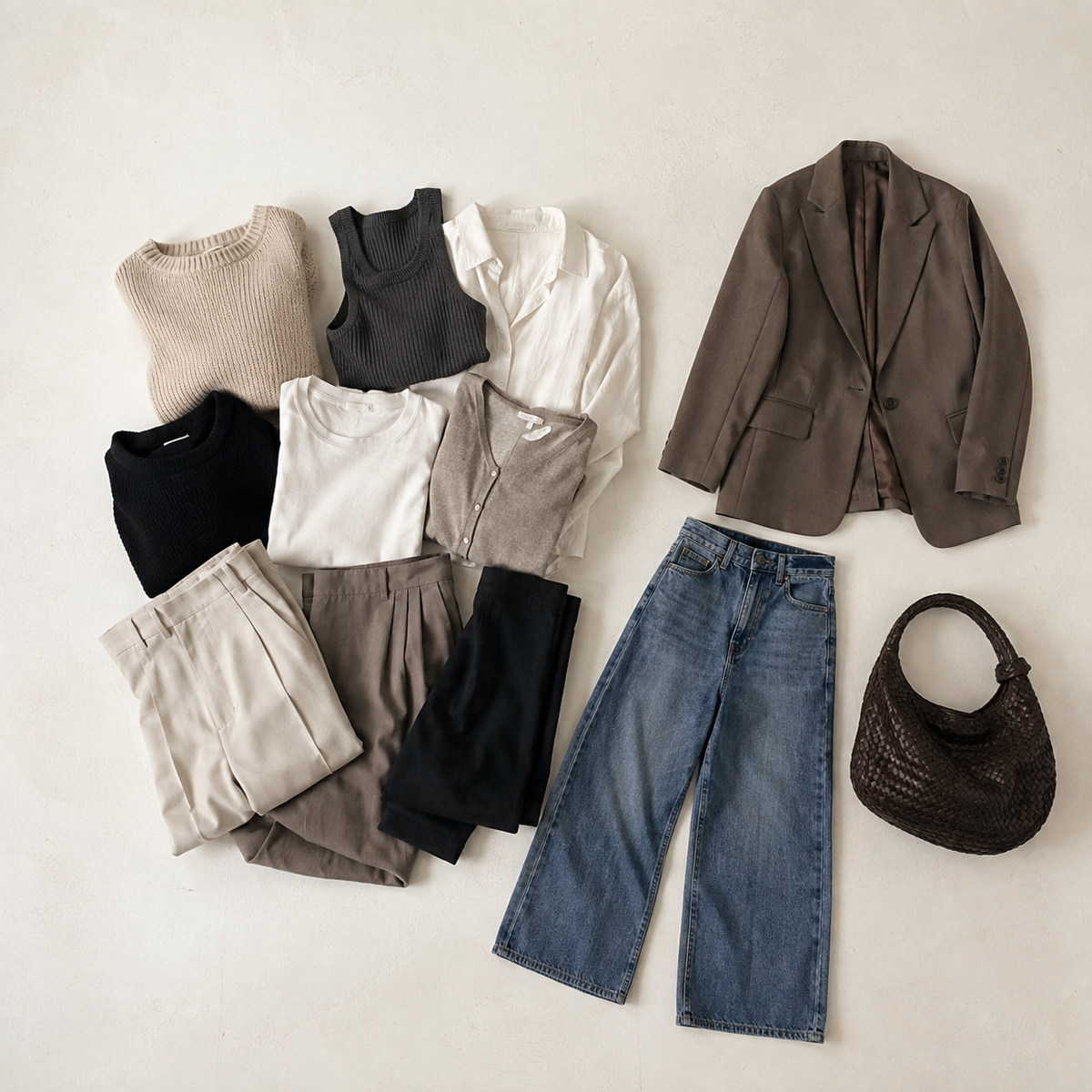
Outfit visibility solves the "nothing to wear" problem—but knowing what you genuinely lack is what makes shopping intentional rather than reactive.
According to Circana, the back-to-school apparel season now stretches from midsummer through Labor Day and well into the holiday window. That extended timeline is actually good news: it means there's no reason to panic-buy in August. The pressure to grab everything at once is manufactured, not real. Shopping across a longer window gives you time to audit first and purchase second.
The gap analysis itself takes three steps:
- Audit what you own against the 12-piece framework outlined earlier in this article. Lay everything out physically, or upload it to a wardrobe app, and map each item to a category: bottoms, tops, layers, shoes, statement accent.
- Identify 1–3 genuinely missing pieces—not items you'd like to have, but items that would unlock combinations you currently can't build.
- Buy only those pieces, choosing versions that integrate with at least three things you already own.
That third step is where most back-to-school shopping goes wrong. According to Urban Outfitters' 2026 trend reporting, animal prints—leopard, zebra, and cow print—are among the season's sharpest signals. Circana similarly highlights wide-leg denim as a standout silhouette. Both are worth owning, but only if they connect to your existing wardrobe. A cow-print bag that works with three outfits is a smart buy; one that only works with a single new outfit you also have to purchase is just trend anxiety in disguise.
Elara automates this entire process. Upload your wardrobe, and the AI maps what you have, surfaces the specific gaps, and generates a prioritized shopping list—so you walk into any store or website knowing exactly what you need, and nothing else.
FAQ: Back-to-School Outfits and Capsule Wardrobes
Q: What if I don't own most of these 12 pieces? A: That's normal. The capsule is a target framework, not a shopping list. Start by identifying which 5–7 pieces you already own, then prioritize the 1–3 that would unlock the most new outfit combinations. A single missing piece—like a blazer or a second pair of pants—can often unlock 3–4 entirely new back-to-school outfits from pieces you already have.
Q: Can I use this capsule if my school has a strict dress code? A: Yes. The 12-piece framework is built around pieces that work within dress-code boundaries. Wide-leg denim, cardigans, button-downs, and solid tanks all meet standard school policies. The statement accent (animal print) is optional and can be swapped for a solid color if needed. The goal is maximizing outfit combinations within the rules you're already following.
Q: How do I know if a new piece will actually work with what I own? A: Test it against three existing items before buying. If a new top, bottom, or jacket doesn't pair naturally with at least three pieces you already have, it's a gap-filler, not a gap-solver. This is where Elara helps—upload your wardrobe and the AI will show you exactly which new pieces would unlock the most combinations.
Q: Is a 12-piece capsule enough for a full school year? A: A 12-piece capsule covers fall and early winter well. As seasons shift, you'll swap in lighter layers (short-sleeve tees, linen shirts) or heavier ones (sweaters, jackets). The framework stays the same; the specific pieces rotate. The goal is outfit multiplicity from a smaller, more intentional set—not a static wardrobe that never changes.
Key Takeaways: Back-to-School Outfit Planning
- Plan before you buy. According to Circana, the back-to-school season stretches across months—use that time to audit your closet and identify real gaps instead of panic-buying in August.
- Trends are a filter, not a mandate. Wide-leg denim, Y2K nostalgia, and preppy layering are 2026 signals worth knowing about, but only if they connect to your existing wardrobe.
- Twelve intentional pieces beat a full closet. A capsule built around pieces that work together creates more outfit combinations than a larger wardrobe of disconnected items.
- Outfit visibility is the real solution. The "nothing to wear" feeling almost always comes from not seeing the combinations you already have—not from actually needing more clothes.
- One new piece can unlock multiple new outfits. Before shopping, identify which single missing item would create the most new back-to-school outfit combinations from what you already own.
Conclusion: Outfit Planning Is the New Back-to-School Shopping
Back-to-school prep has never really been about buying more—it's always been about showing up ready. According to jenagreen.com's 2026 trend analysis, the strongest style direction this season centers on comfort-first basics, relaxed denim, and layered pieces that work across multiple occasions. Twelve intentional pieces, chosen to work together, can cover a full week of distinct back-to-school outfits while staying trend-current and well within budget.
The 2026 trend signals—Y2K nostalgia, preppy layering, statement prints, comfort silhouettes—are a curation guide, not a consumption mandate. Students who plan their outfits before they shop will always outperform those who panic-buy. The wardrobe audit comes first; the purchase list follows from it.
If you want to see what your closet is already capable of before spending a dollar, Elara is built for exactly that. Explore how the AI stylist works at joinelara.com—your wardrobe likely has more to say than you've given it credit for.

Your AI Stylist is Here.
live on the App Store
Available on iOS for seamless access anytime, anywhere.